
Language
Grammar sticks when every rule comes with a quick test you can use in the moment. These lessons are built around those tests: swap in “it is” to choose between its and it’s, try he or him to choose who or whom, and step the tense back one place for reported speech.
The lessons cover the rules students meet in writing and in exams: all twelve tenses on one timeline, active and passive voice, clauses, gerunds and infinitives, modal verbs such as could, should and would, and the commas that change a sentence’s meaning. Editing and gap-filling gets a five-step method, and formal letters get a checklist of the six most common format mistakes.
Most decks use the Inkwell template and suit ages 11 to 16. For younger learners, “Is or are?” teaches subject–verb agreement to ages 7 to 9 with big text and friendly pictures. Every example sentence is written for Vesper.
Showing all 15 results
-
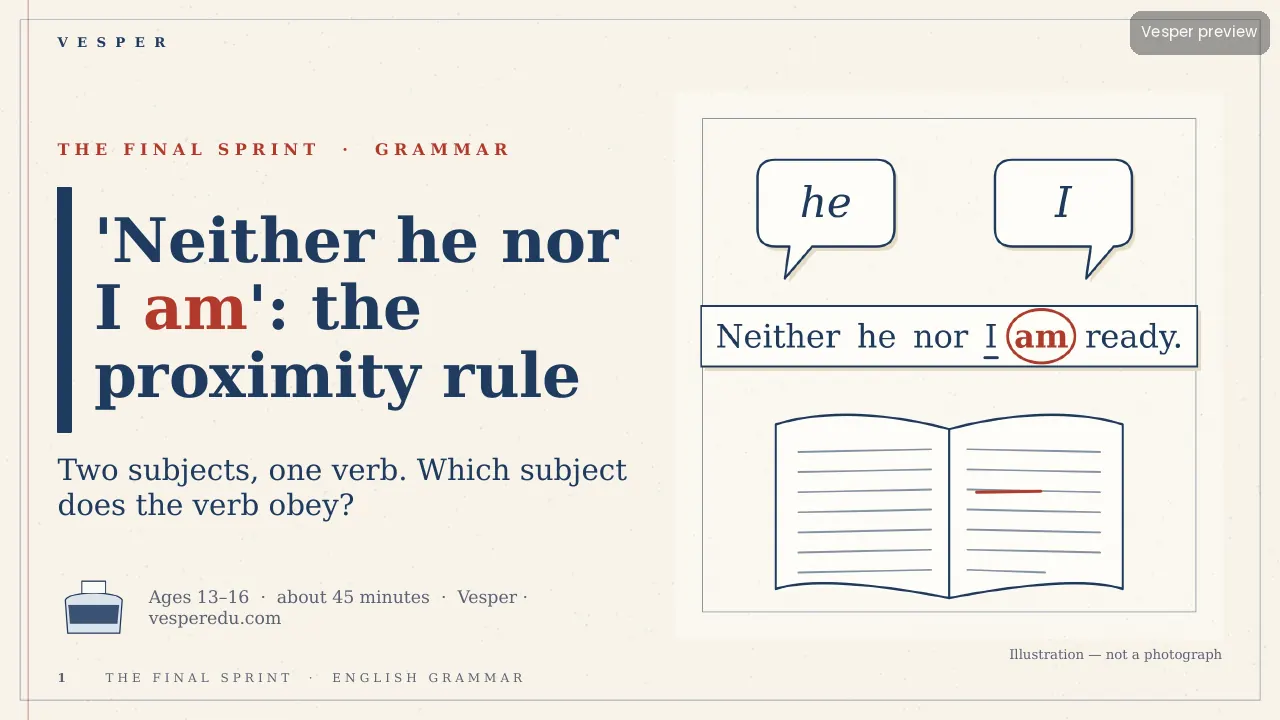
‘Neither he nor I am’: the proximity rule
Pricing coming soon -
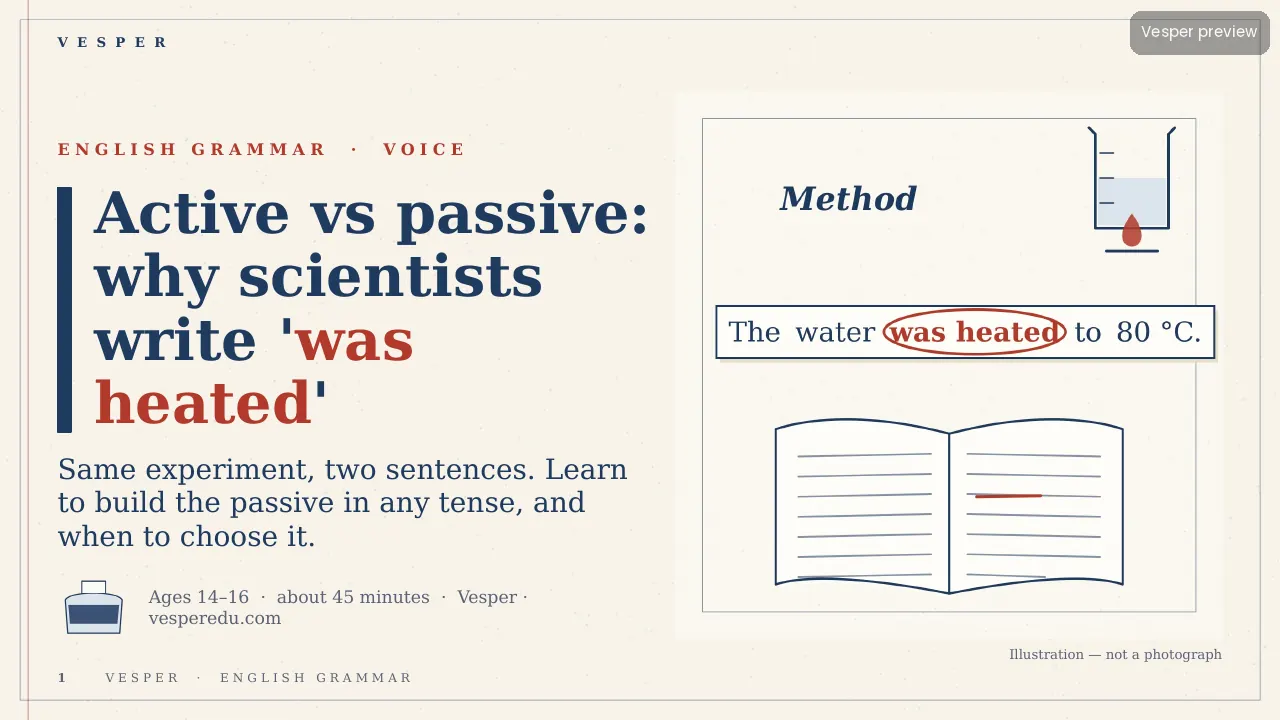
Active vs passive: why scientists write ‘was heated’
Pricing coming soon -
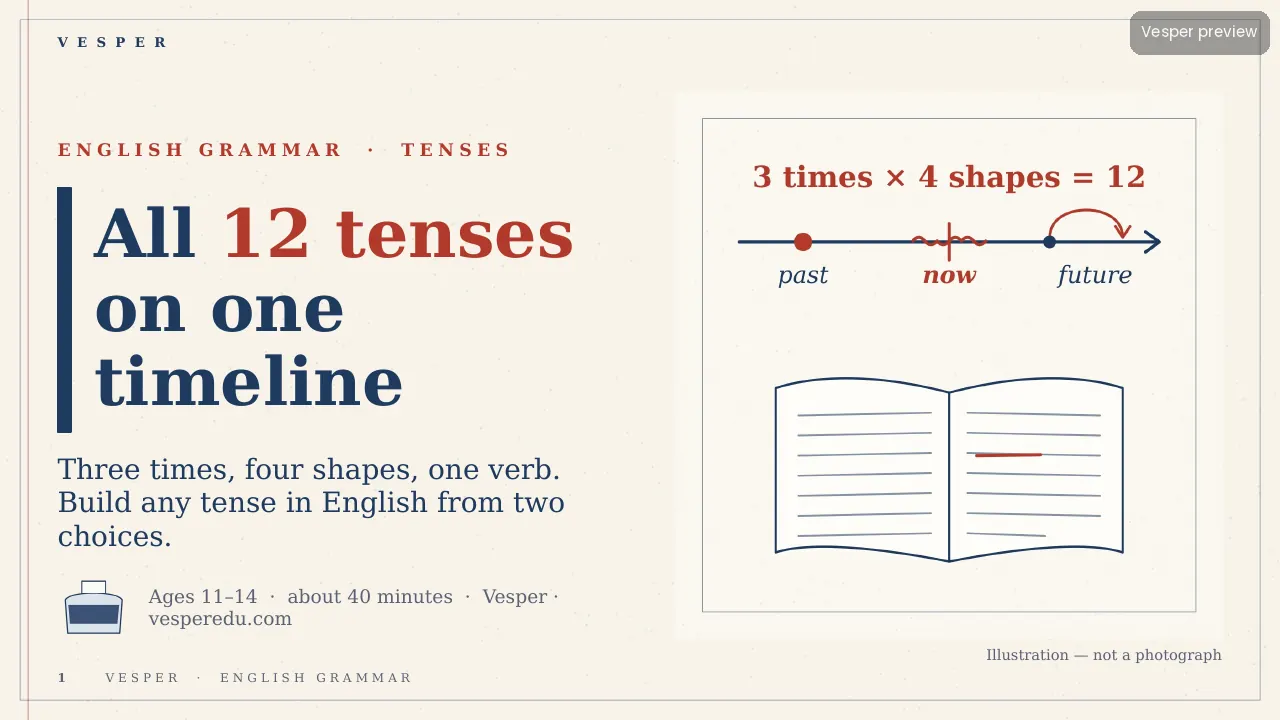
All 12 tenses on one timeline
Pricing coming soon -
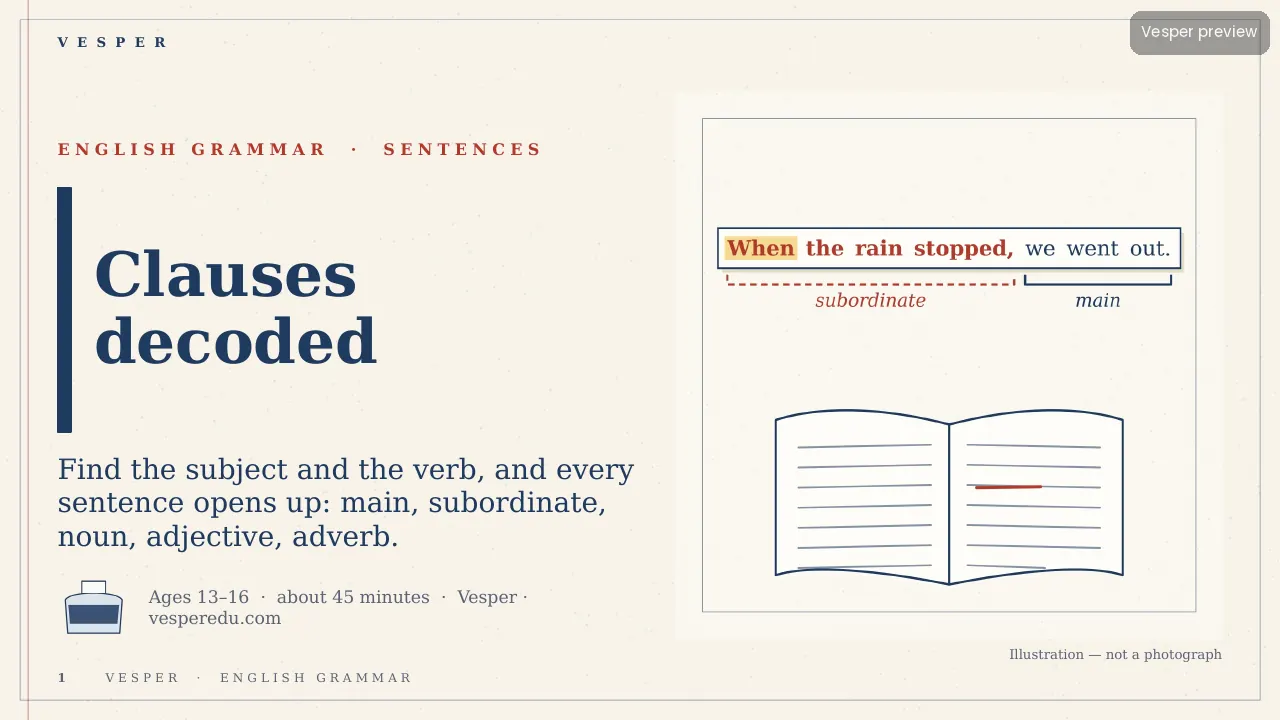
Clauses decoded: main, subordinate, noun, adverb
Pricing coming soon -
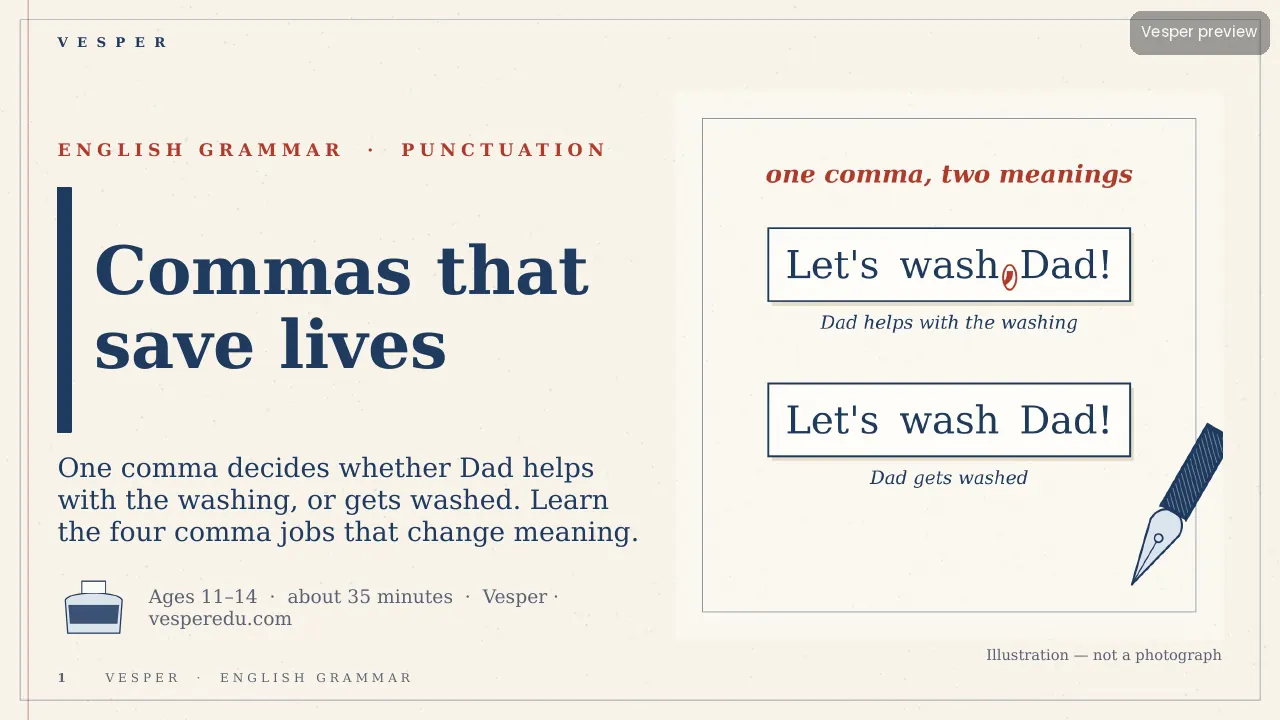
Commas that save lives
Pricing coming soon -
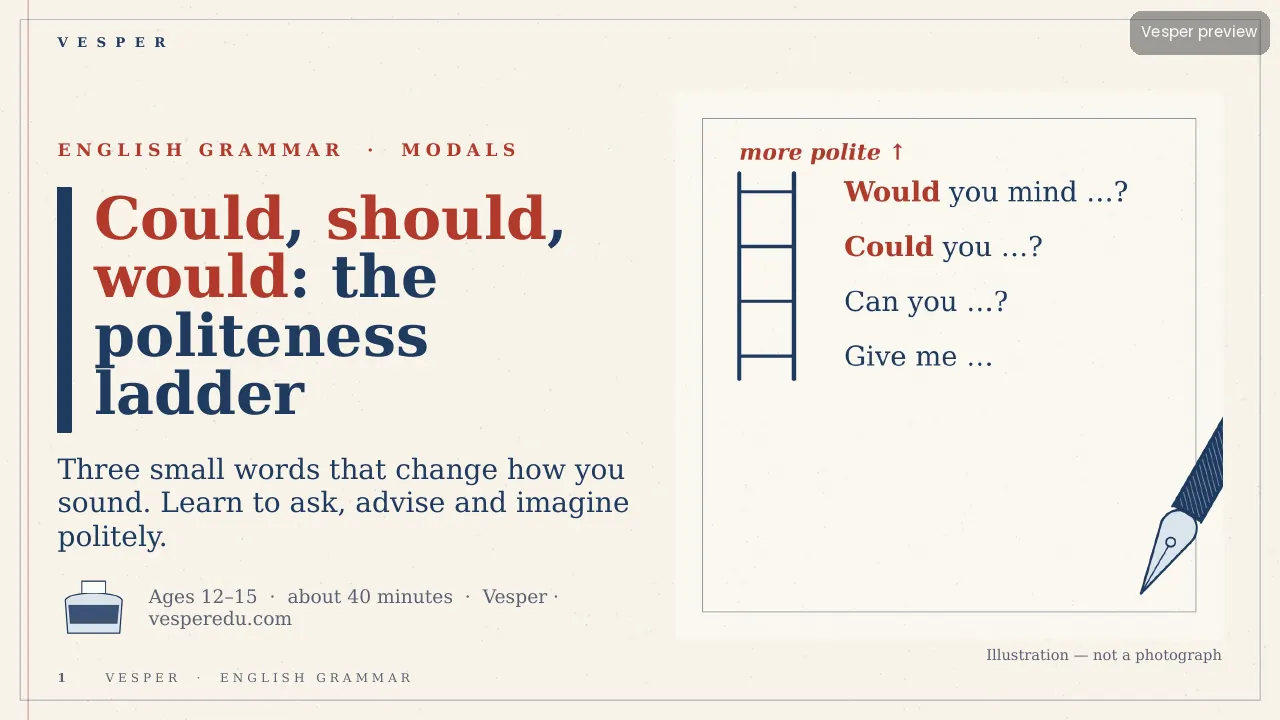
Could, should, would: the politeness ladder
Pricing coming soon -
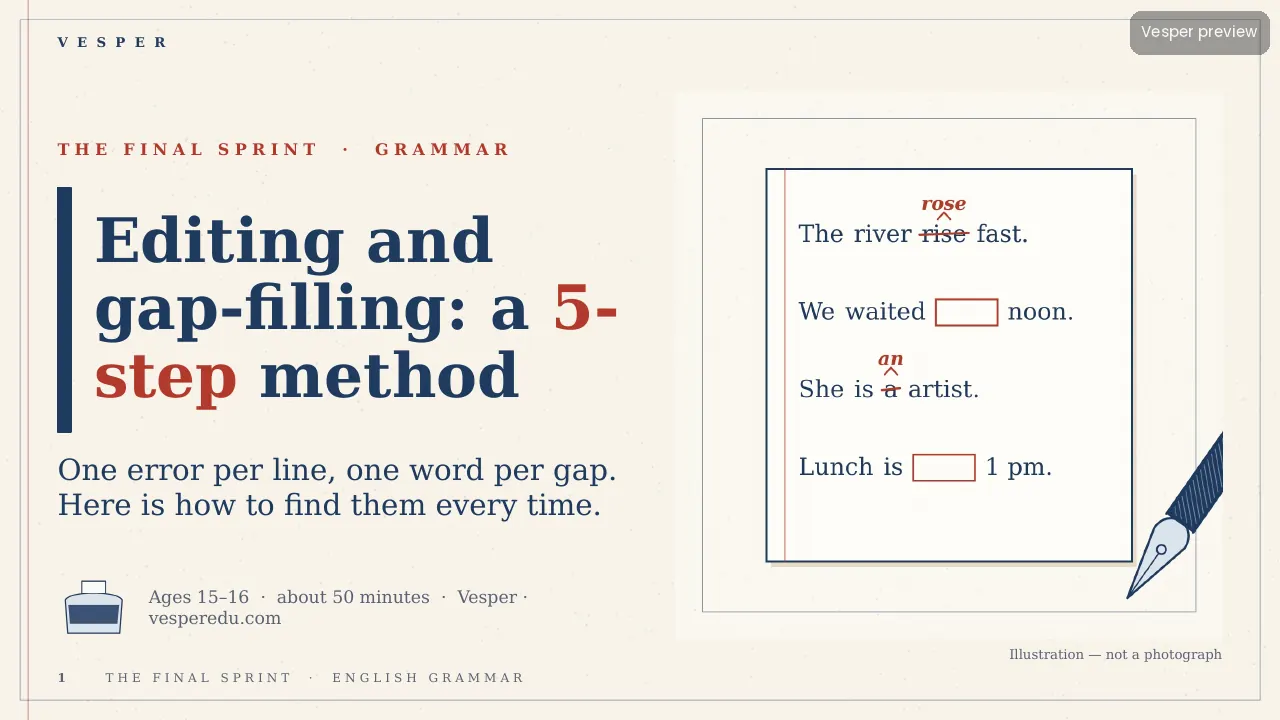
Editing and gap-filling: a 5-step method
Pricing coming soon -
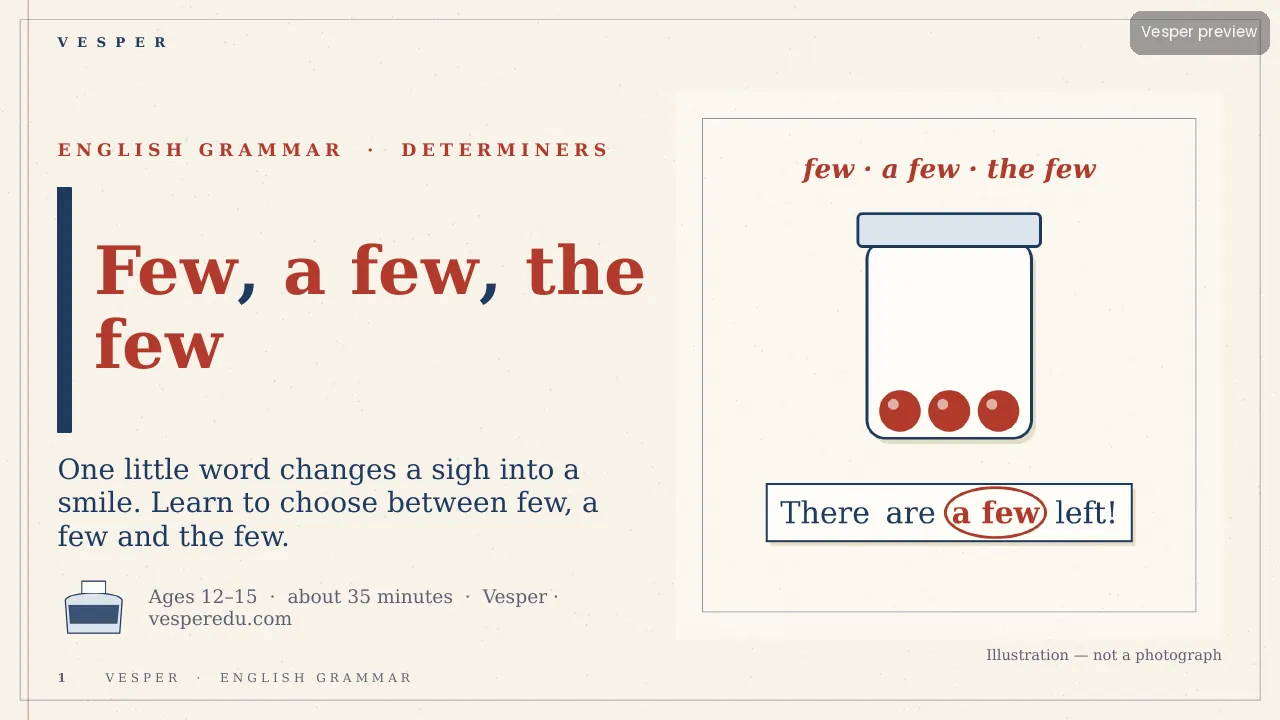
Few, a few, the few
Pricing coming soon -
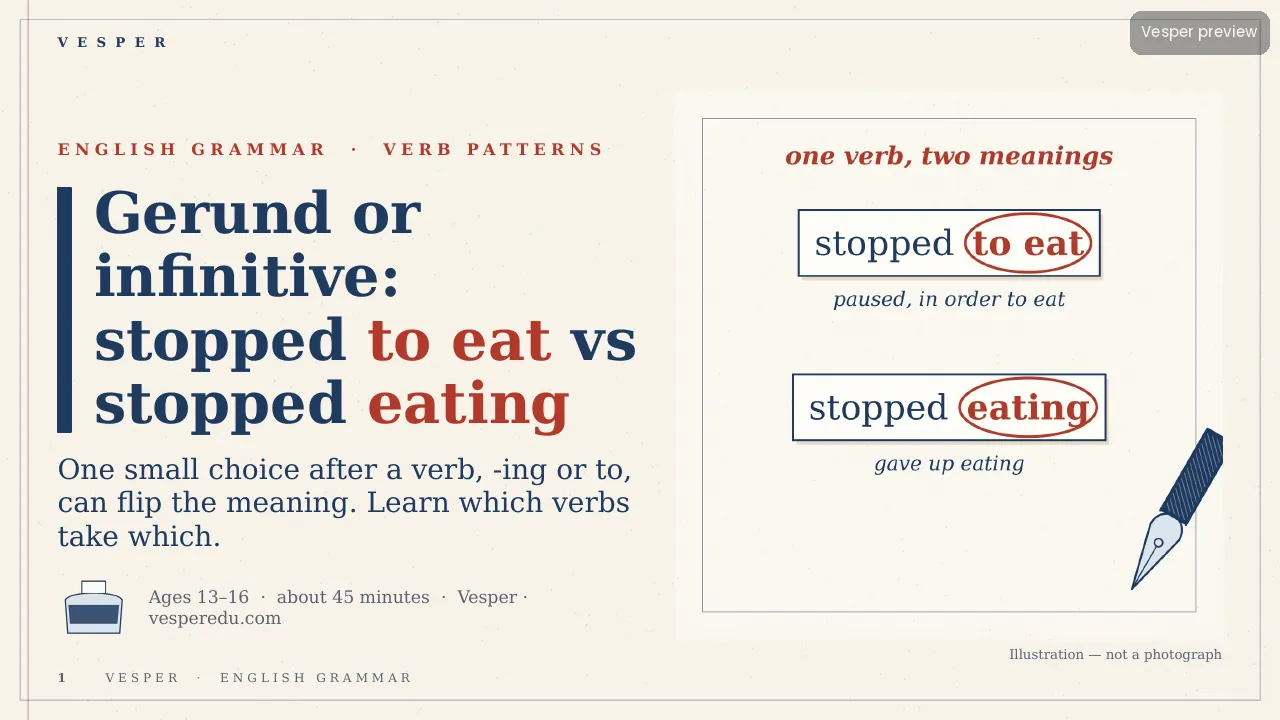
Gerund or infinitive: stopped to eat vs stopped eating
Pricing coming soon -
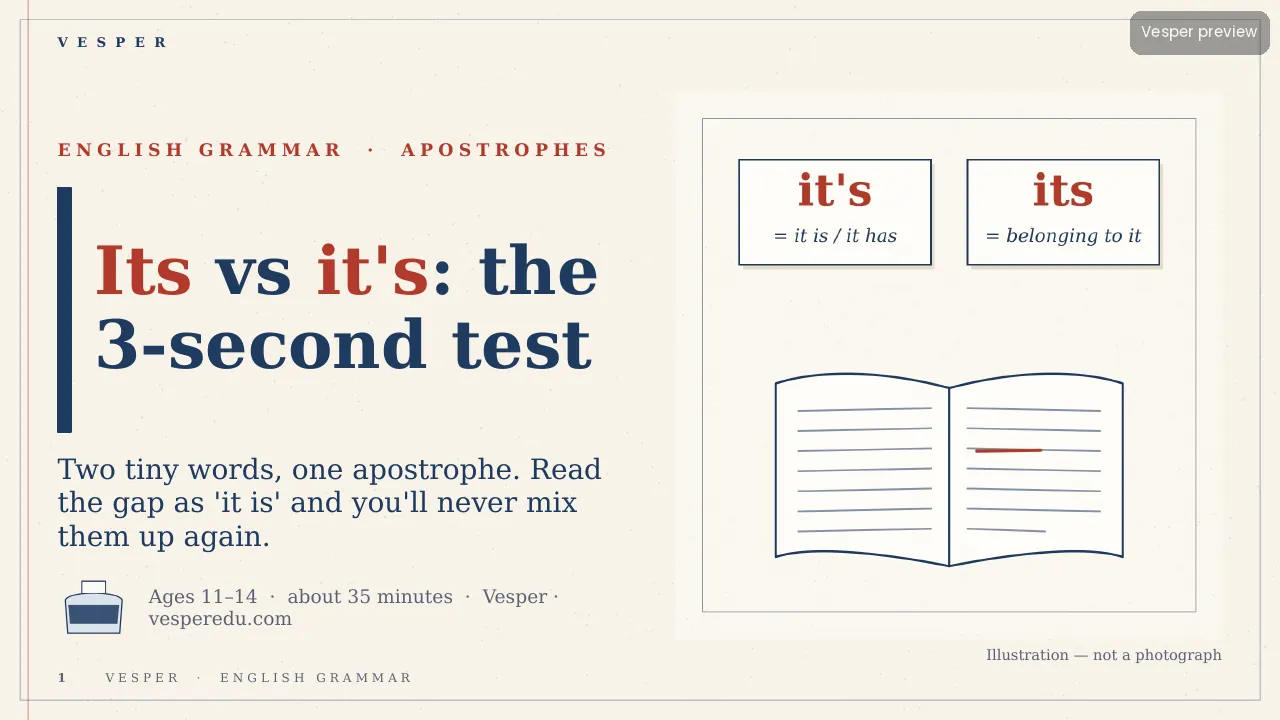
Its vs it’s: the 3-second test
Pricing coming soon -
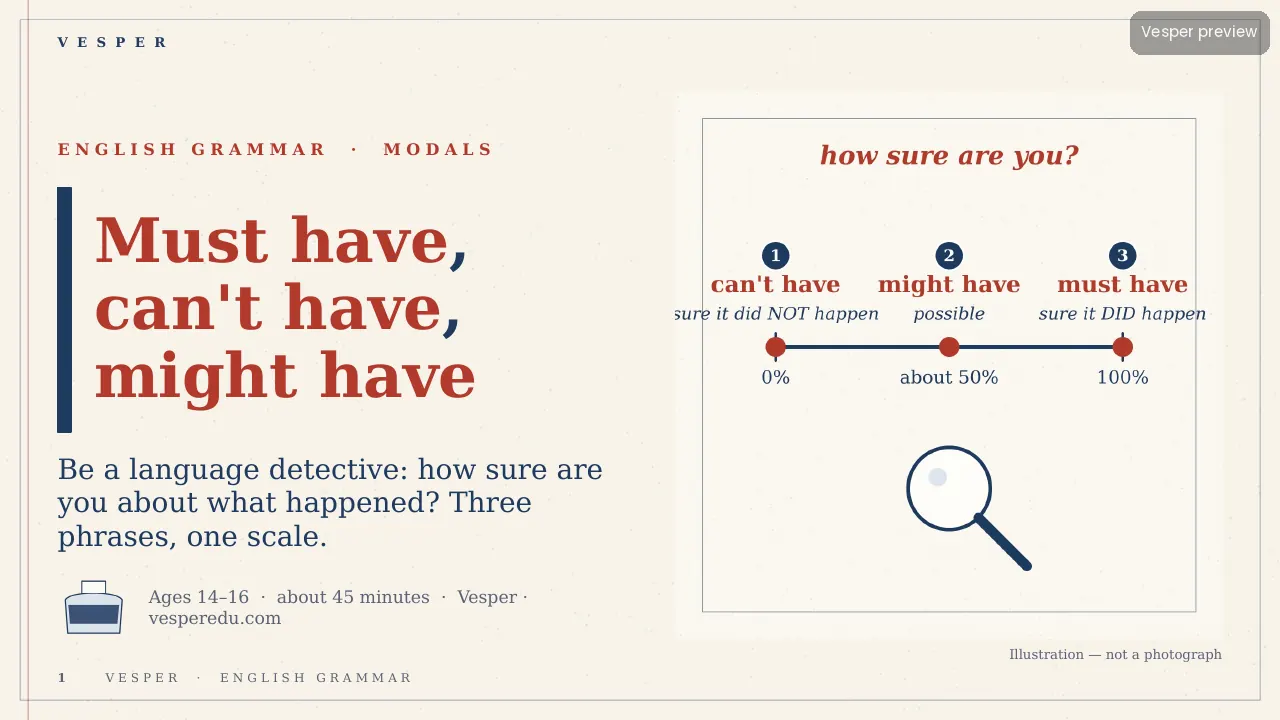
Must have, can’t have, might have
Pricing coming soon -
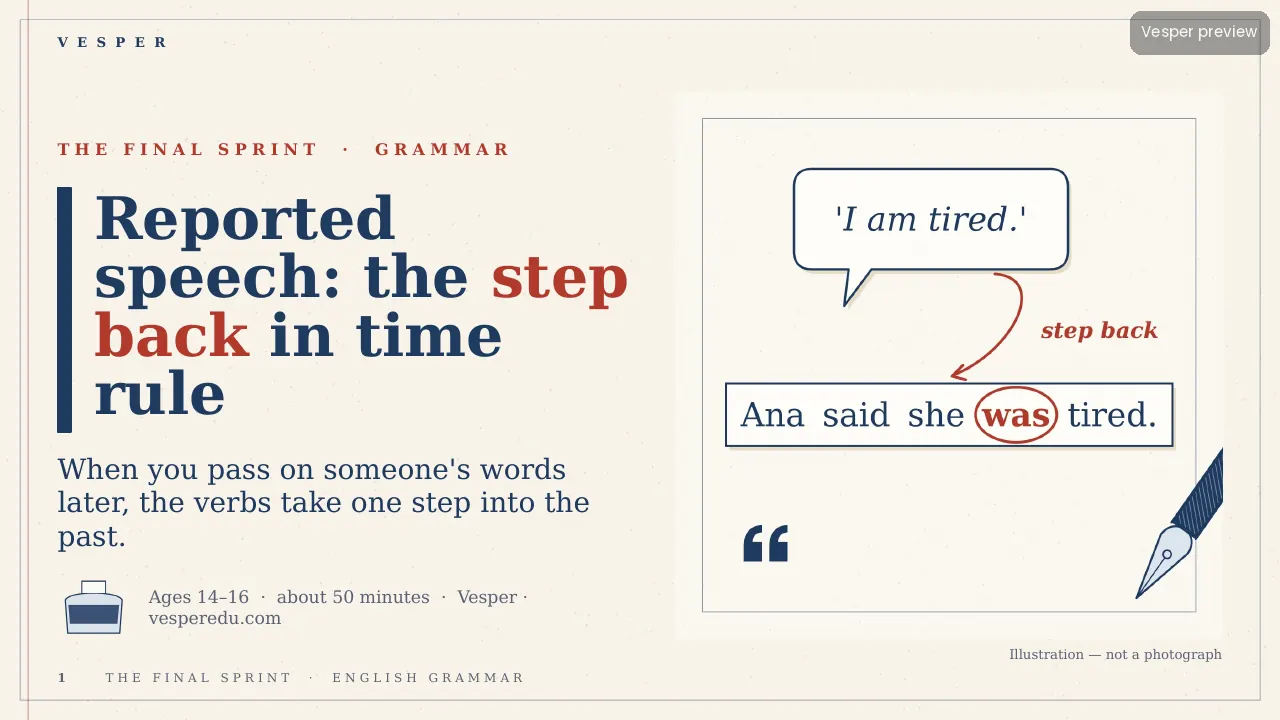
Reported speech: the step back in time rule
Pricing coming soon -
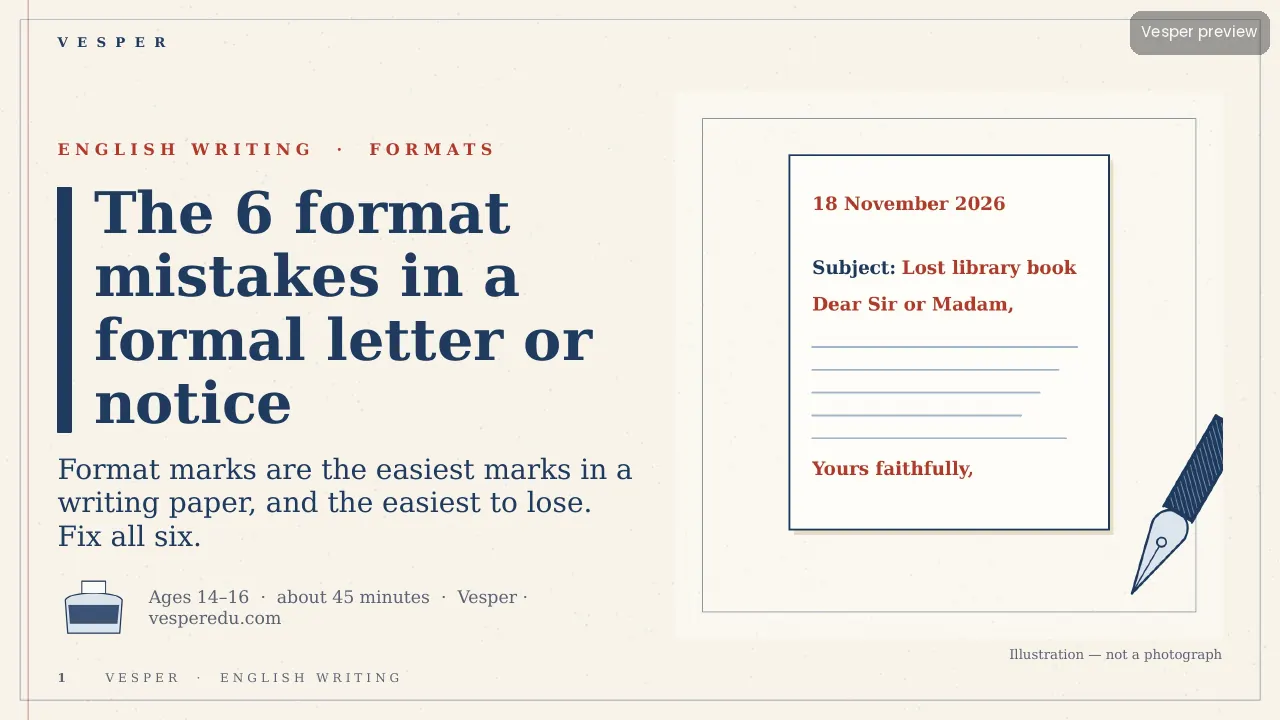
The 6 format mistakes in a formal letter or notice
Pricing coming soon -
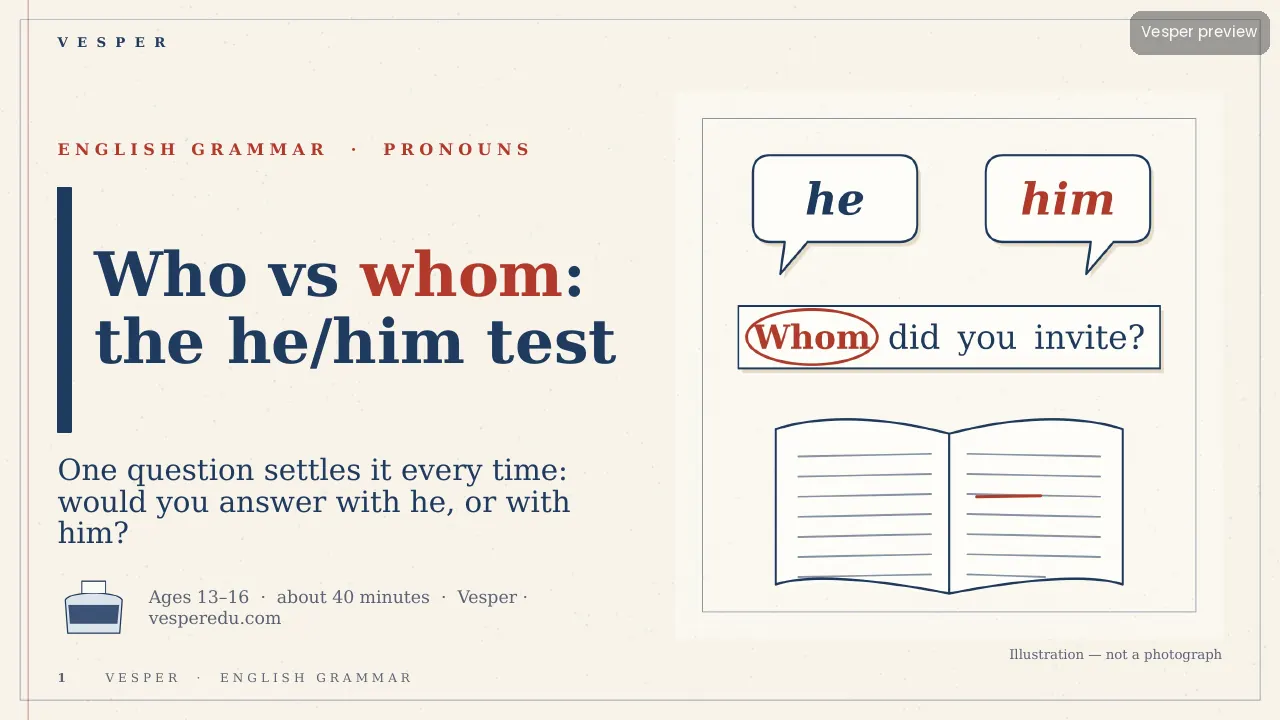
Who vs whom: the he/him test
Pricing coming soon -
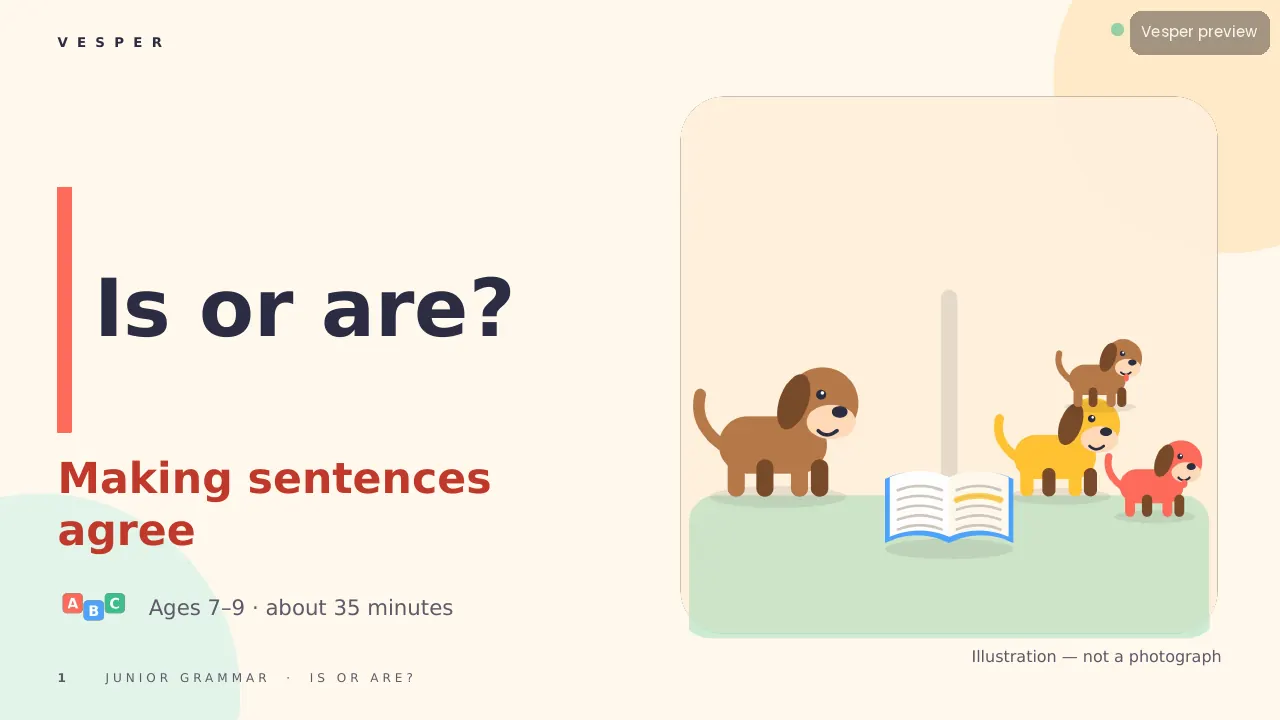
Is or are? Making sentences agree
Pricing coming soon
Questions
Questions, answered
Which ages are the grammar lessons for?
Most are for ages 11 to 16. “Is or are? Making sentences agree” is written for ages 7 to 9.
Is the grammar British or American English?
British English, with notes where American usage differs, for example in some comma and spelling conventions.
Do the lessons include practice questions?
Yes. Each deck has your-turn sentences with answers, spot-the-mistake slides, checkpoints and a quiz with explained answers.
Are the example sentences original?
Yes. Every example is written for Vesper; grammar references are used only to check the rules.
Coming soon
1 Language lesson in production
These are planned and cannot be bought yet. Each one joins the library when it is finished and checked. See every discipline
- Is or are? Making sentences agree Ready now Ages 7–9
- Subject–verb agreement: 7 traps examiners love Ages 11–16
- ‘Neither he nor I am’: the proximity rule Ready now Ages 13–16
- All 12 tenses on one timeline Ready now Ages 11–14
- Active vs passive: why scientists write ‘was heated’ Ready now Ages 14–16
- Reported speech: the step back in time rule Ready now Ages 14–16
- Who vs whom: the he/him test Ready now Ages 13–16
- Its vs it’s: the 3-second test Ready now Ages 11–14
- Could, should, would: the politeness ladder Ready now Ages 12–15
- Editing and gap-filling: a 5-step method Ready now Ages 15–16
- Few, a few, the few Ready now Ages 12–15
- Clauses decoded: main, subordinate, noun, adverb Ready now Ages 13–16
- Commas that save lives Ready now Ages 11–14
- Must have, can’t have, might have Ready now Ages 14–16
- Gerund or infinitive: stopped to eat vs stopped eating Ready now Ages 13–16
- The 6 format mistakes in a formal letter or notice Ready now Ages 14–16
Free lesson
Your first lesson is on us.
Email us and we will send you a complete lesson as a PDF, free. We will not add you to a mailing list unless you ask. Under 16? Ask a parent or guardian to email for you.