
Chemistry
A lot of chemistry happens in the kitchen, and these lessons start there. Students find out why a cut apple turns brown, how soap pulls grease off a plate, why turmeric turns red in soapy water and what really separates baking soda from baking powder.
From there the lessons build the ideas examiners test. Balancing equations is taught as atom accounting, so every atom on the left has a partner on the right. Students see why iron rusts while gold stays bright, why carbon forms more compounds than any other element, how a plaster cast sets, and how Mendeleev left gaps in his table for elements nobody had found yet.
Every chemistry deck uses the Flask template, with checked equations, safe home experiments, teacher notes on every slide and a quiz with explained answers. The lessons suit ages 12 to 16, and the kitchen experiments make good homework that families can try together.
Showing all 12 results
-
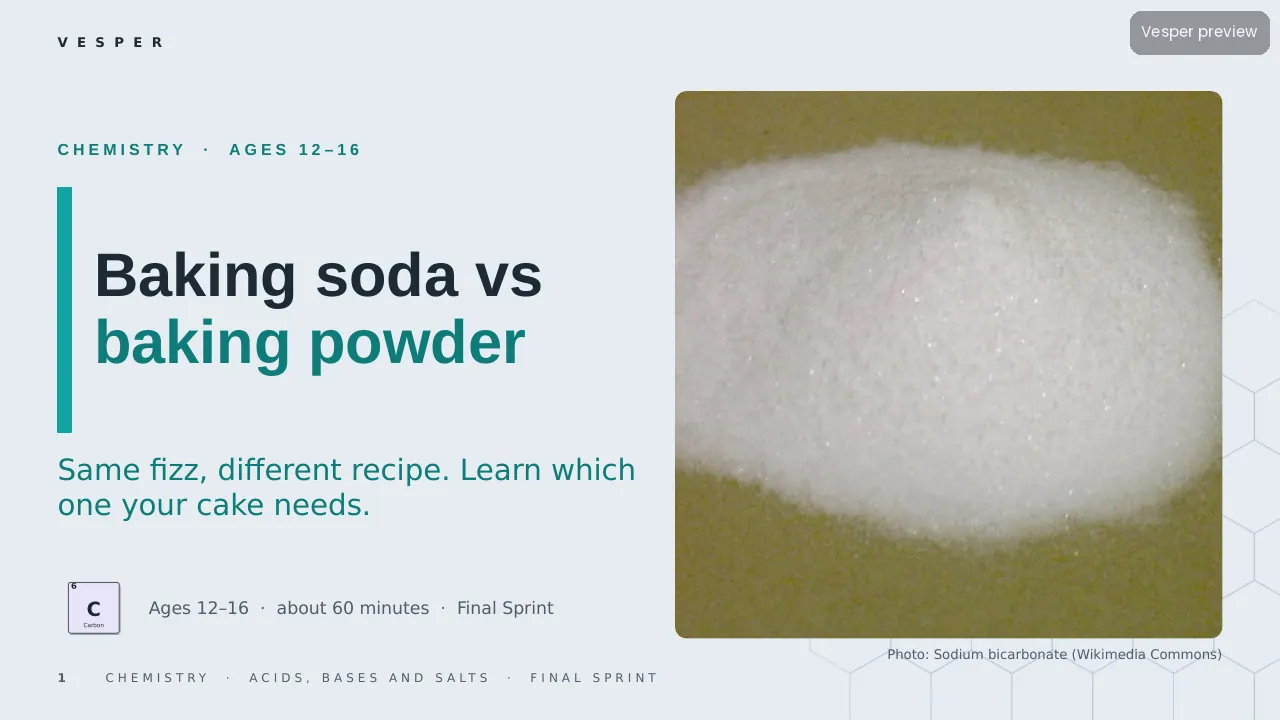
Baking soda vs baking powder: kitchen chemistry
Pricing coming soon -
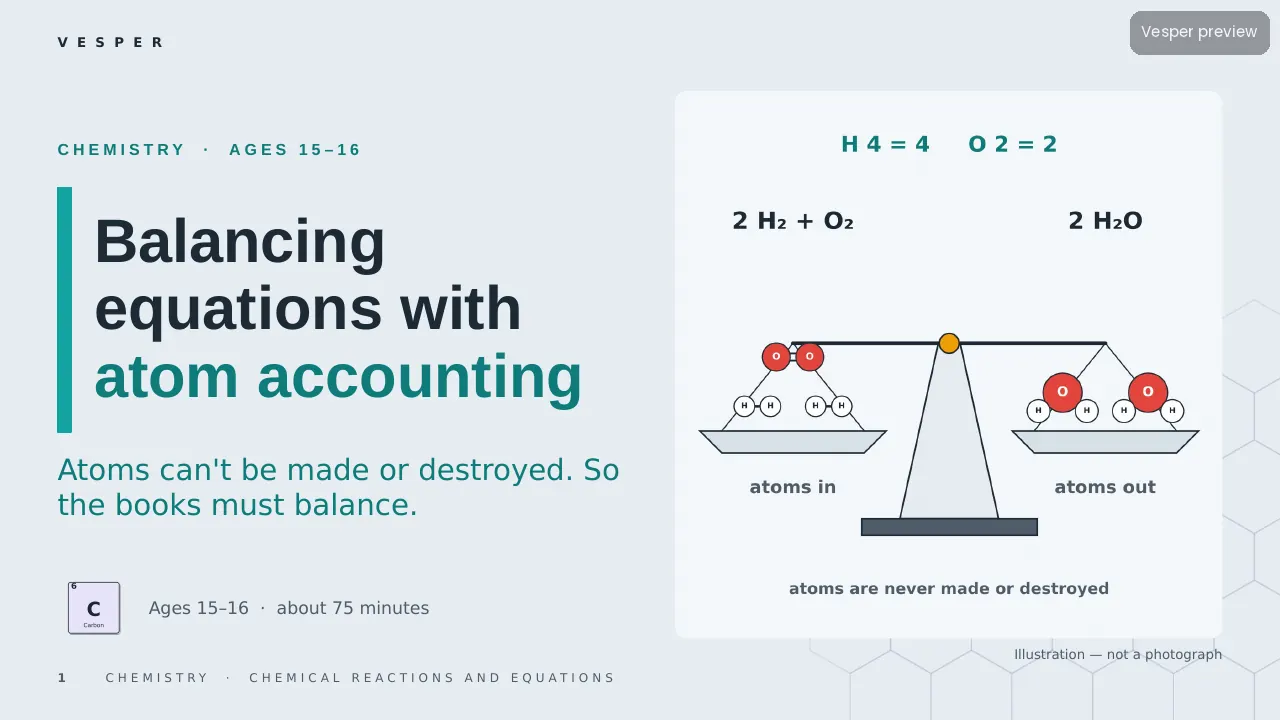
Balancing equations with atom accounting
Pricing coming soon -
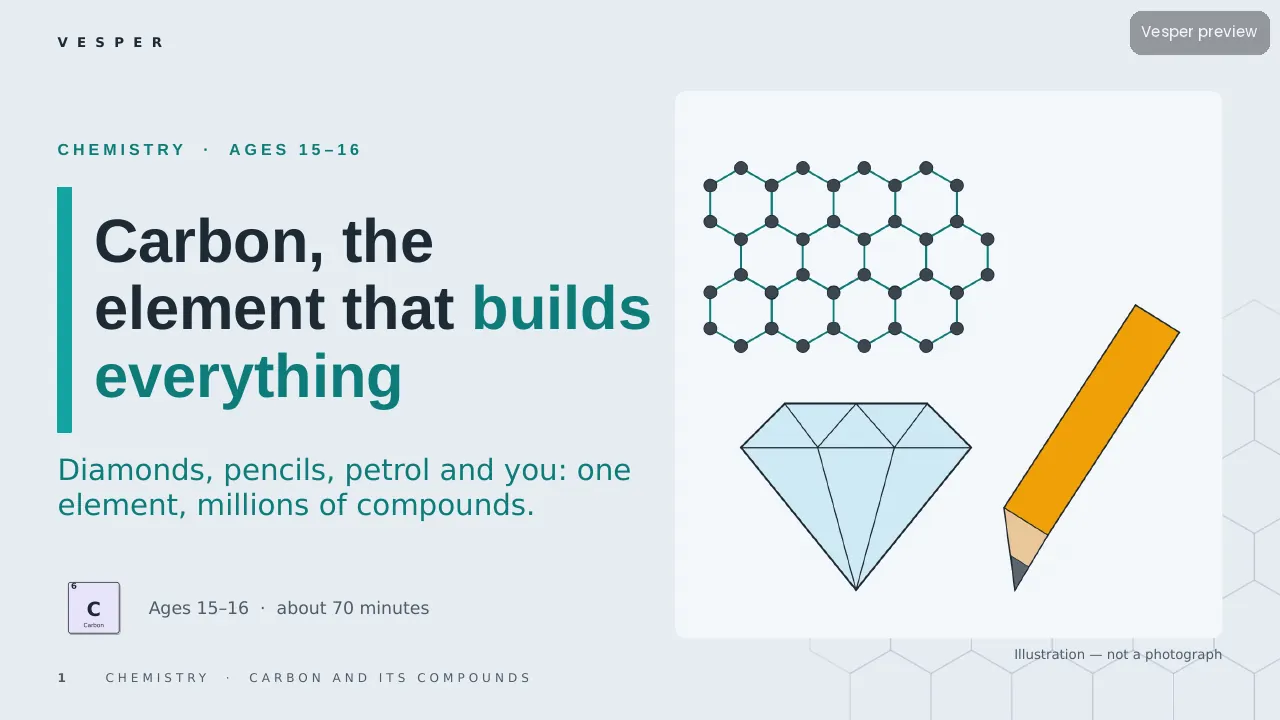
Carbon, the element that builds everything
Pricing coming soon -
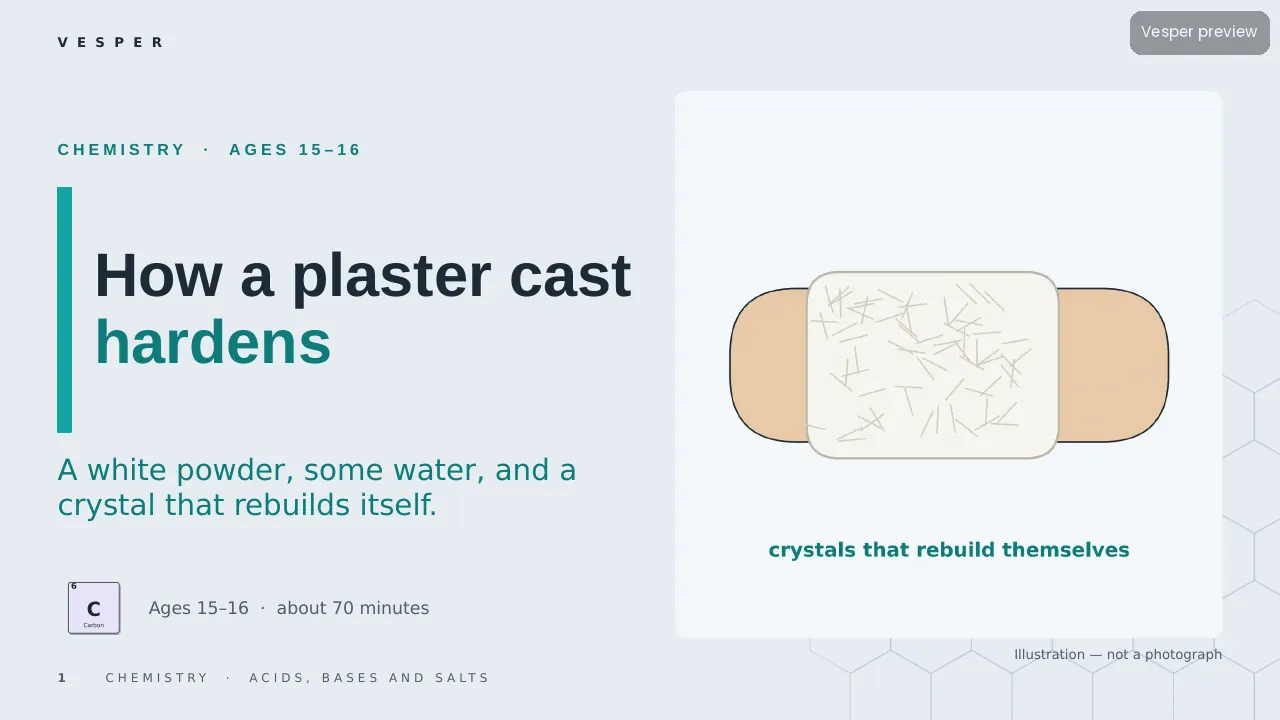
How a plaster cast hardens
Pricing coming soon -
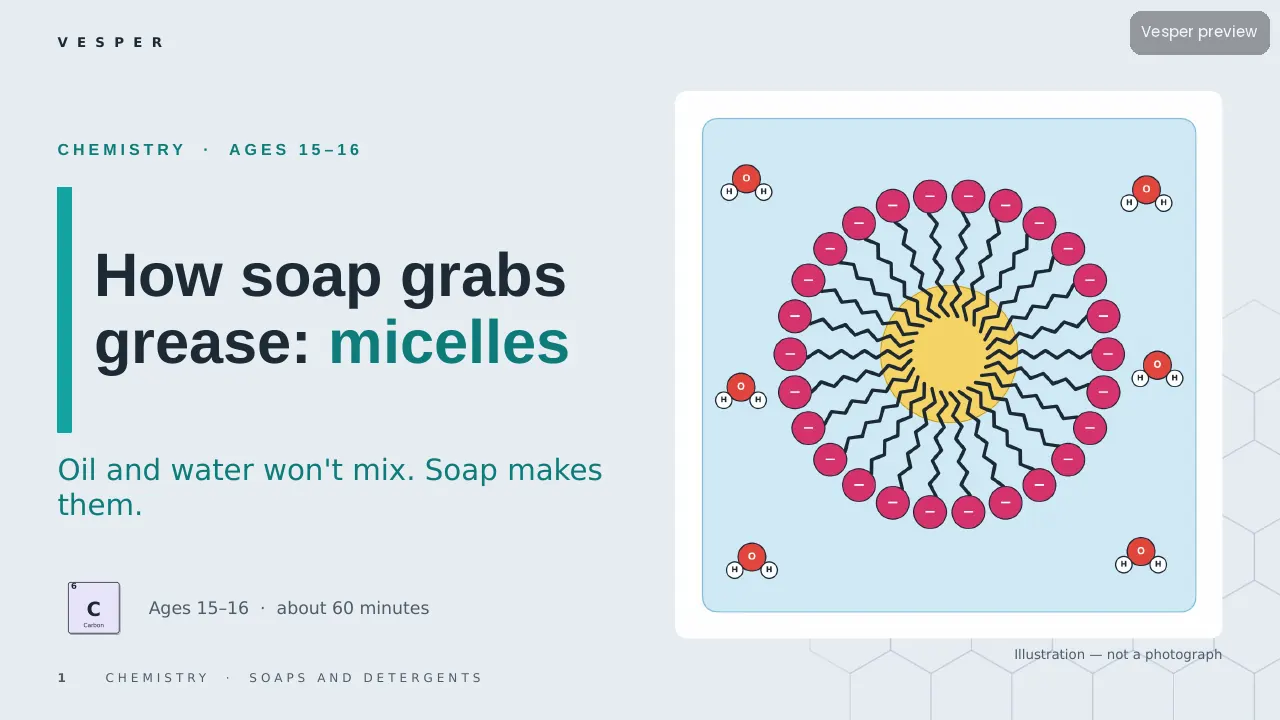
How soap grabs grease: micelles
Pricing coming soon -
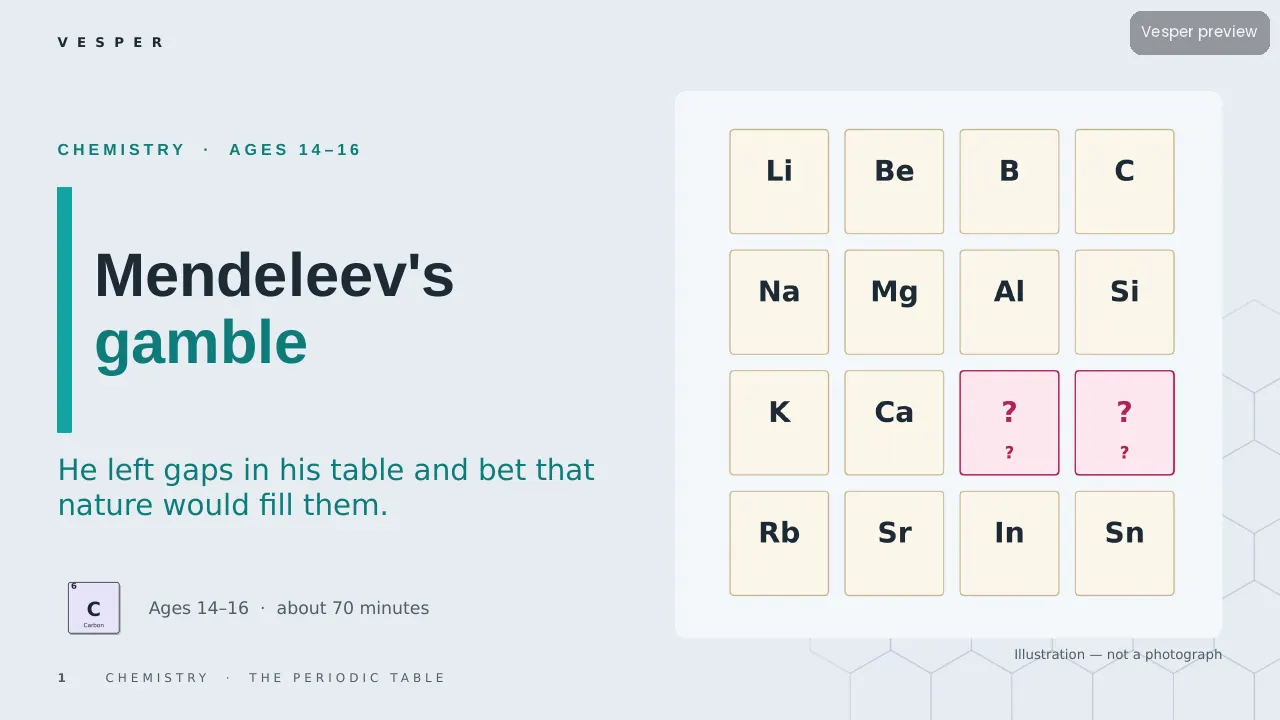
Mendeleev’s gamble
Pricing coming soon -
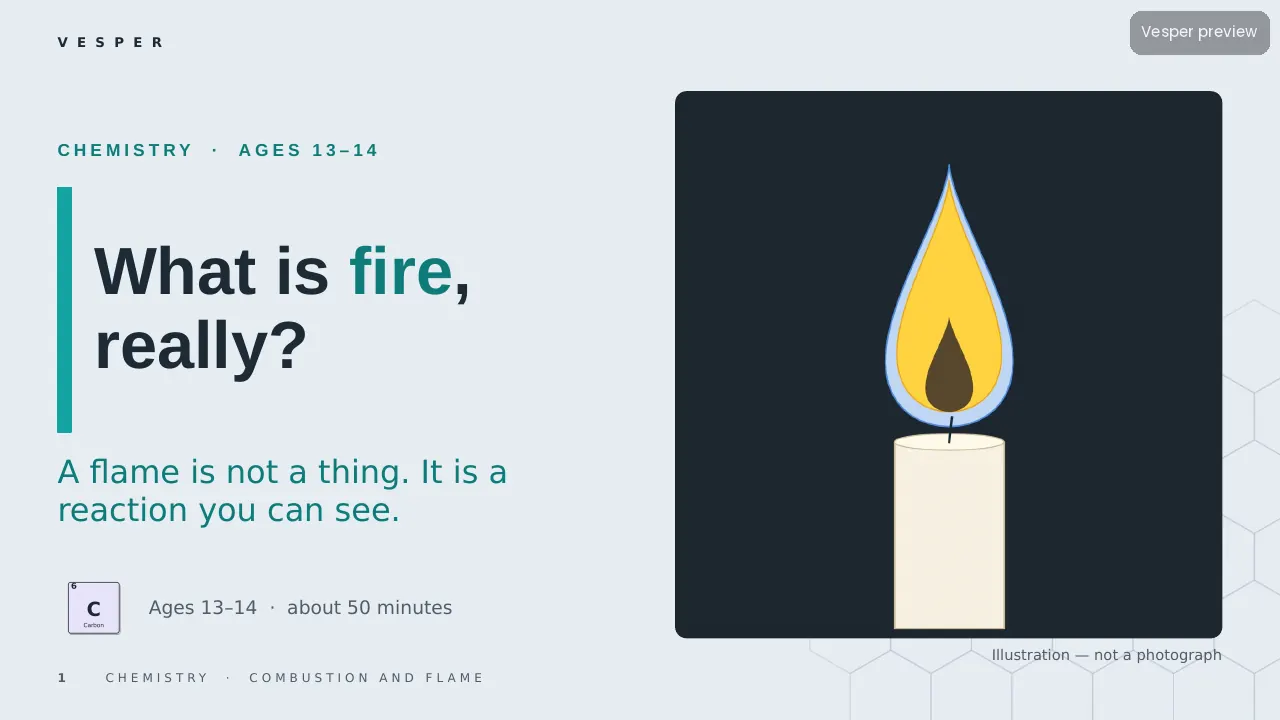
What is fire, really?
Pricing coming soon -
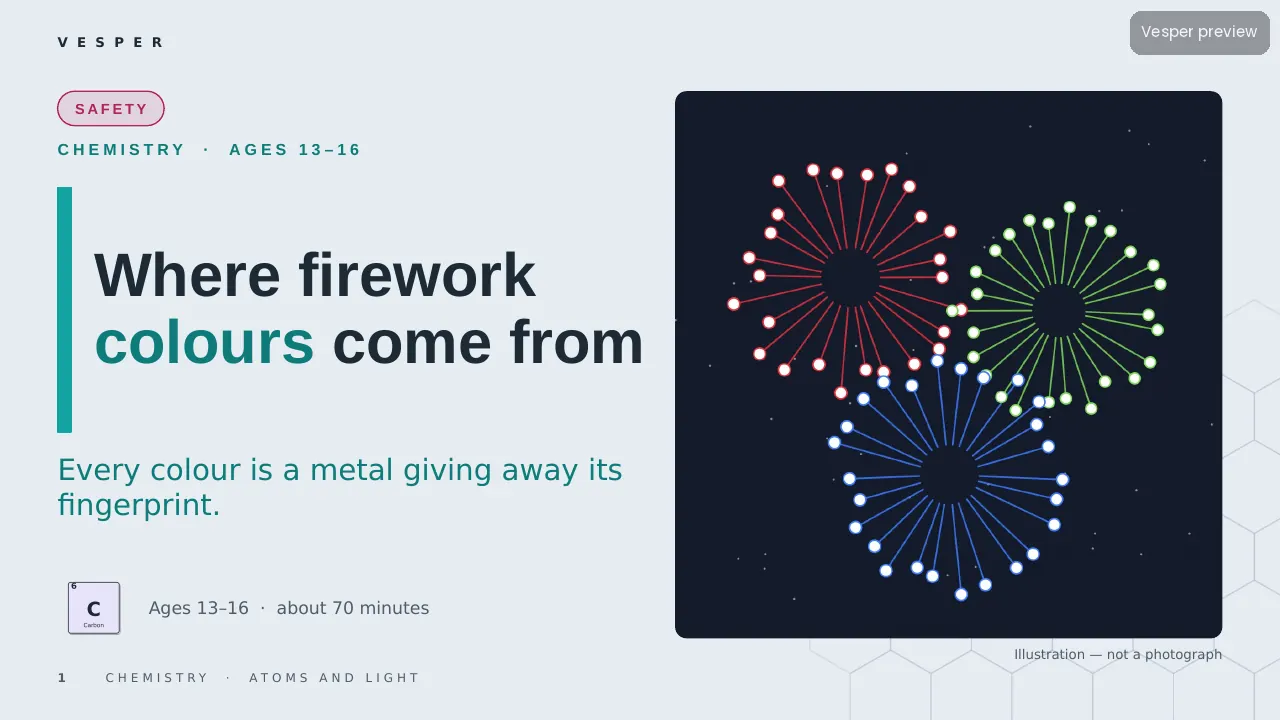
Where firework colours come from
Pricing coming soon -
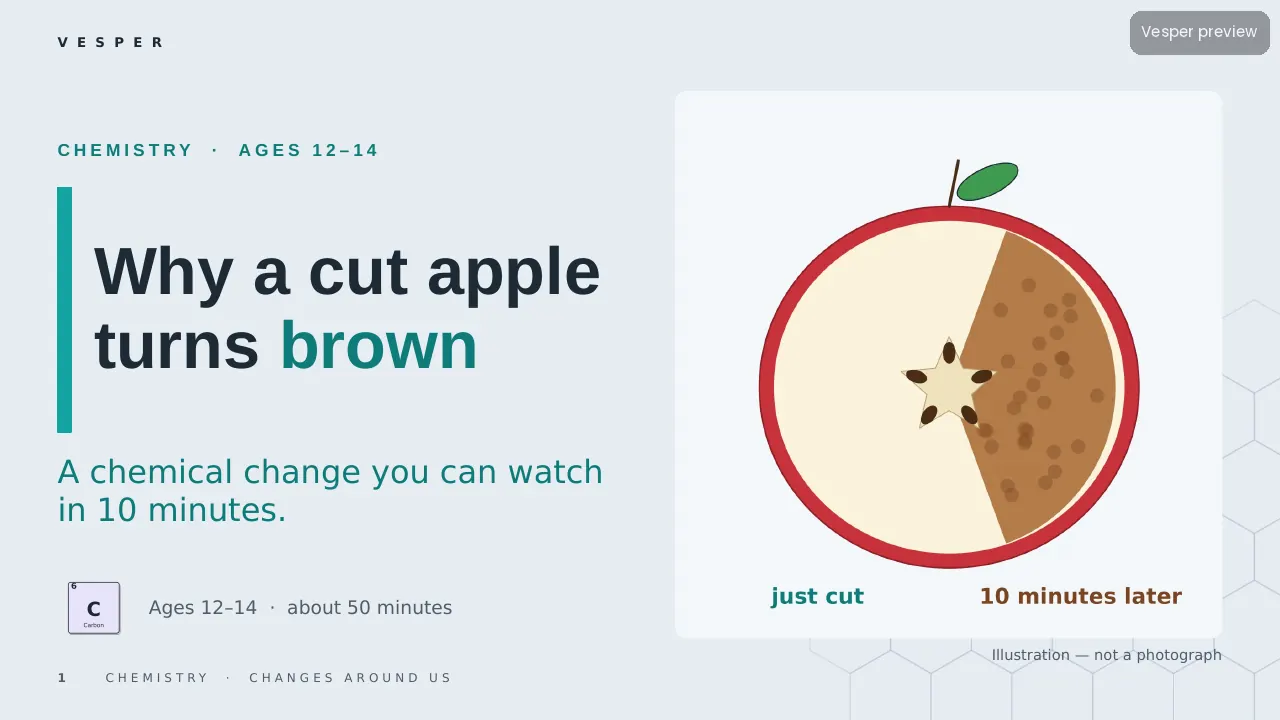
Why a cut apple turns brown
Pricing coming soon -
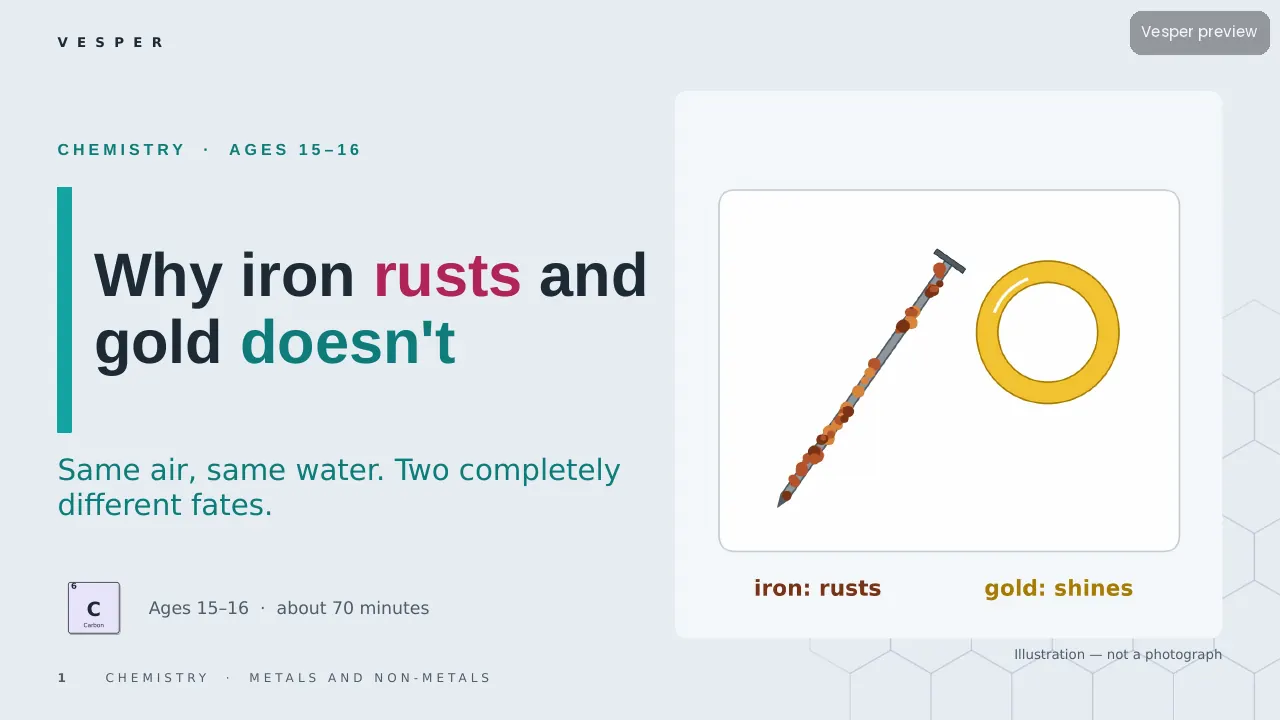
Why iron rusts and gold doesn’t
Pricing coming soon -
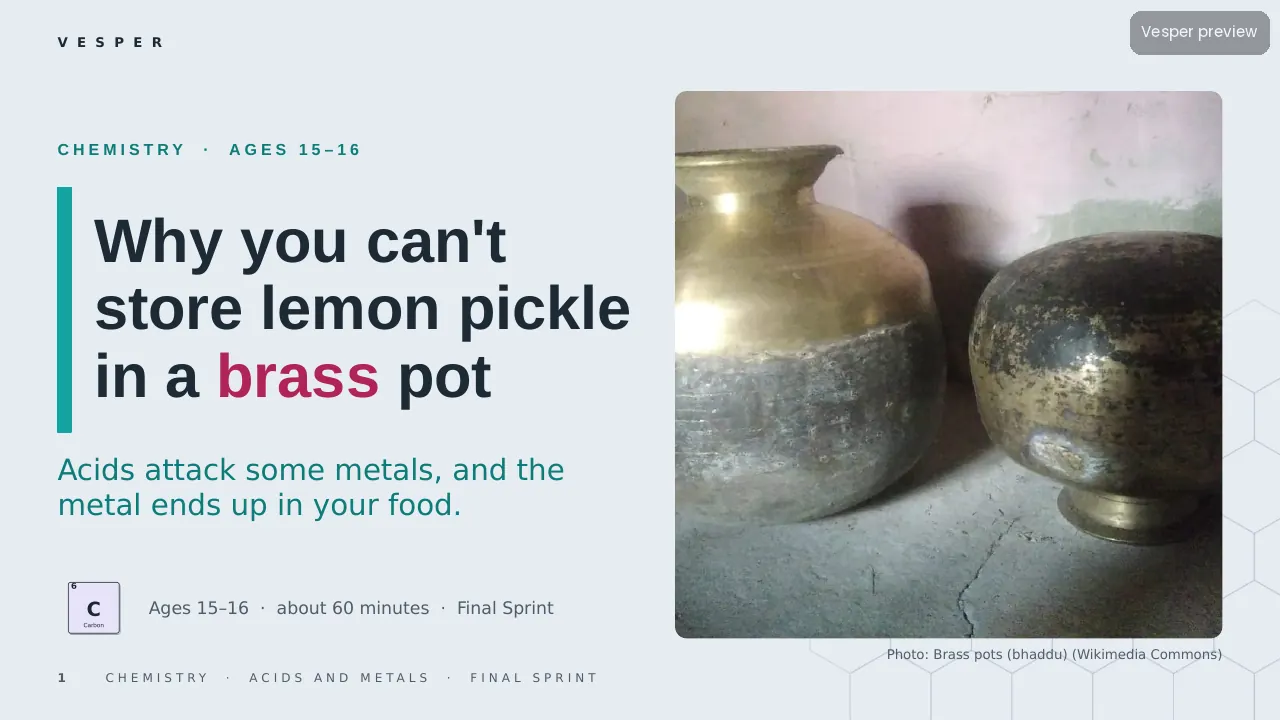
Why you can’t store lemon pickle in a brass pot
Pricing coming soon -
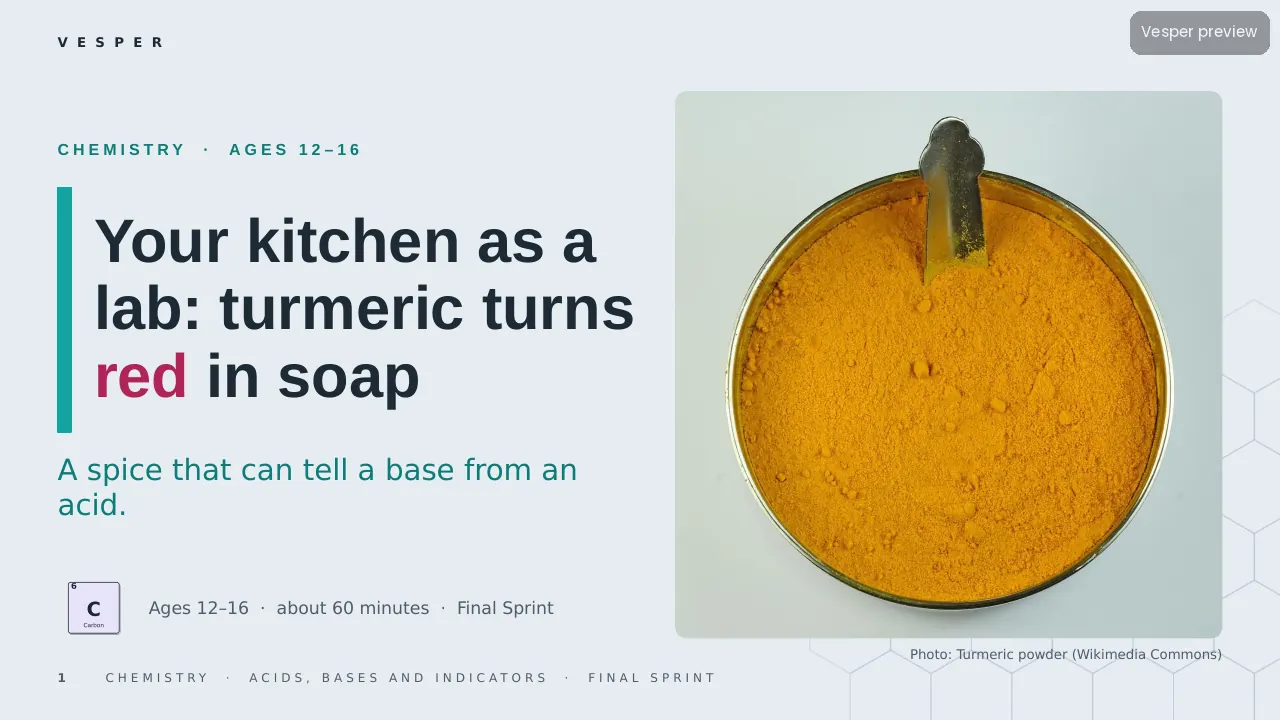
Your kitchen as a lab: turmeric turns red in soap
Pricing coming soon
Questions
Questions, answered
Are the experiments safe to do at home?
The home experiments use everyday materials such as apples, soap, turmeric and baking soda, and each one comes with safety notes. Anything that needs a lab is shown, not set as a task.
Are the chemical equations checked?
Yes. Every equation in the chemistry decks is checked atom by atom before the deck is published.
Which ages are the chemistry lessons for?
Ages 12 to 16. Each lesson page shows its range; balancing equations and rusting are pitched at 15–16.
What is in a chemistry Teacher Deck?
An editable PowerPoint on the Flask template with notes on every slide, a PDF copy and the blank template, so you can add slides of your own.
Coming soon
0 Chemistry lessons in production
These are planned and cannot be bought yet. Each one joins the library when it is finished and checked. See every discipline
- Why a cut apple turns brown Ready now Ages 12–14
- Your kitchen as a lab: turmeric turns red in soap Ready now Ages 12–16
- Balancing equations with atom accounting Ready now Ages 15–16
- Why iron rusts and gold doesn’t Ready now Ages 15–16
- Carbon, the element that builds everything Ready now Ages 15–16
- How soap grabs grease: micelles Ready now Ages 15–16
- What is fire, really? Ready now Ages 13–14
- Mendeleev’s gamble Ready now Ages 14–16
- Baking soda vs baking powder: kitchen chemistry Ready now Ages 12–16
- Where firework colours come from Ready now Ages 13–16
- Why you can’t store lemon pickle in a brass pot Ready now Ages 15–16
- How a plaster cast hardens Ready now Ages 15–16
Free lesson
Your first lesson is on us.
Email us and we will send you a complete lesson as a PDF, free. We will not add you to a mailing list unless you ask. Under 16? Ask a parent or guardian to email for you.