About this lesson
What students discover
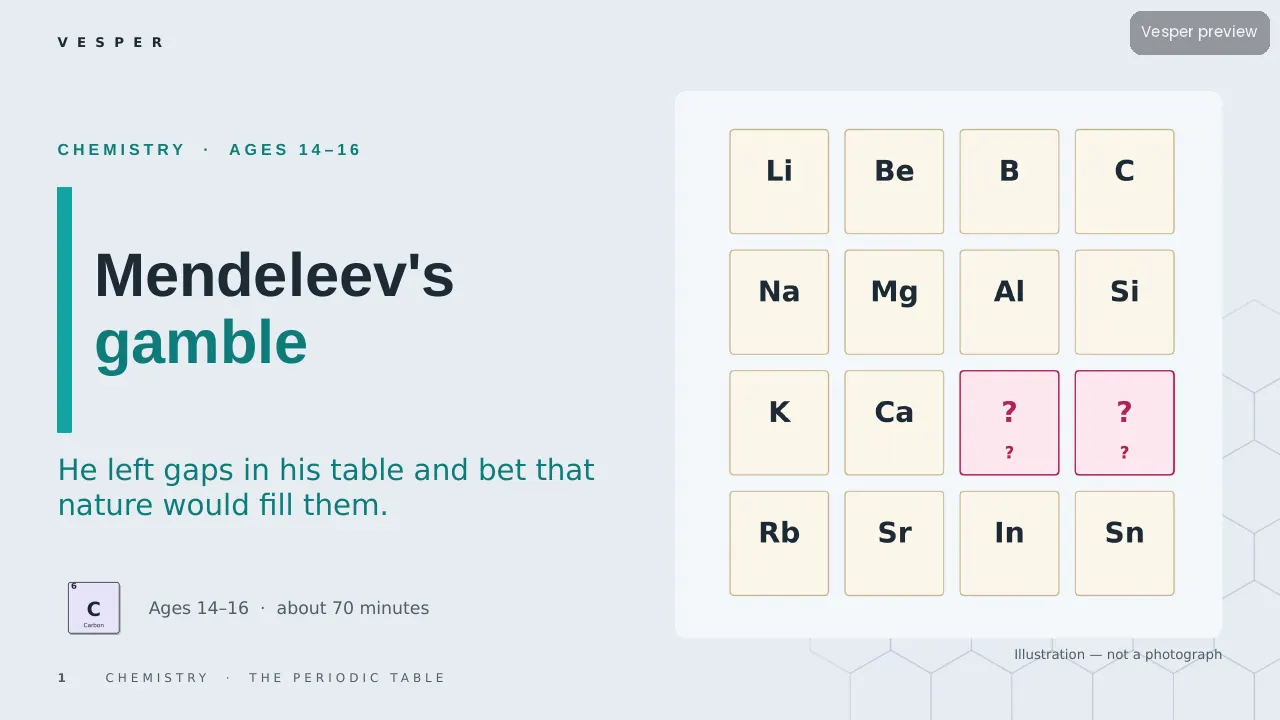
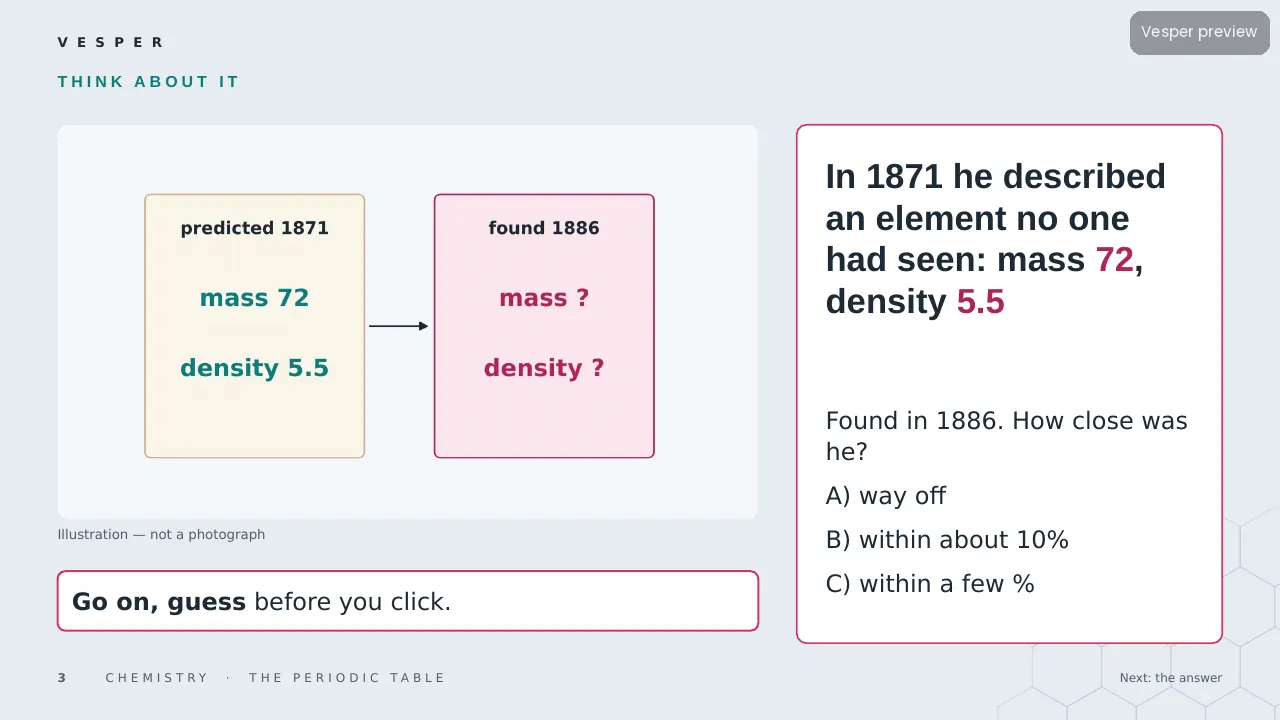
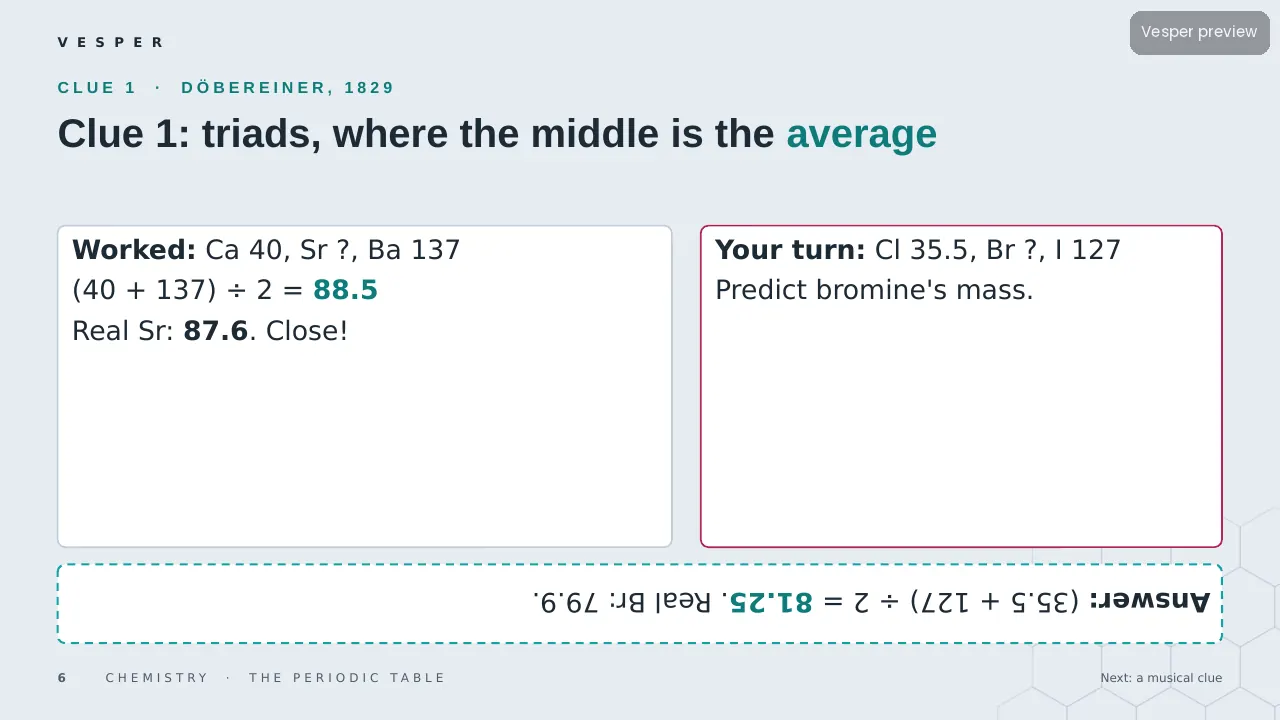
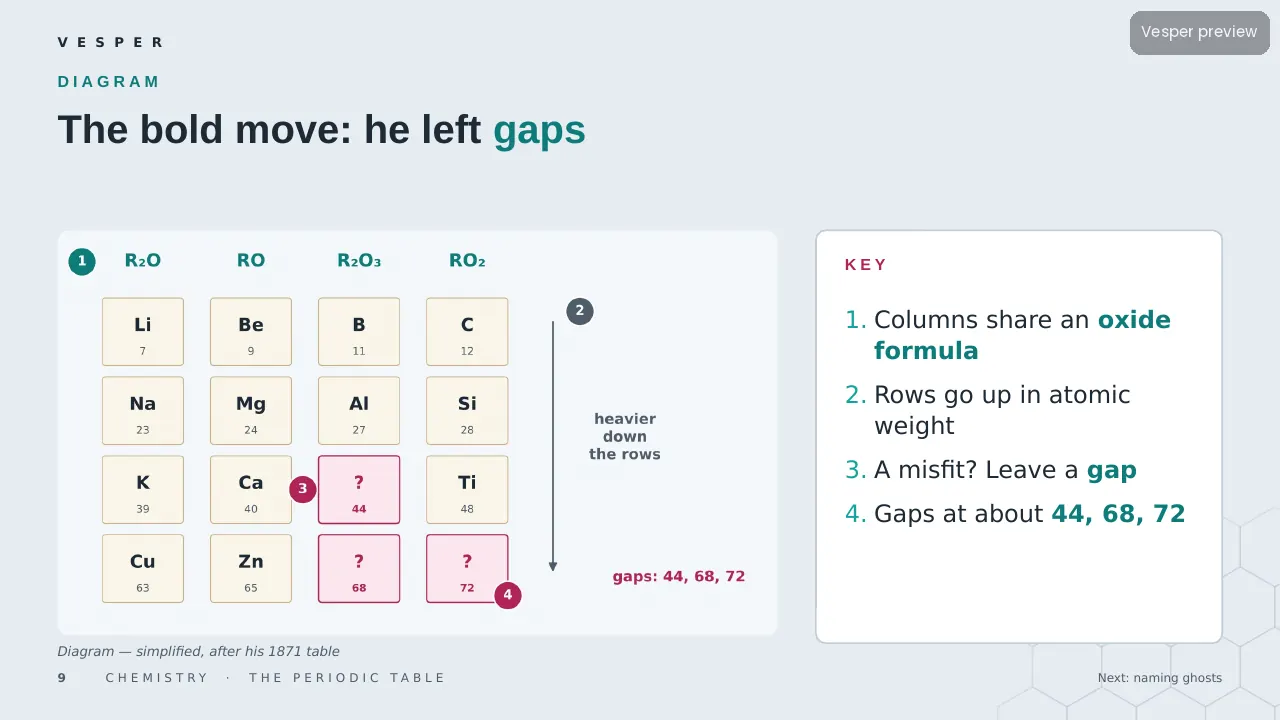
In 1871 Dmitri Mendeleev described an element nobody had found: atomic mass 72, density 5.5. In 1886 germanium turned up with 72.6 and 5.3. Students work through the clues he had (Döbereiner’s triads, Newlands’ octaves), see how he sorted elements like cards by weight and family, and why he left gaps and named them in Sanskrit: eka-boron, eka-aluminium, eka-silicon.
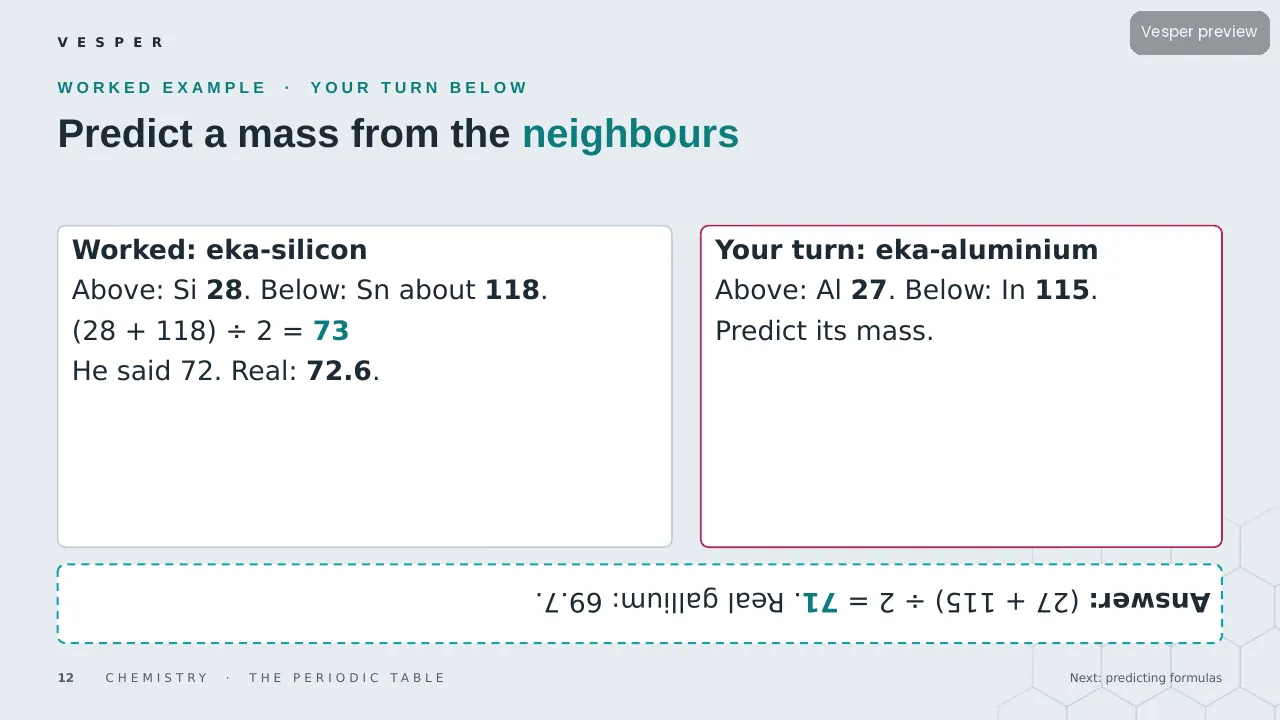
Then they predict like he did: masses from neighbours, formulas from columns, with balanced equations for GeCl4 and Ga2O3, and they score his predictions with a percentage error. The story goes on to the gallium density he corrected, the tellurium-iodine swap that Moseley’s atomic numbers proved right in 1913, the noble gases, and a prediction that failed.
Inside the deck
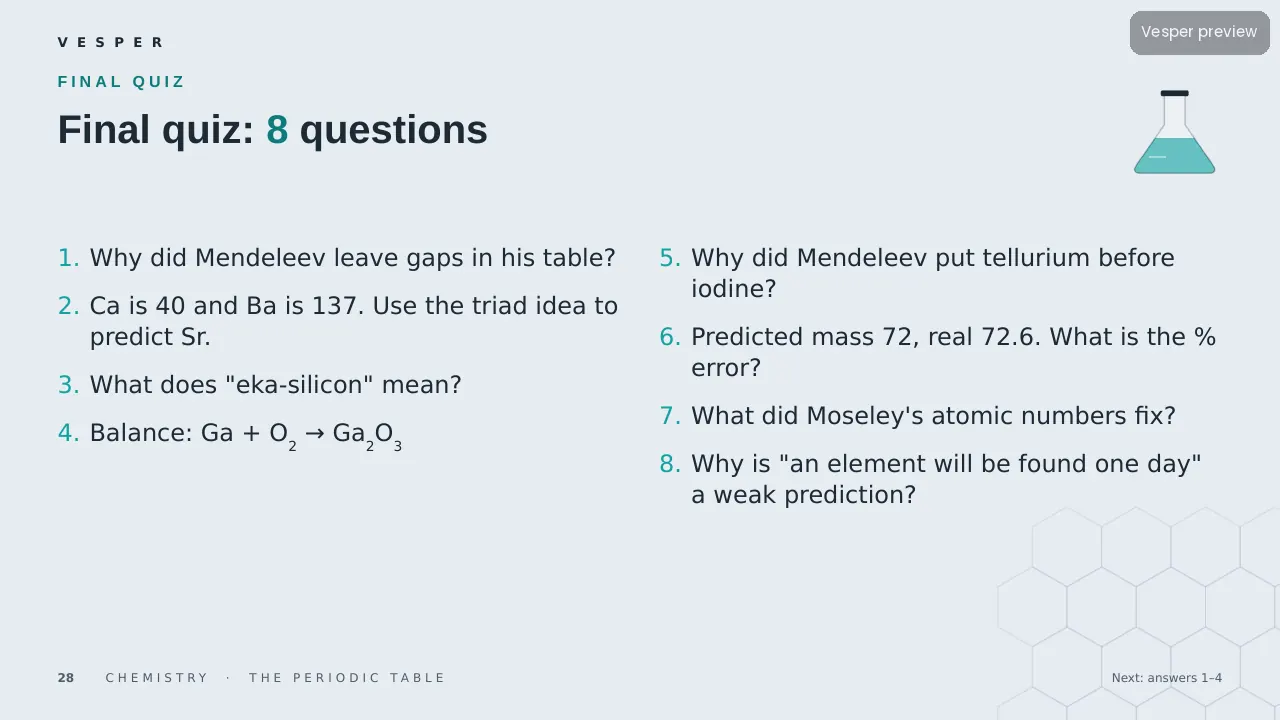
32 slides on the Flask template with worked examples, two your-turn predictions, a spot-the-mistake on tellurium and iodine, a quick poll on what makes a good prediction, two checkpoints and an 8-question quiz with explained answers. A paper card game (elements 1–20, a partner hides three cards) lets learners play his game.
How to teach it
Plan on about 70 minutes. Open with the 1871 prediction and the three-option guess, then reveal germanium’s real values. The card game on slide 24 works in pairs in 10 minutes. The ‘dream’ story is labelled as legend, so you can discuss how science stories grow. Notes on every slide give Say, Ask, Watch for and Time.
Who it’s for
For ages 14–16 studying the periodic table, atomic number and the nature of science. It also suits a history-of-science lesson. The PowerPoint is editable, with named layouts for your own slides.