About this lesson
What students discover
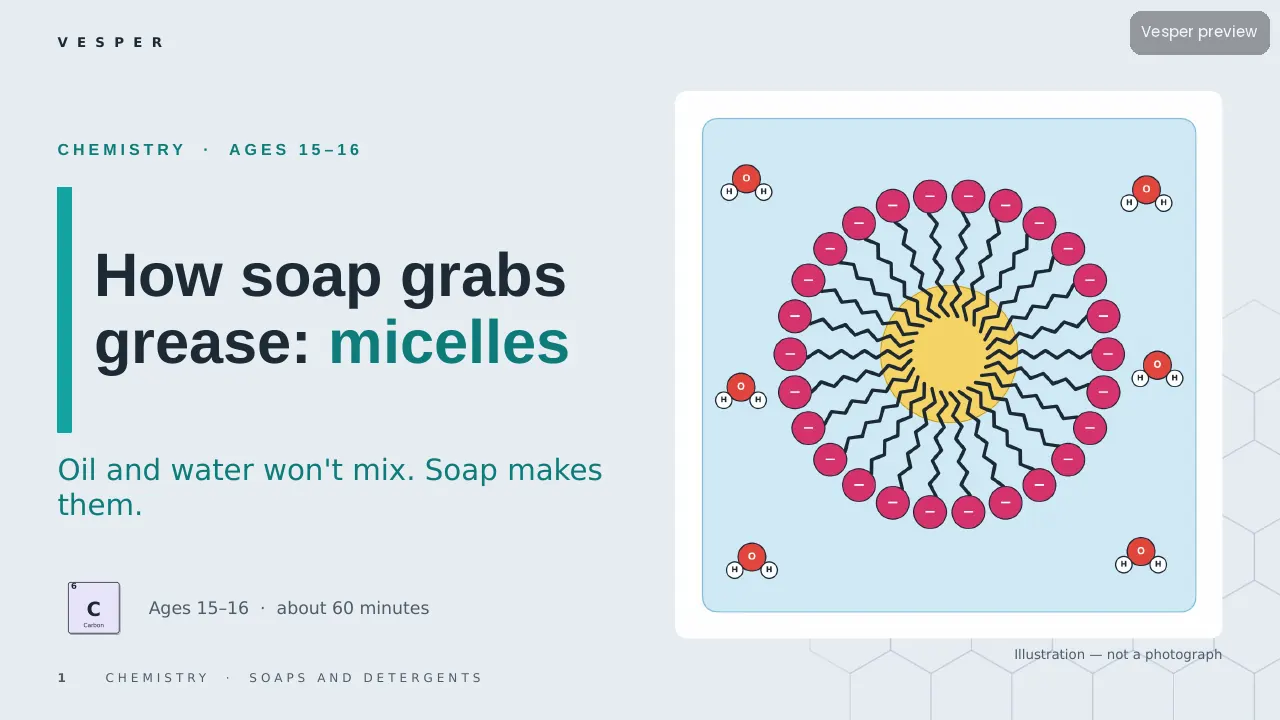
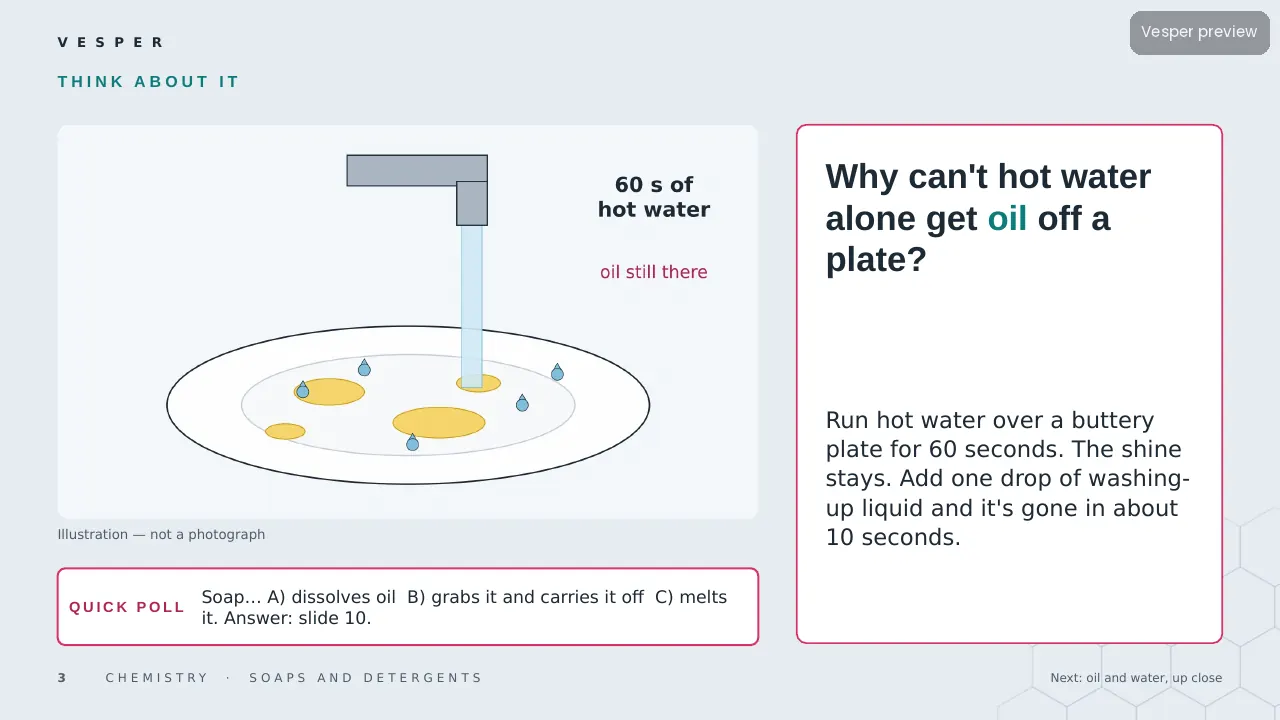
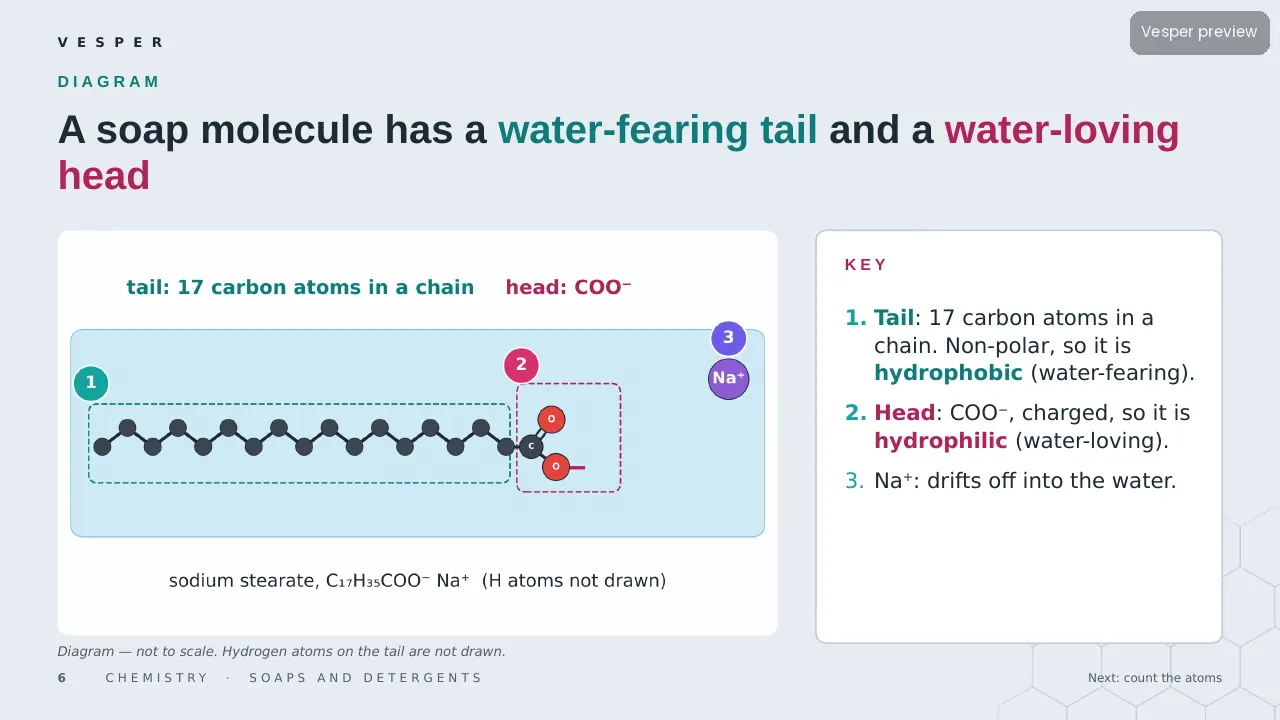
Hot water can’t shift a greasy plate; one drop of soap can. Students meet polar and non-polar molecules, then a real soap molecule, sodium stearate, with its water-fearing tail and water-loving head. A four-step diagram shows tails digging into grease and sealing it inside micelles about 4 nm across, holding about 60 molecules each, that repel each other and rinse away.
The second half covers saponification (1 fat + 3 NaOH → 3 soap + 1 glycerol) and hard water: why calcium and magnesium ions turn soap into scum, and how a detergent’s sulfonate head avoids it. Every equation is balanced with a full atom count.
Inside the deck
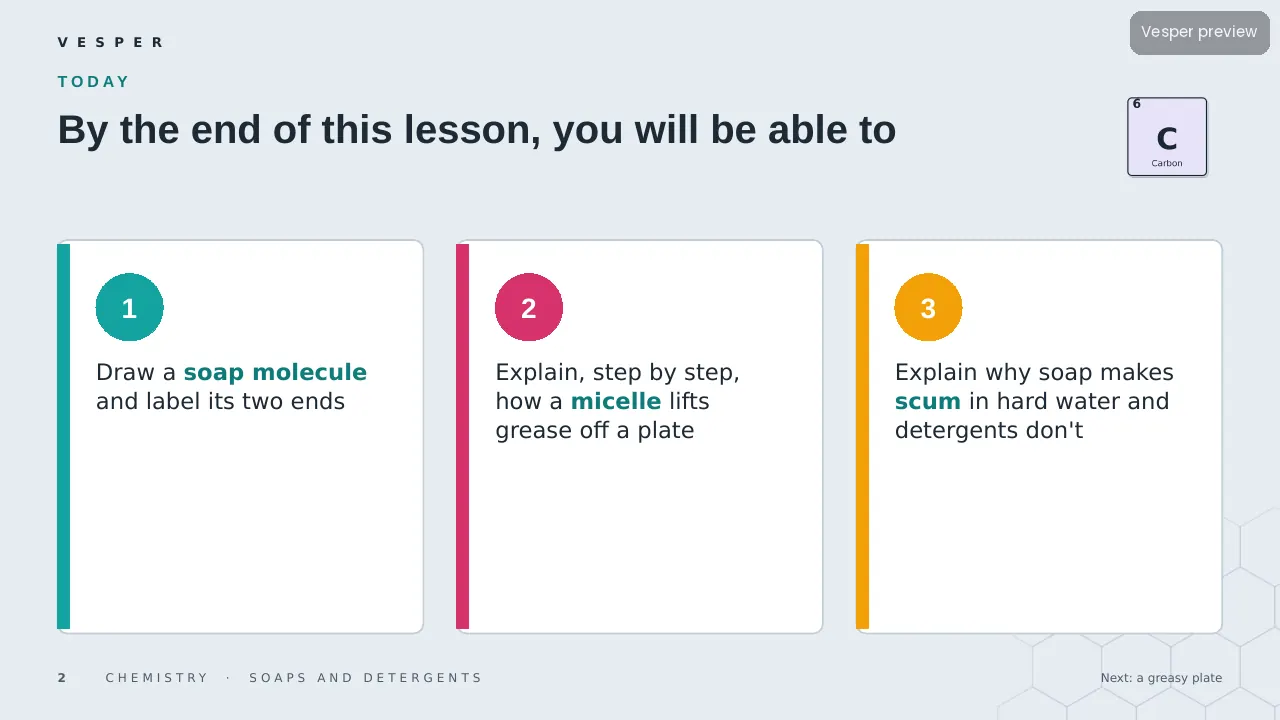
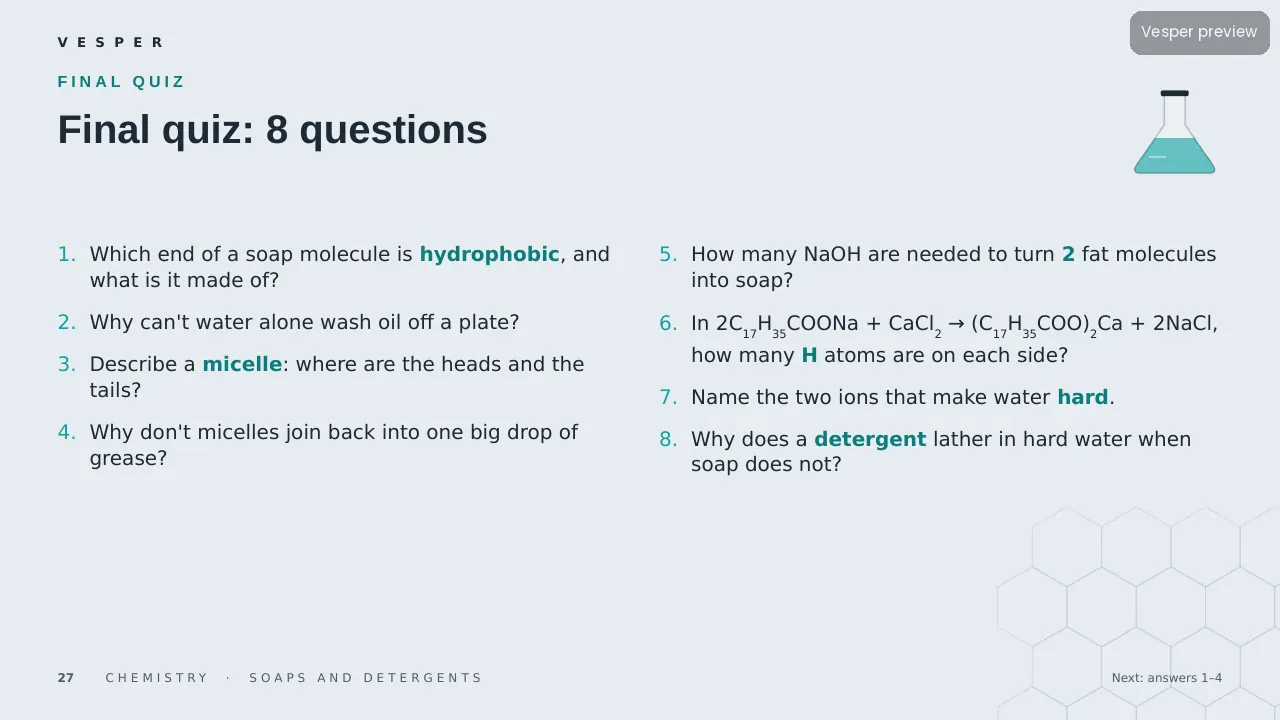
32 slides on the Flask template with guess-first polls, a pause-and-predict on which end dives into the grease, a spot-the-mistake micelle, a your-turn on saponification, a myth slide (‘more foam means cleaner’), a real-world slide linking soap to bile in your gut, two checkpoints and an 8-question quiz with explained answers.
How to teach it
Allow about 60 minutes. The safe at-home lather test on slide 20 uses Epsom salt to make hard water; it also works as a quick demonstration with two bottles. Ask students to draw a micelle before slide 14 so they can spot the mistake in someone else’s. Notes on every slide are detailed enough for students to work through the deck alone.
Who it’s for
For ages 15–16 studying carbon compounds, soaps and detergents, and polar and non-polar molecules. The PowerPoint is editable, with named layouts.