About this lesson
What students discover
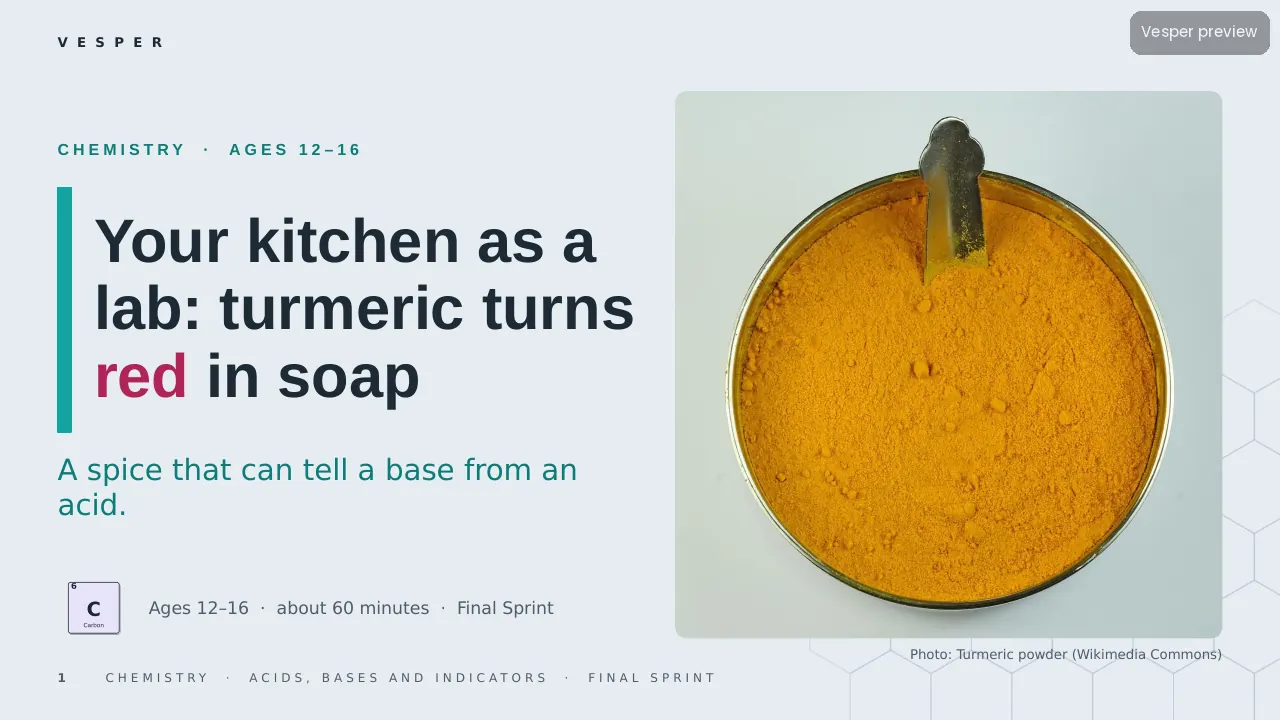
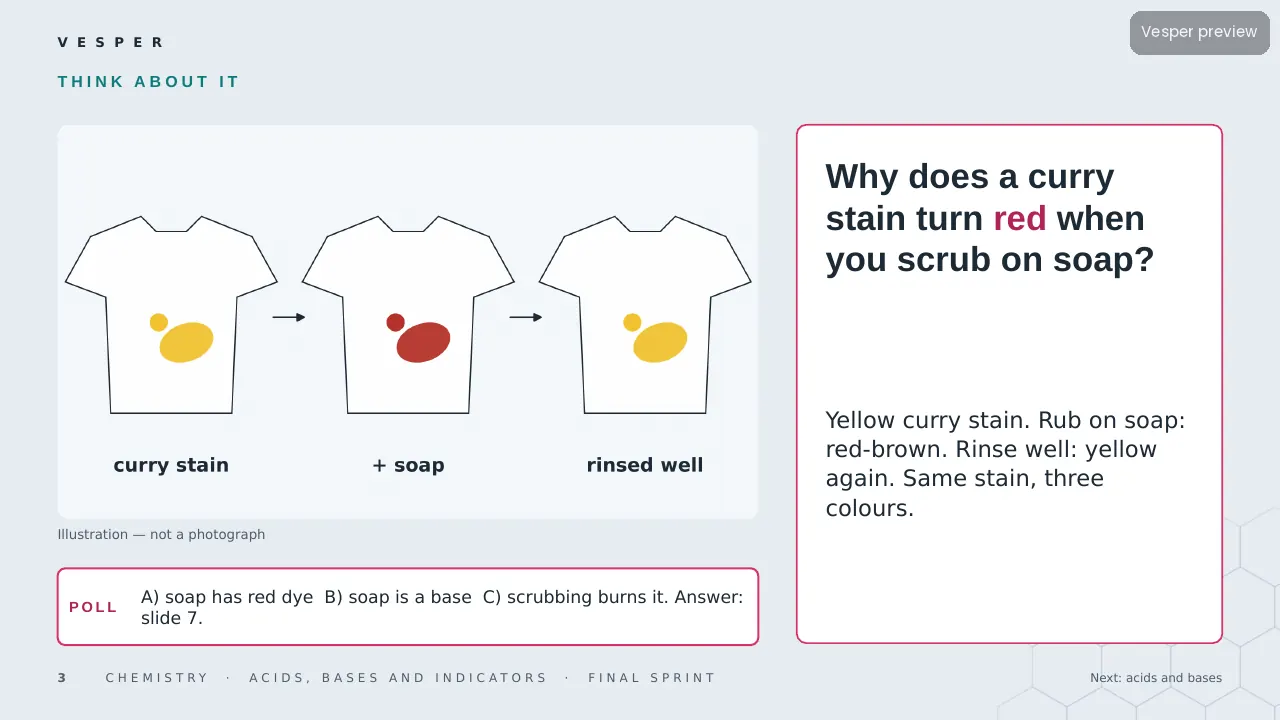
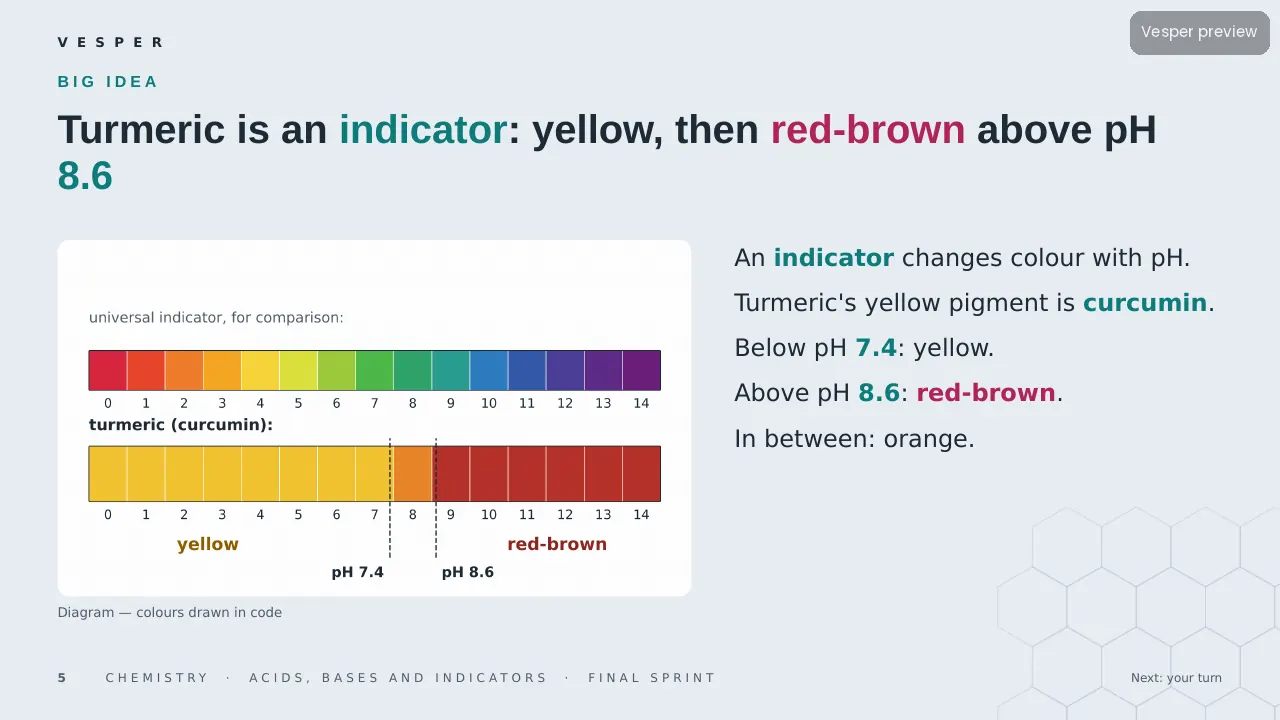
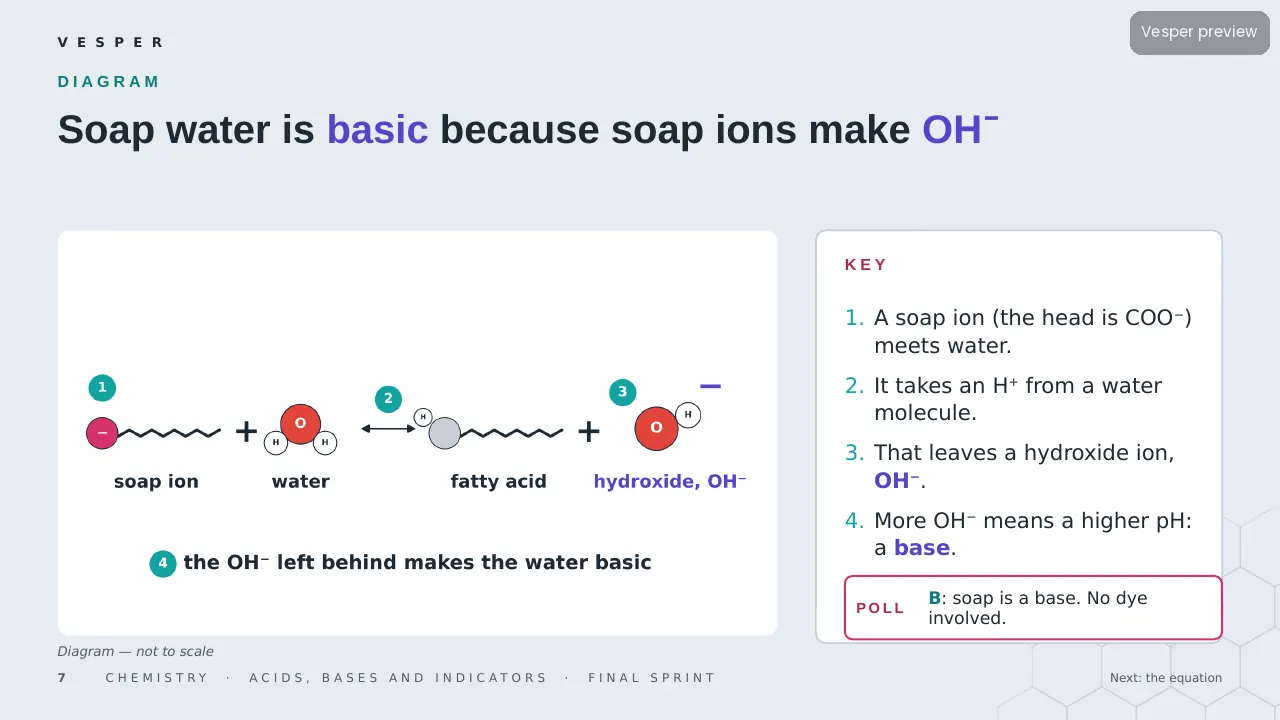
A curry stain turns red-brown when you scrub on soap, then yellow again when you rinse. Students meet the pH scale with real kitchen values, then turmeric’s indicator, curcumin: yellow below pH 7.4, red-brown above 8.6. A diagram and a balanced equation, with full atom and charge counts, show why soap water is basic: soap ions take H⁺ from water and leave OH⁻.
Students learn that pH is a ×10 scale (pH 10 has 1,000 times fewer H⁺ than pH 7), that the colour change is reversible, and that H⁺ + OH⁻ → H₂O brings the yellow back. They also learn what turmeric cannot show: it stays yellow in acids and in neutral water alike.
Inside the deck
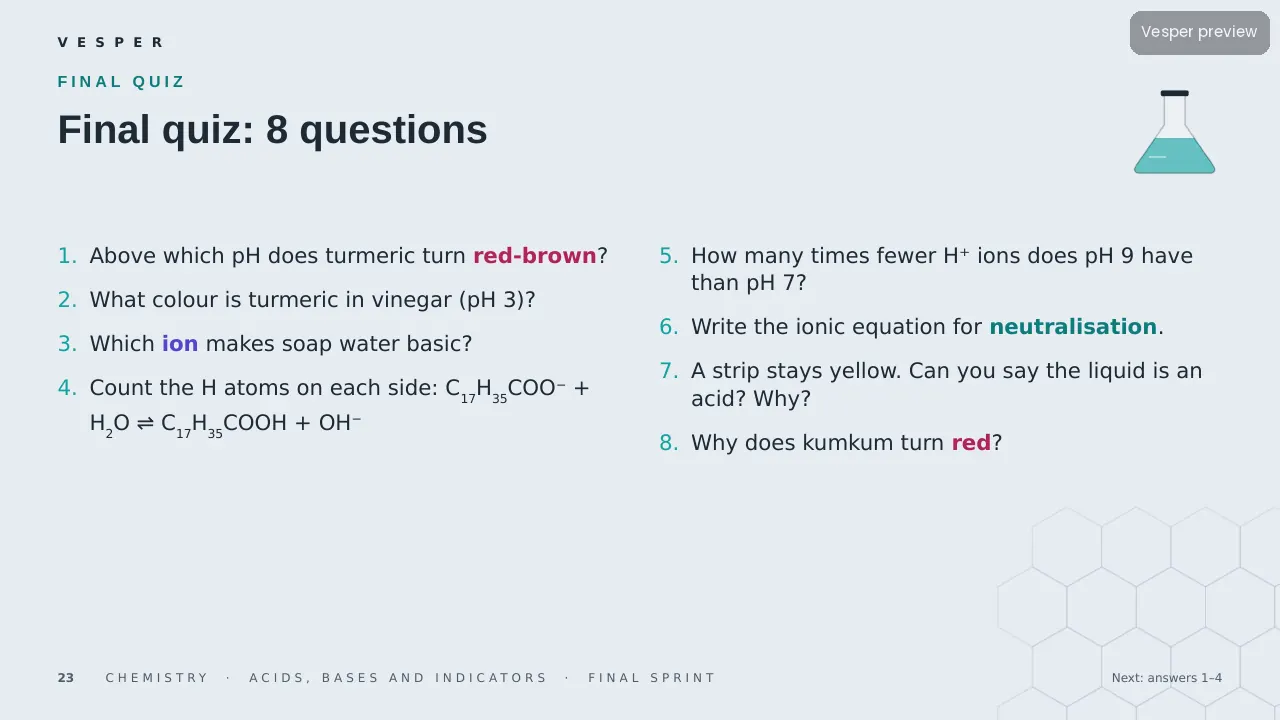
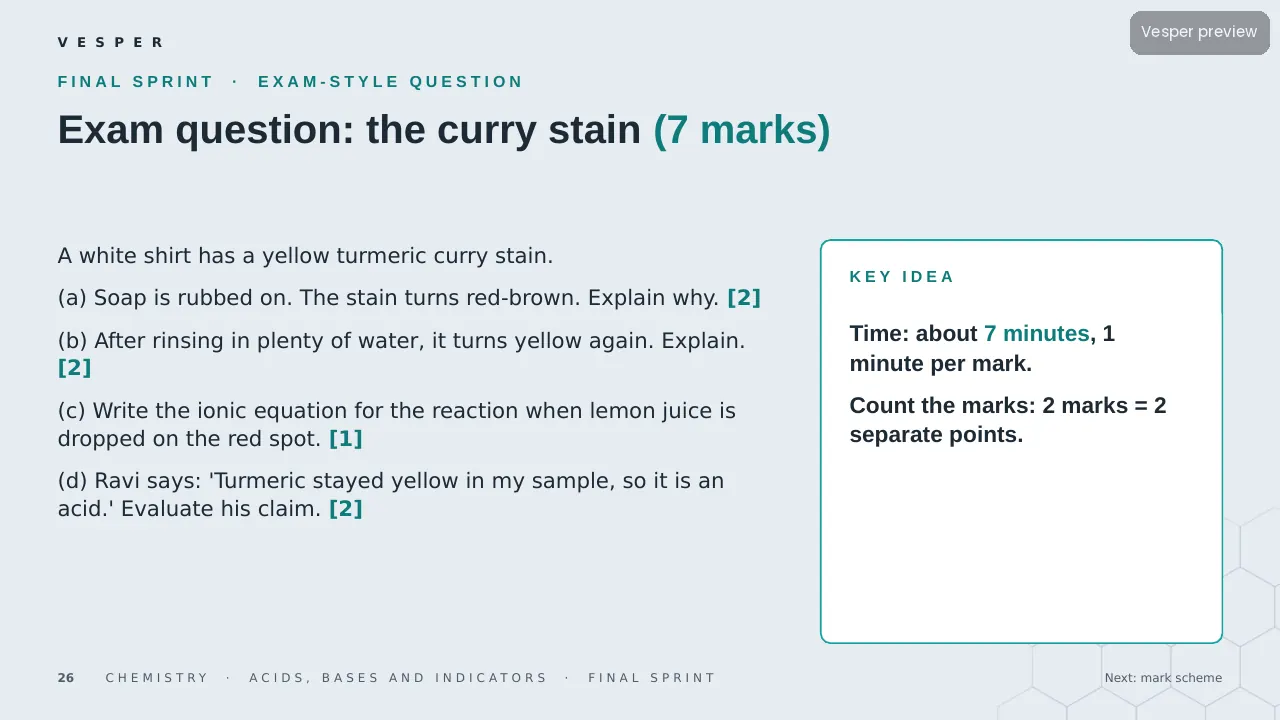
30 slides on the Flask template. A predict-the-colour your-turn, a pause-and-predict with lemon juice, a safe at-home turmeric-paper test of five kitchen liquids with a results table, a spot-the-mistake, an indicator comparison, a myth slide (‘red always means acid’) and the chemistry of kumkum. Two checkpoints, an 8-question quiz with explained answers and a 7-mark exam question with a full mark scheme.
How to teach it
Allow about 60 minutes. The turmeric-paper test on slide 14 needs turmeric, water, paper strips and five liquids such as lemon juice, vinegar, water, baking soda solution and soap solution; it can run as a class practical or as homework. Give about seven minutes for the exam question before the mark scheme. Notes on every slide give Say, Ask, Watch for and Time.
Who it’s for
For ages 12–16 studying acids, bases, indicators and neutralisation. Part of The Final Sprint, 15 exam lessons that each end with an exam-style question and mark scheme.