About this lesson
What students discover
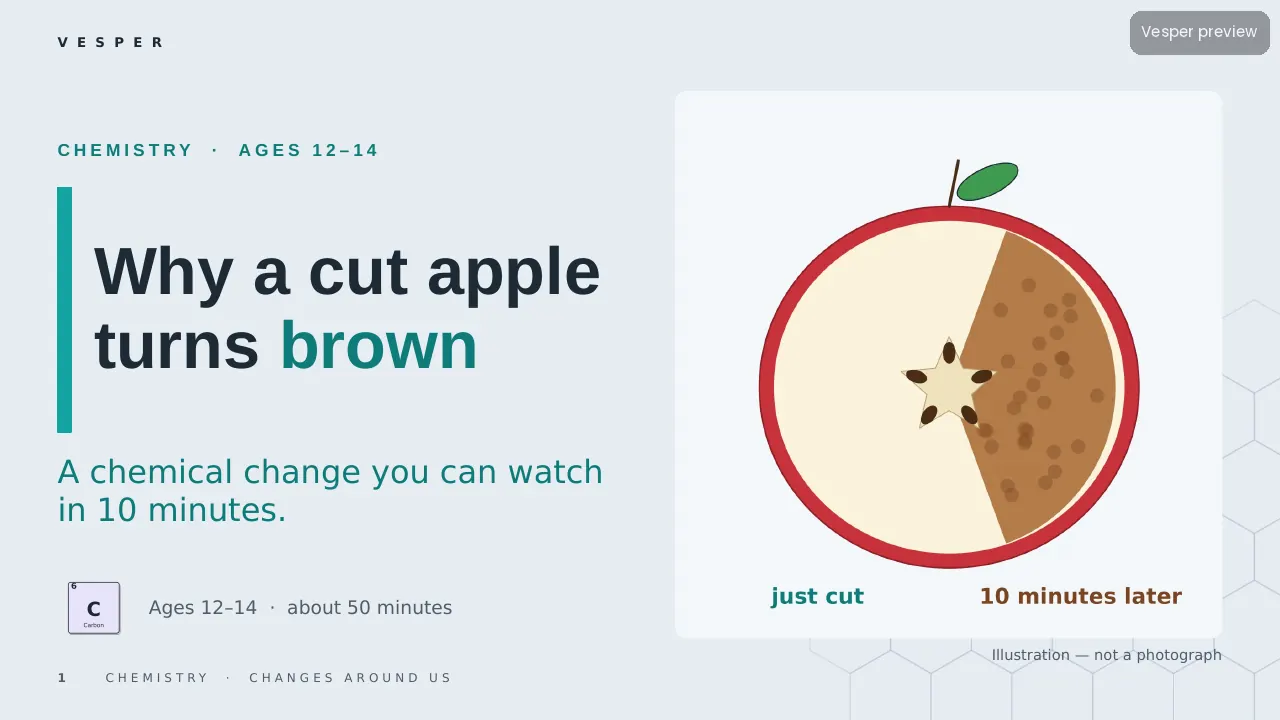
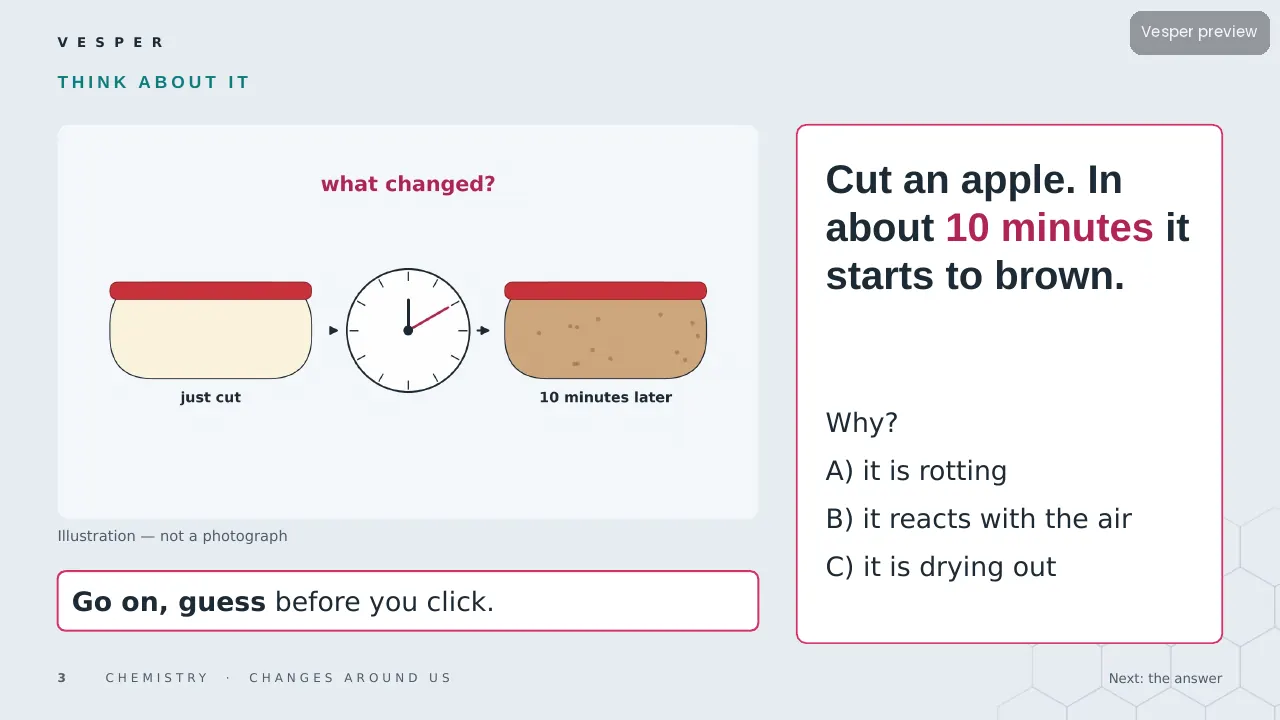
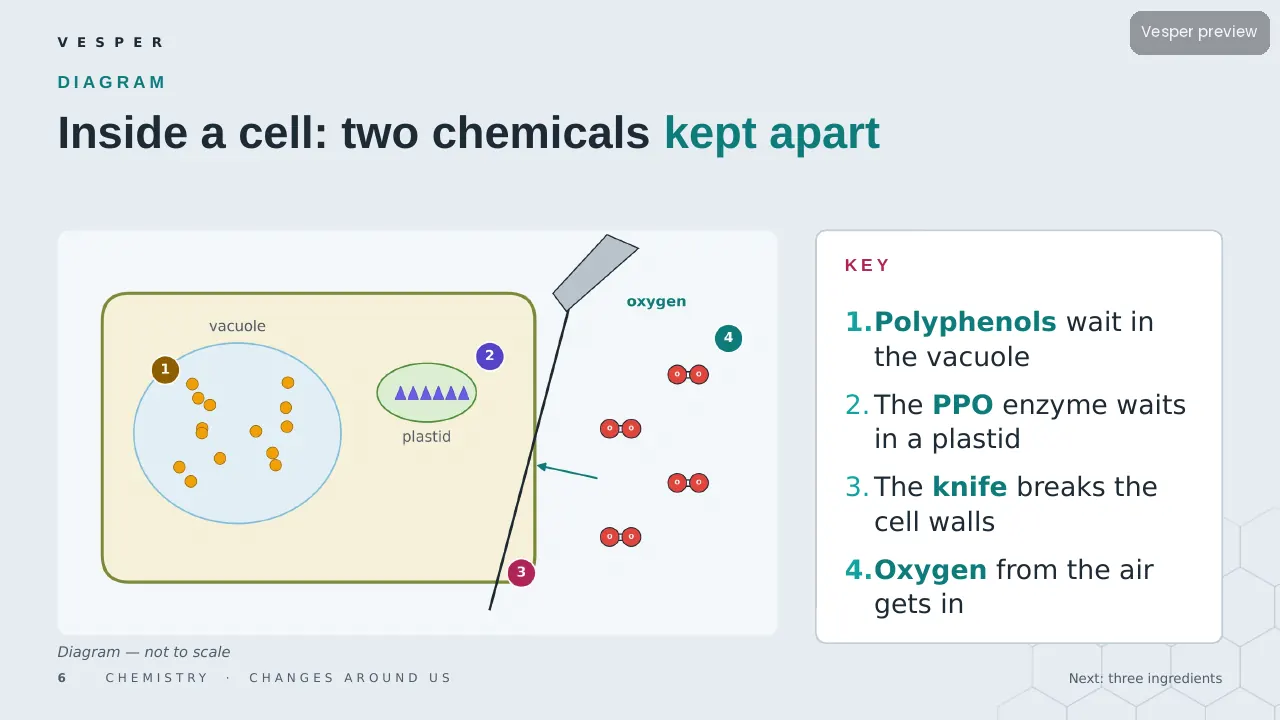
Every lunchbox has seen it: cut at 12:00, brown by 12:15. Most students guess it is rotting. It isn’t. Inside each apple cell, polyphenols sit in the vacuole and the enzyme PPO waits in a separate plastid. A knife breaks the walls, oxygen gets in, and the browning triangle is complete: polyphenols, oxygen, PPO. Remove any one side and the browning stops.
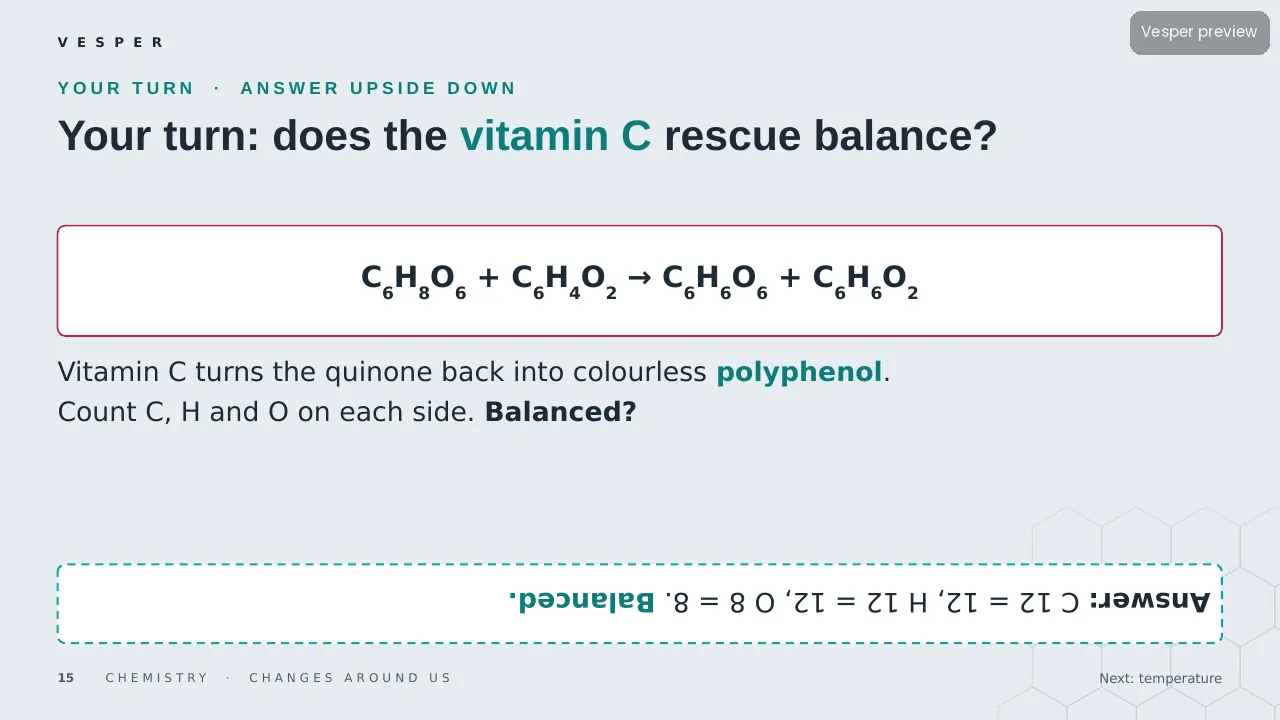
Students decide whether browning is a physical or chemical change, then count atoms in the reaction (12 carbon, 12 hydrogen and 6 oxygen on each side). They meet melanin, the brown pigment chain, read a pH scale where lemon juice sits at about pH 2, and check a vitamin C equation for themselves.
Inside the deck
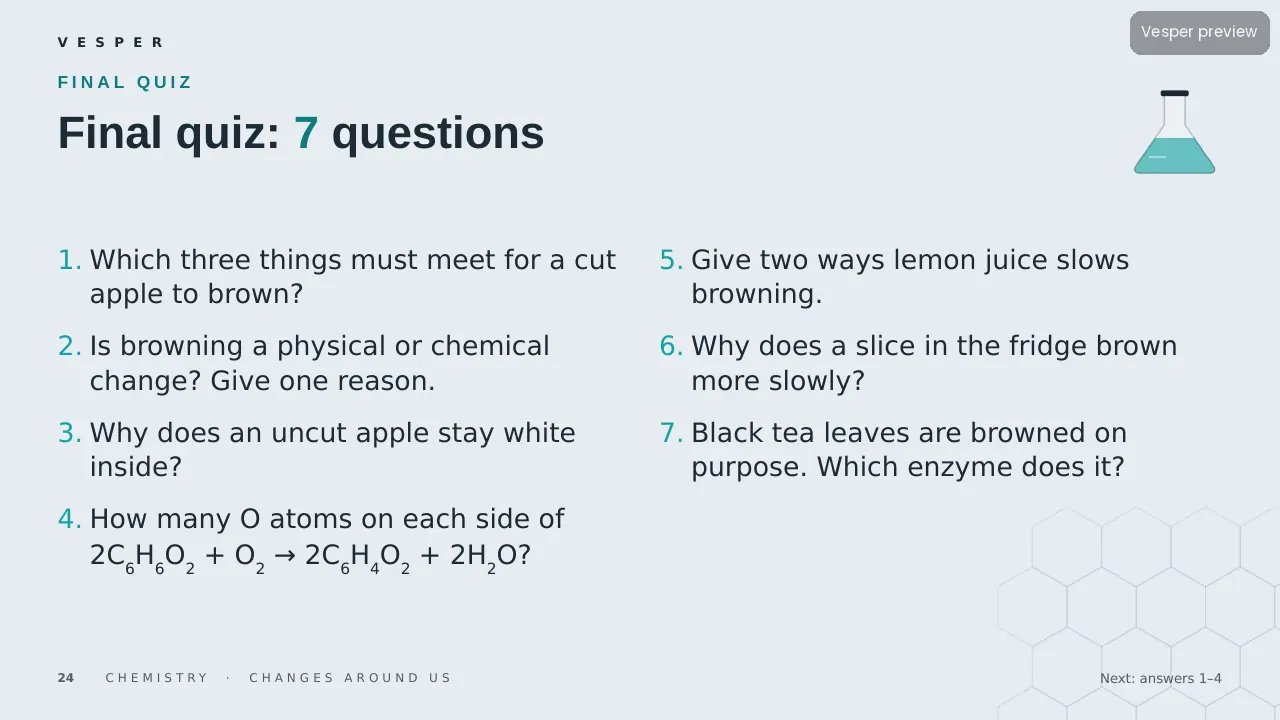
28 slides on the Flask template: a guess-first hook, a quick poll, a numbered cell diagram, an atom-ledger worked example and a your-turn with the answer upside down. Riya’s ‘my apple is rotting, bin it’ is the spot-the-mistake slide. A pause-and-predict compares a fridge slice at 4 °C with a table slice at 25 °C. Two real-world turns follow: black tea is browned on purpose, and a non-browning apple was approved in the USA in 2015. There are two checkpoints and a seven-question quiz with explained answers.
How to teach it
About 50 minutes. Run the apple slice race (plain, lemon, salt water, cling film, fridge), scoring each slice 0 to 3 at 0, 30 and 60 minutes; an adult does the cutting. It doubles as a fair-test lesson, and the deck shows typical results so you can compare. Speaker notes give Say, Ask, Watch for and timing on every slide.
Who it’s for
Learners aged 12–14 meeting chemical change, enzymes or oxidation for the first time, and teachers who want a reaction students can watch happen in ten minutes.