About this lesson
What students discover
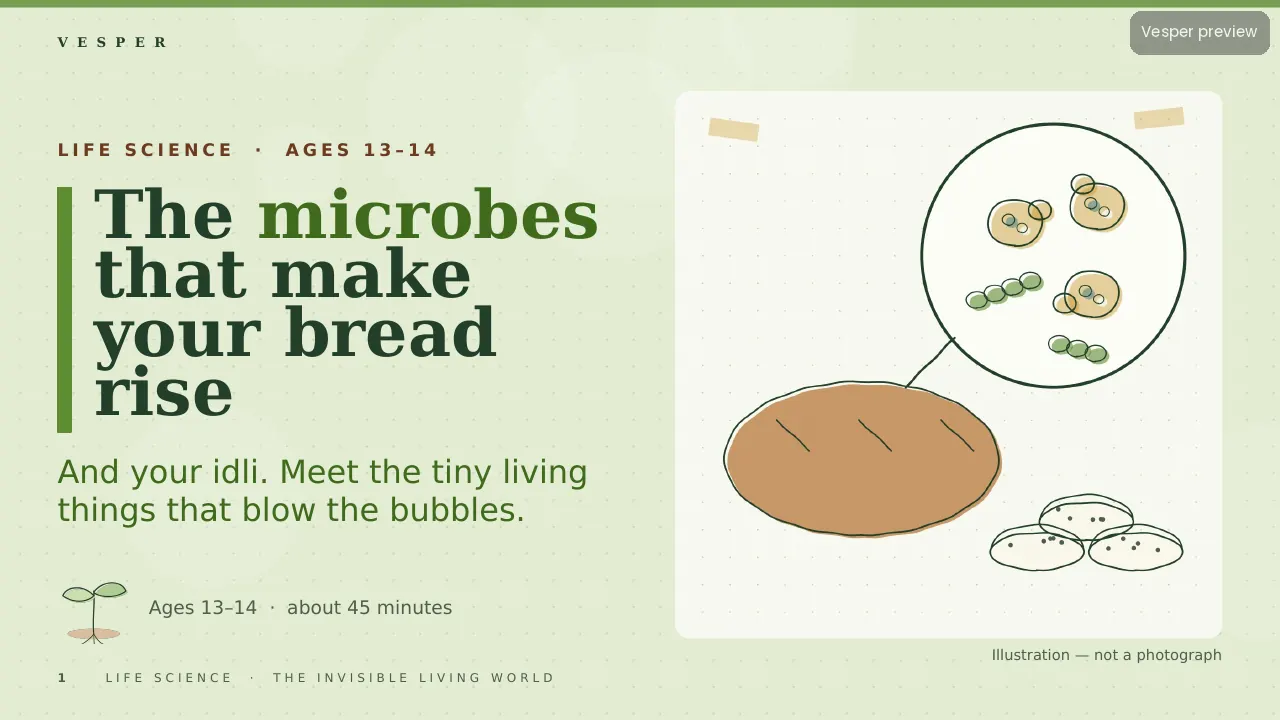
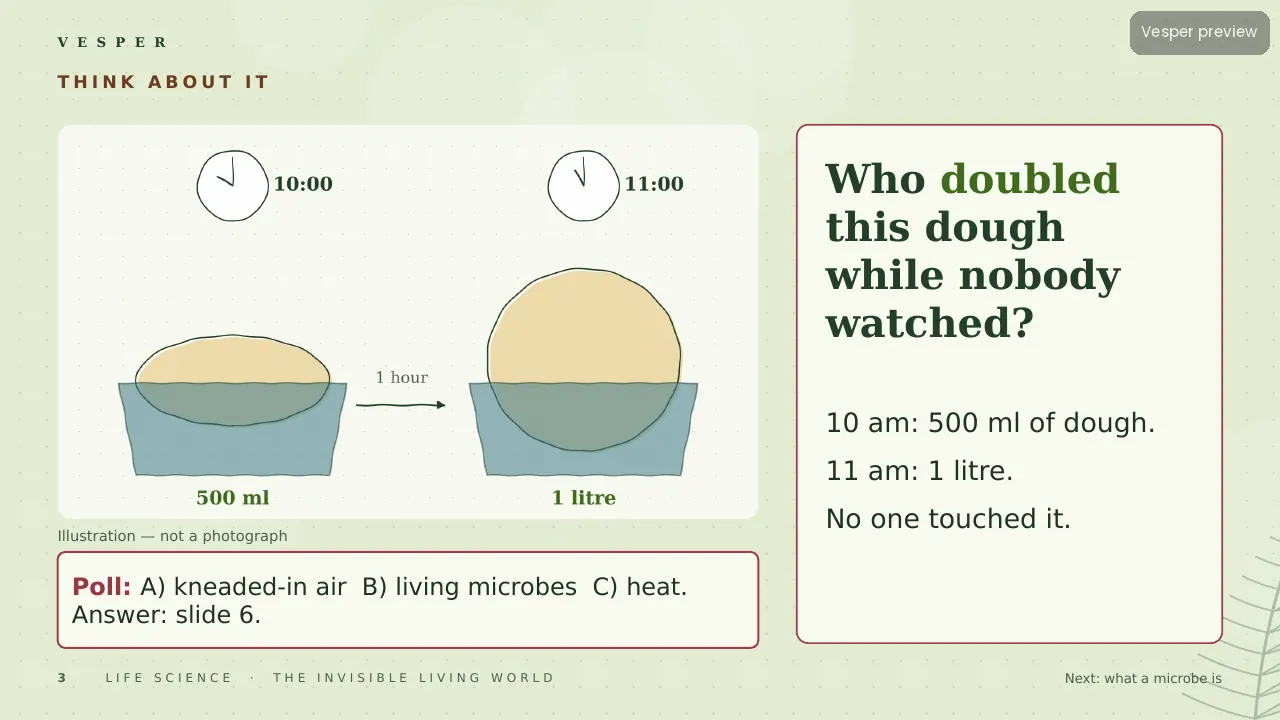
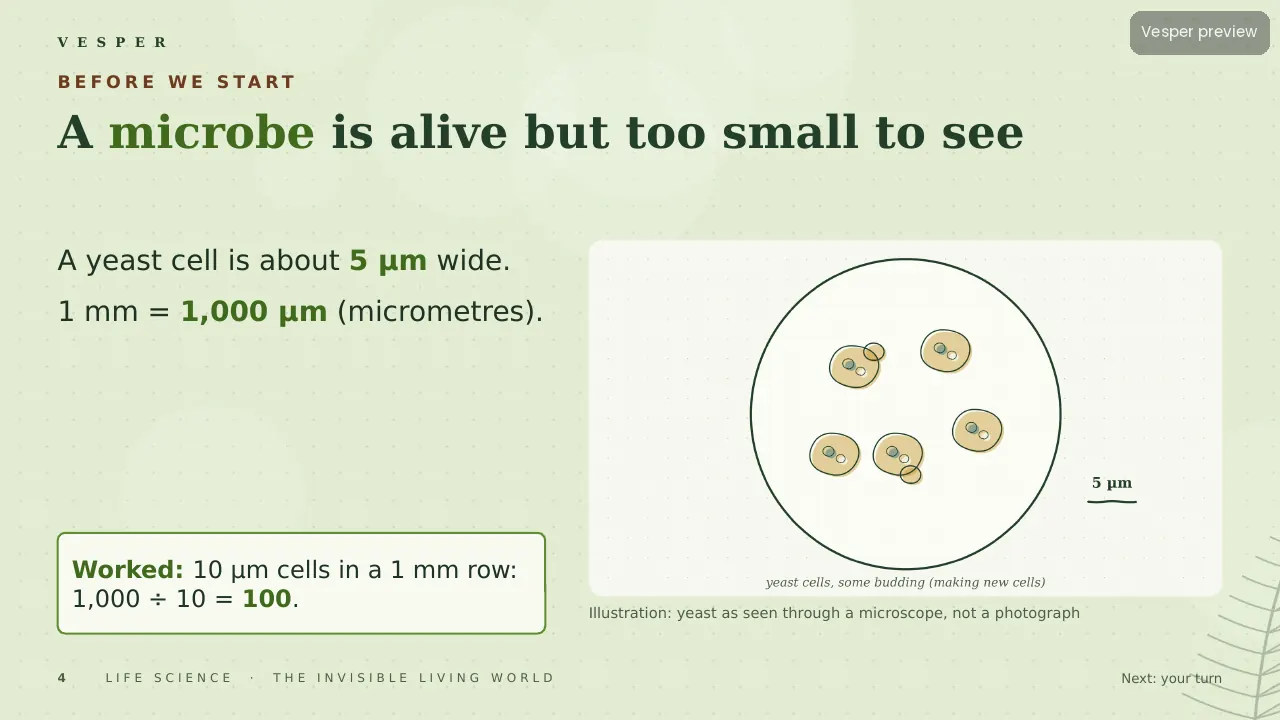
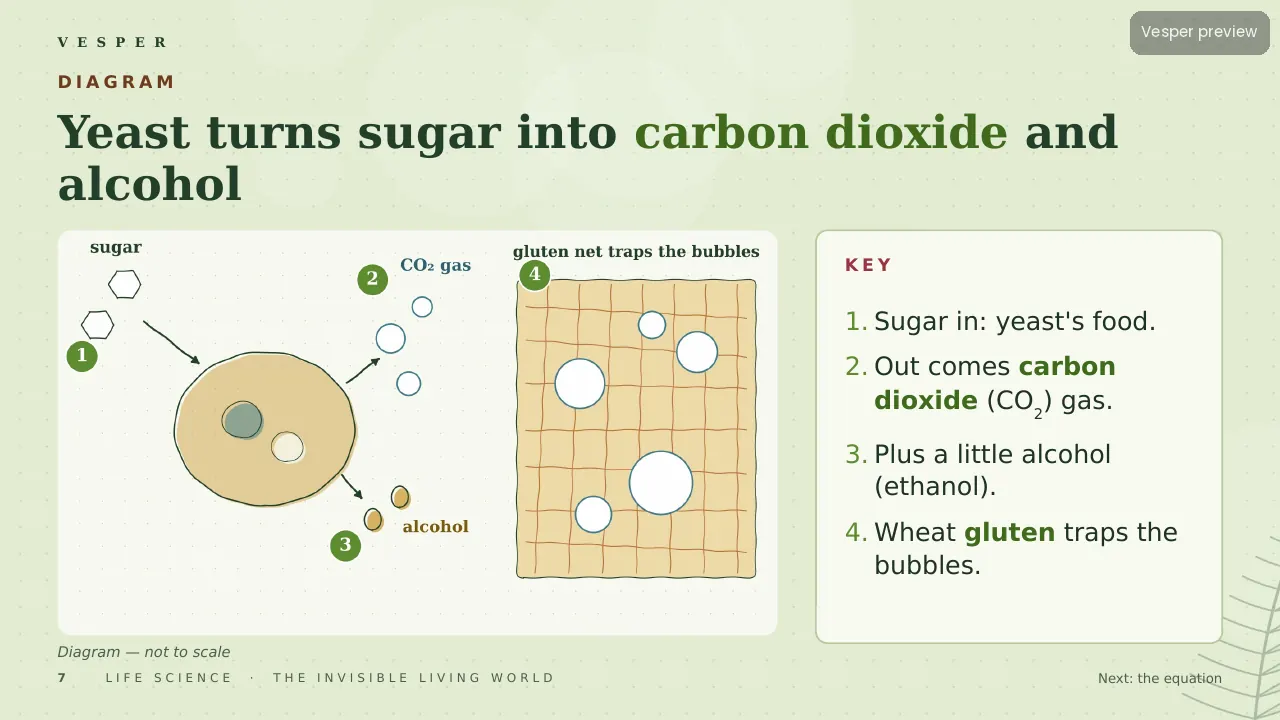
A bowl of dough doubles in an hour and nobody touches it. Students meet yeast, a single-celled fungus about 5 µm wide, watch it turn sugar into carbon dioxide and alcohol, and balance the fermentation equation atom by atom: 180 g of glucose makes 88 g of gas. A thermometer slide explains why yeast works best near 30 °C, dies at 60 °C, and why baked bread has no alcohol left.
Then the surprise: idli rises with no added yeast. A bacterium, Leuconostoc, arrives on the urad dal, makes lactic acid and one CO2 per glucose, and a spot-the-mistake equation proves it.
Inside the deck
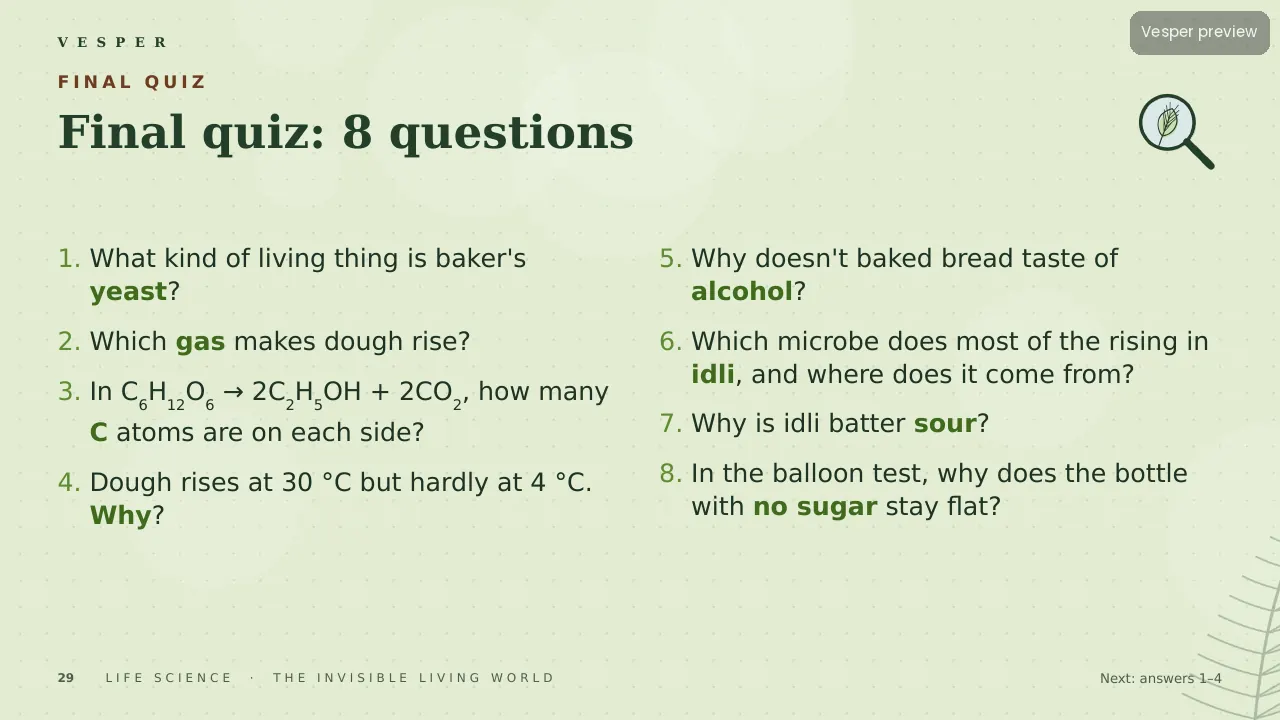
34 slides on the Field Notes template with sketchbook-style illustrations. There are three your-turn calculations, a pause-and-predict on three bowls of dough, a bread-and-idli comparison table, a myth slide (‘not every bacterium is a germ’), a real-world slide on dosa and sourdough, two checkpoints and an 8-question quiz with explained answers.
How to teach it
Allow about 45 minutes. Start the balloon experiment on slide 22 early: three bottles with a teaspoon of yeast and 120 ml of water, warm with sugar, warm without, and cold with sugar. Check them after 30 minutes and use slide 23 to discuss the result. Never use boiling water, and leave the bottles uncapped. Notes on every slide give Say, Ask, Watch for and Time.
Who it’s for
For ages 13–14 learning about microorganisms, respiration and useful microbes in food. It works well where students know idli or dosa, and equally where they only know bread. The deck is editable, so you can add a local fermented food.