About this lesson
What students discover
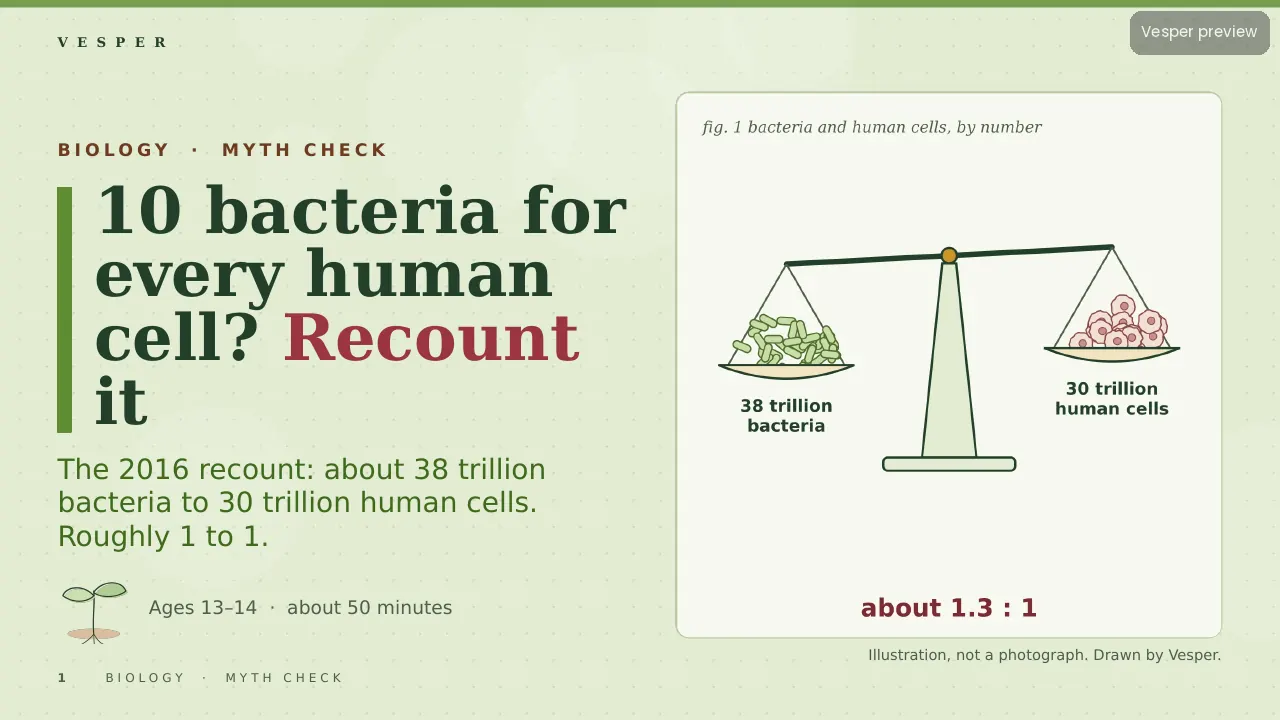
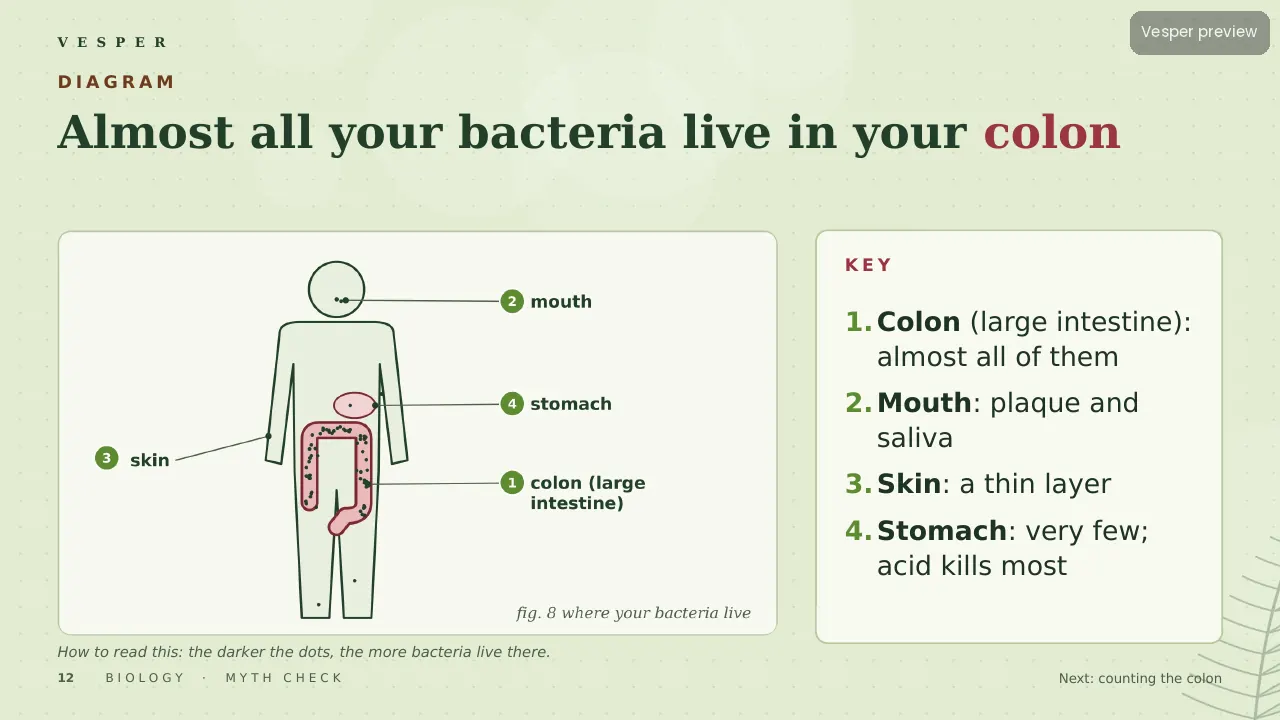
‘You are only 10% human’ sounds like a fact. Students trace it to its source: a 1972 estimate by Thomas Luckey that assumed 1 litre of gut contents and 100 billion bacteria per gram, giving 100 trillion bacteria against about 10 trillion human cells. Then they redo the sums with the 2016 recount by Sender, Fuchs and Milo. About 420 g of colon contents at 90 billion per gram gives roughly 38 trillion bacteria. On the human side, 4.9 litres of blood with 5 trillion red cells per litre is about 25 trillion red cells, 84% of our 30 trillion.
The result is 38 : 30, about 1.3 : 1. Students also check the viral ‘90% bacteria’ claim (it is about 56% of cells, and only about 0.3% by mass), learn that one trip to the toilet can tip the ratio below 1, and see how counting only cells with a nucleus brings back a 10 : 1.
Inside the deck
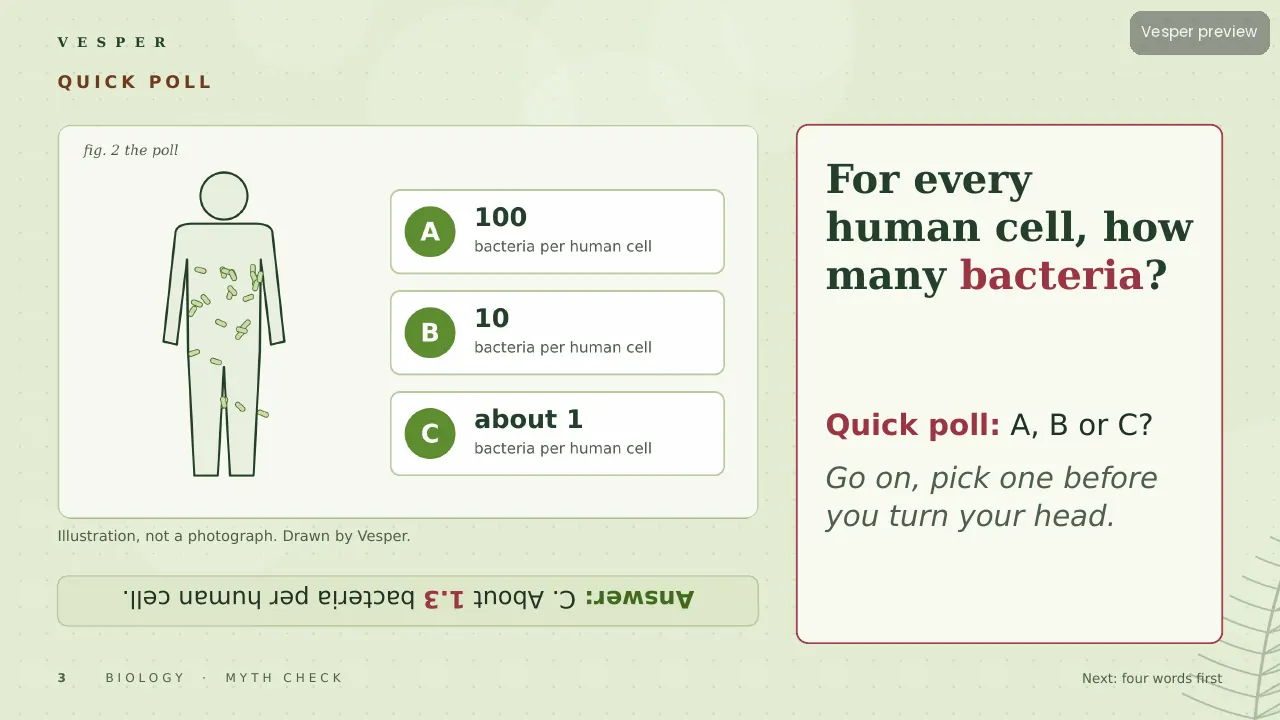
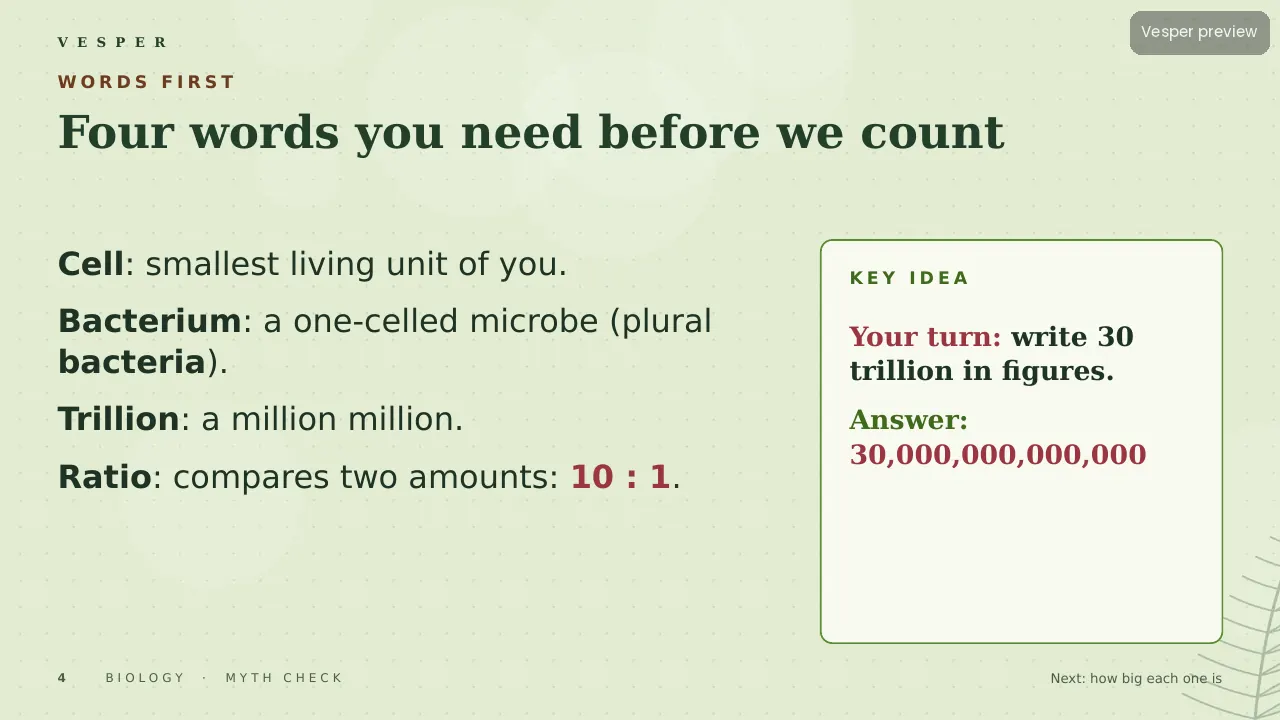
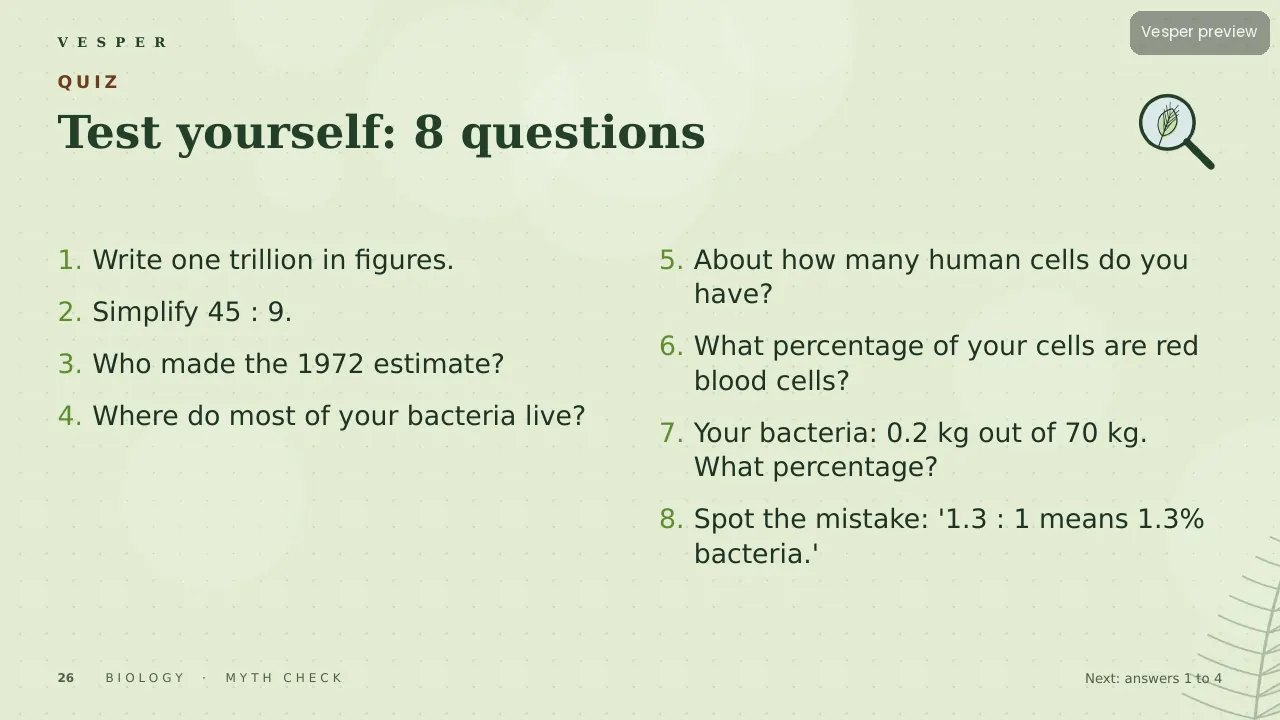
30 slides on the Field Notes template: a quick-poll hook, a word primer, cell sizes in micrometres (a cheek cell is about 50 µm, a bacterium about 2 µm), seven your-turn moments, a spot-the-mistake myth slide and a frontier slide that badges what is established and what is still a hypothesis. Two checkpoints and an eight-question quiz with explained answers close it.
How to teach it
About 50 minutes. It works in science or in maths, since most of the reasoning is ratio, percentage and estimation. Finish with the take-home task: trace one viral number back to whoever first said it.
Who it’s for
Learners aged 13–14 studying microorganisms or ratios, and teachers who want a lesson in checking sources that uses real data rather than a lecture.