About this lesson
What students discover
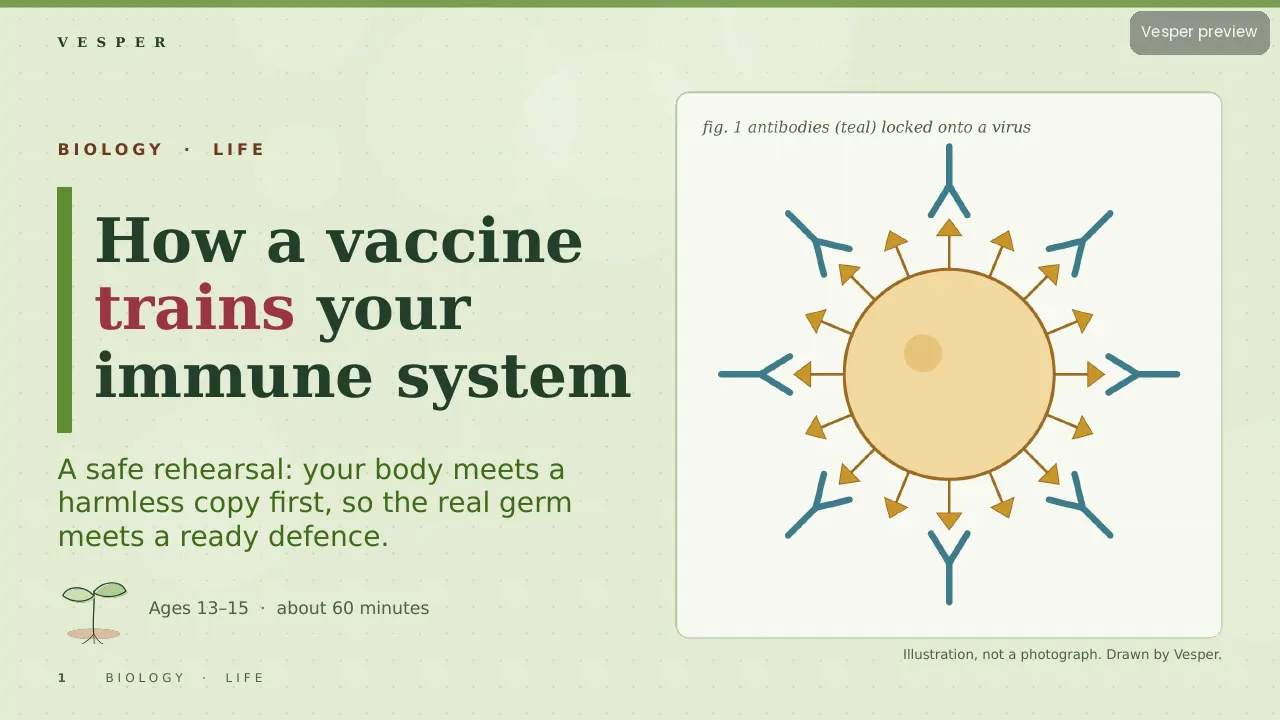
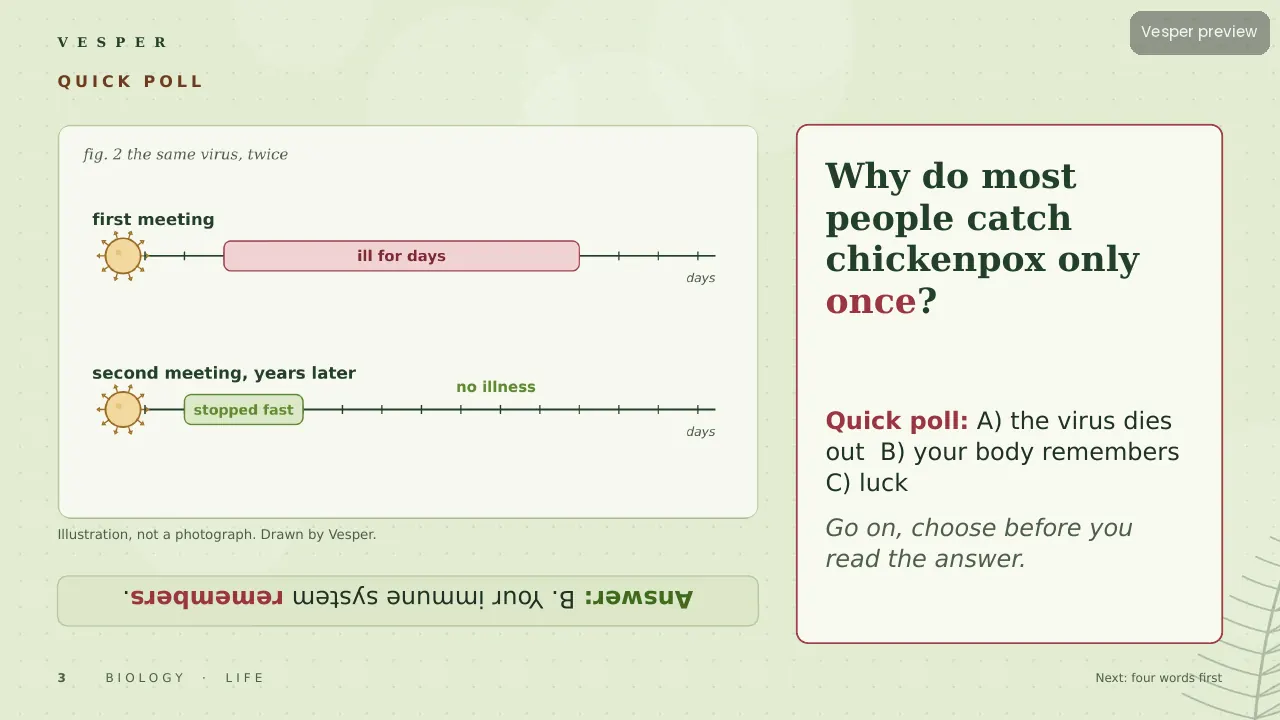
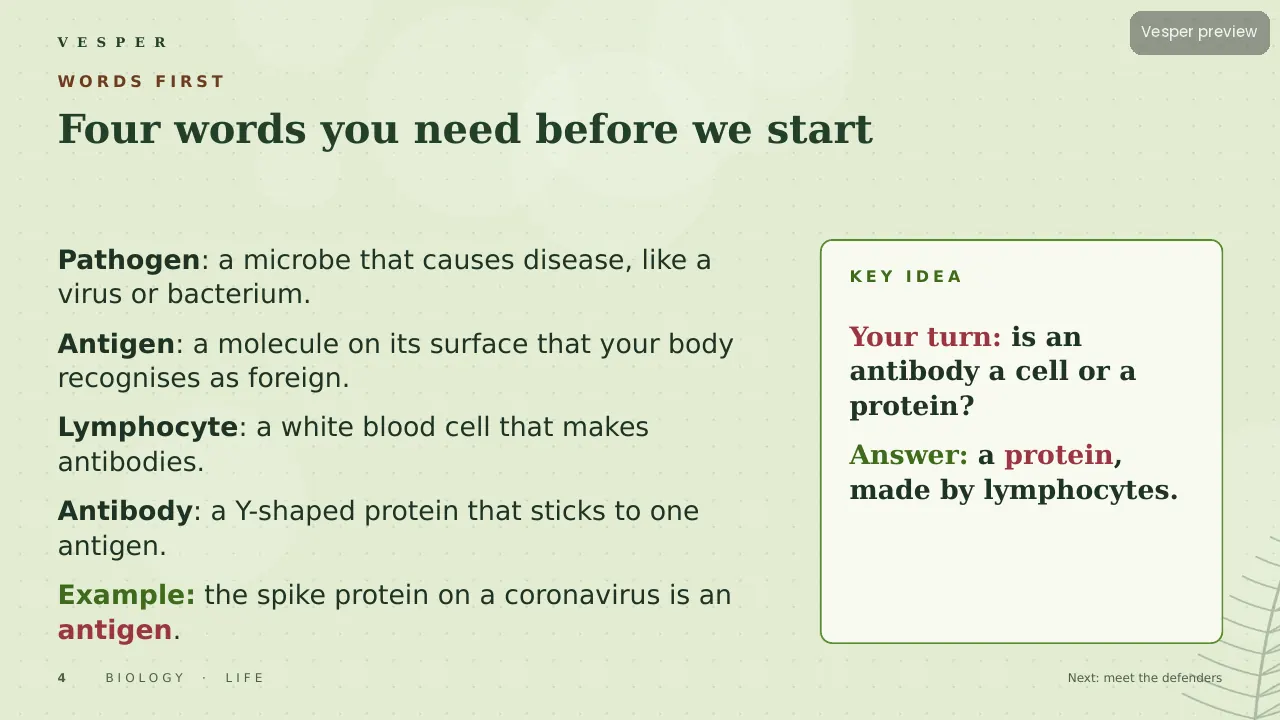
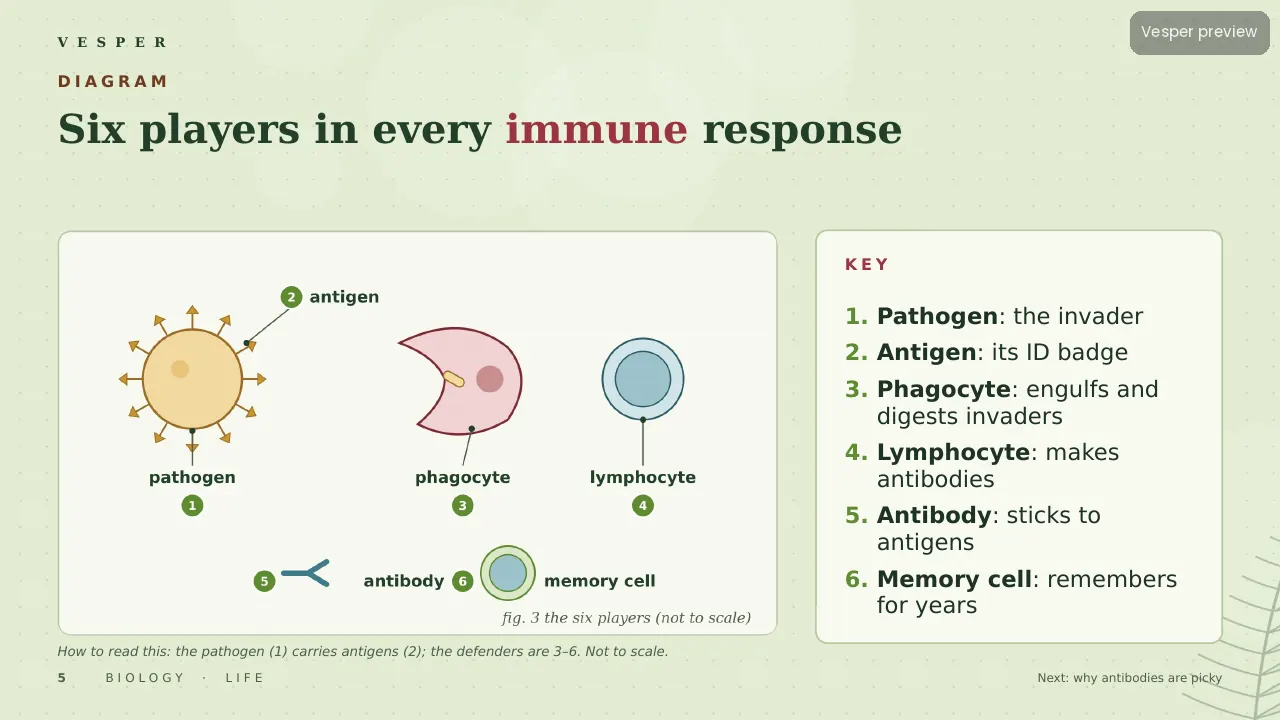
Why do most people catch chickenpox only once? Students answer with the immune system’s own memory, then see how a vaccine gives the body that first meeting safely. Six players share one labelled diagram (pathogen, antigen, phagocyte, lymphocyte, antibody, memory cell). Students see why each antibody fits one antigen shape, and why the first response takes days: one cell doubling ten times makes 1,024.
Graphs compare a slow primary response with a fast, larger secondary one, and show why a second dose helps. Five vaccine types are drawn side by side, and an mRNA slide explains calmly why it never enters the nucleus. Herd immunity is calculated with 1 − 1/R₀: 75% for R₀ = 4, about 93% for measles.
Inside the deck
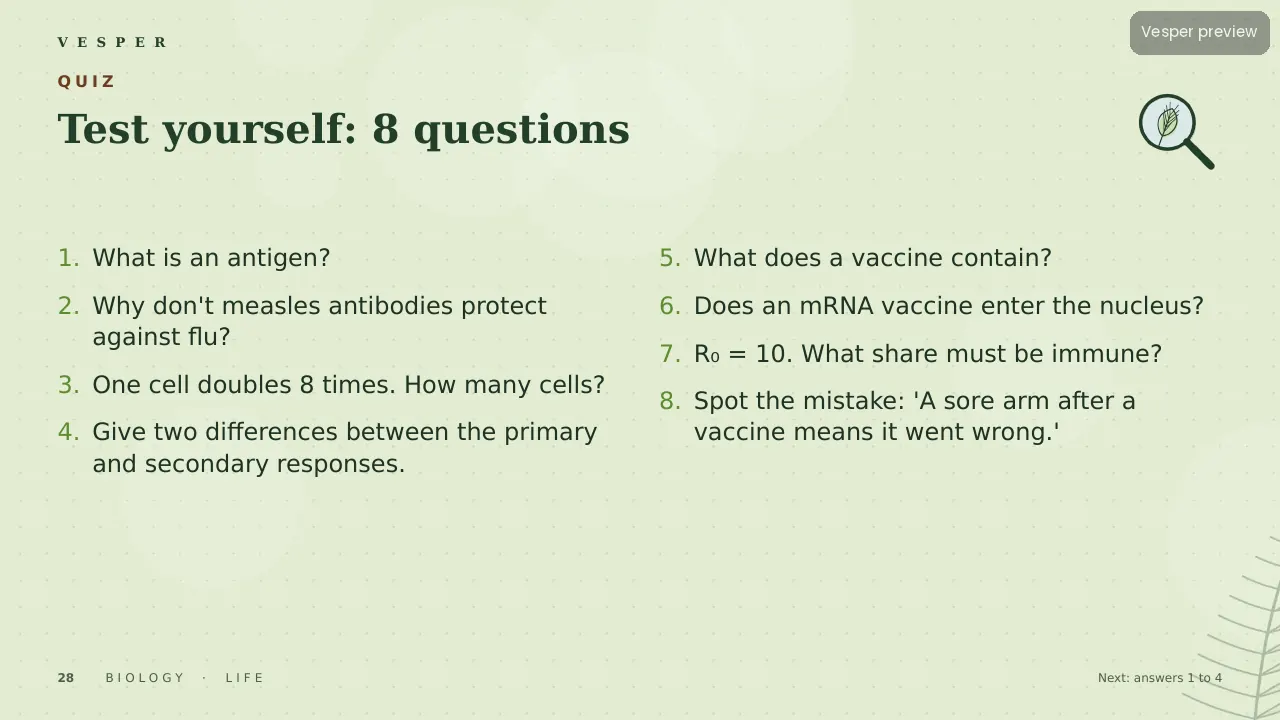
32 slides on the Field Notes template with ten your-turn questions. Evidence slides cover Jenner in 1796, smallpox eradication in 1980, trial phases, rare side effects (about 1 in a million doses), the retracted 1998 autism paper set against a 657,461-child study, and at least 154 million lives saved since 1974. A frontier slide on malaria and universal flu vaccines, polls, upside-down answers, two checkpoints and an 8-question quiz with explained answers.
How to teach it
Allow about 60 minutes. Start with the chickenpox question and collect ideas. The home activity on slide 24 asks students to read their own vaccination record; make it optional and private. The tone throughout is calm and evidence-led. Notes on every slide give Say, Ask, Watch for and Time.
Who it’s for
For ages 13–15 studying disease, the immune system and public health. Useful where students have met vaccine myths online and need the evidence. Editable PowerPoint with named layouts.