About this lesson
What students discover
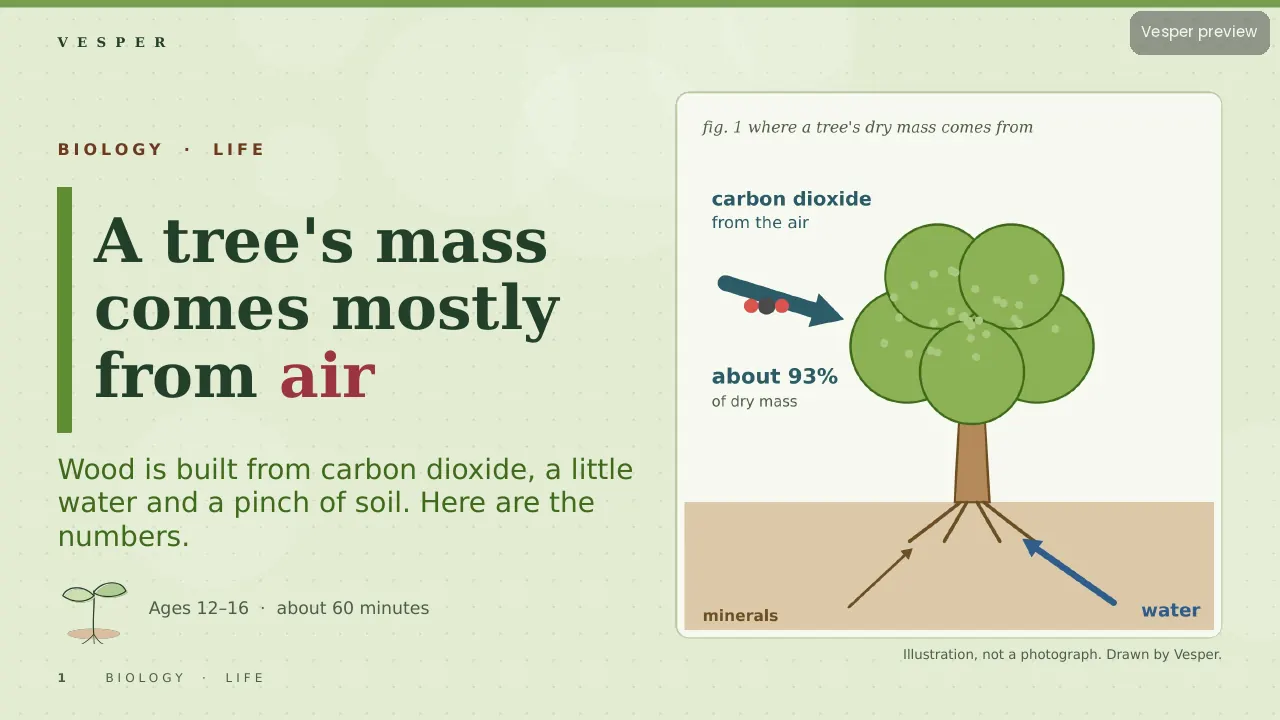
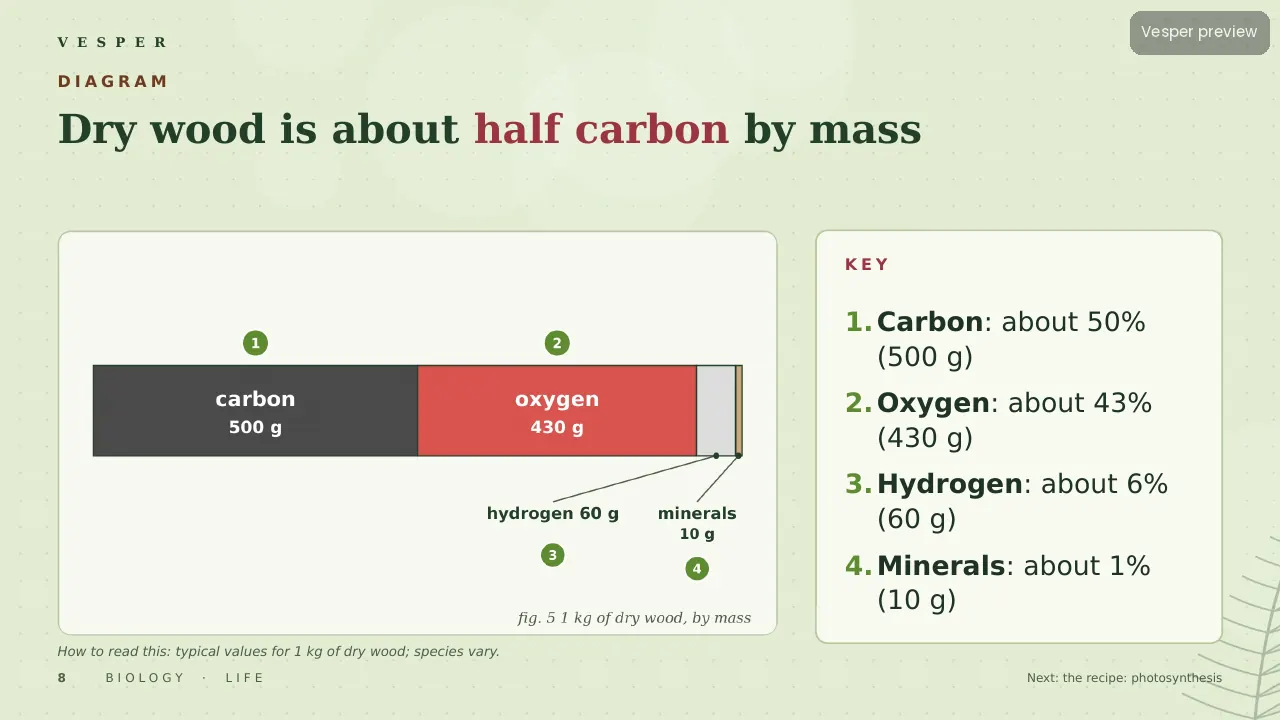
Ask a class where a tree’s mass comes from and most will say the soil. This lesson lets the evidence answer. Van Helmont’s willow (published 1648) gained 164 lb while its 200 lb of soil lost about 2 oz. Students separate fresh mass from dry mass, see that dry wood is about half carbon, and use the balanced photosynthesis equation to trace every atom, including the 1941 oxygen-18 experiment that showed the oxygen gas comes from water.
Then they do the arithmetic: of every 180 g of glucose, 168 g (93%) comes from carbon dioxide, and 1 kg of dry wood locks away the carbon from about 1.83 kg of CO₂, roughly the CO₂ in an Olympic pool of air at 424 ppm.
Inside the deck
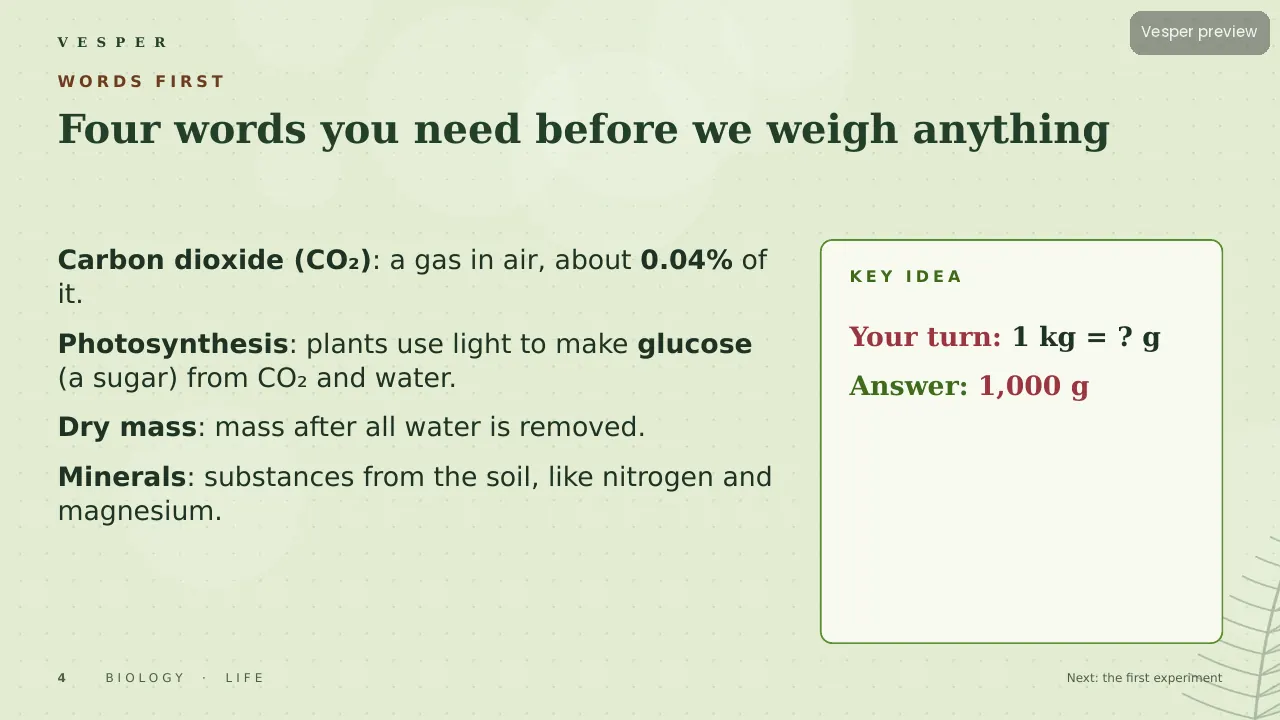
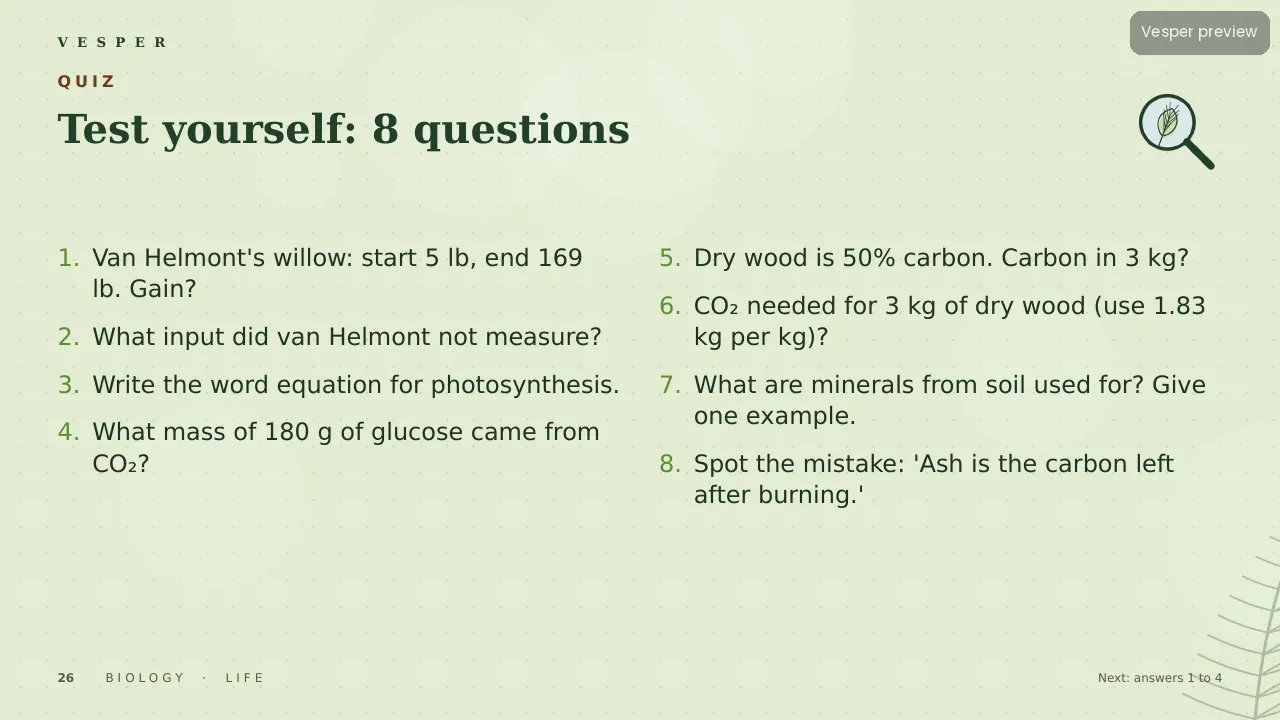
30 slides on the Field Notes template with eleven your-turn questions. Stomata, transpiration (over 90% of the water passes straight through), minerals (about 1%, left as ash when wood burns), respiration and forests in the carbon cycle complete the picture. Two myth slides, a frontier slide that labels CO₂ fertilisation as an open question, polls, upside-down answers, two checkpoints and an 8-question quiz with explained answers.
How to teach it
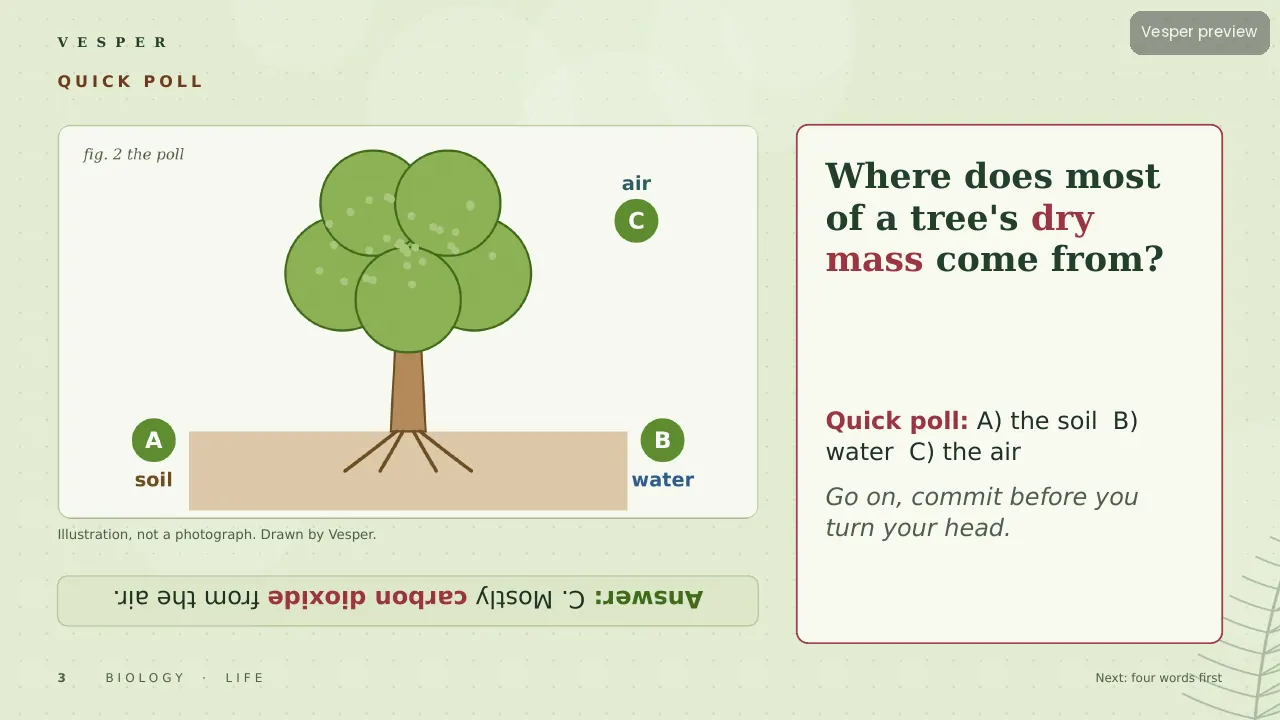
Allow about 60 minutes. Take a vote on the hook (soil, water or air?) and keep the result on the board until slide 12. The van Helmont slide works well if students predict the soil loss first. Notes on every slide give Say, Ask, Watch for and Time.
Who it’s for
For ages 12–16 studying photosynthesis, plant nutrition and the carbon cycle. It also makes a strong link to climate and forests without doom. Editable PowerPoint with named layouts.