About this lesson
What students discover
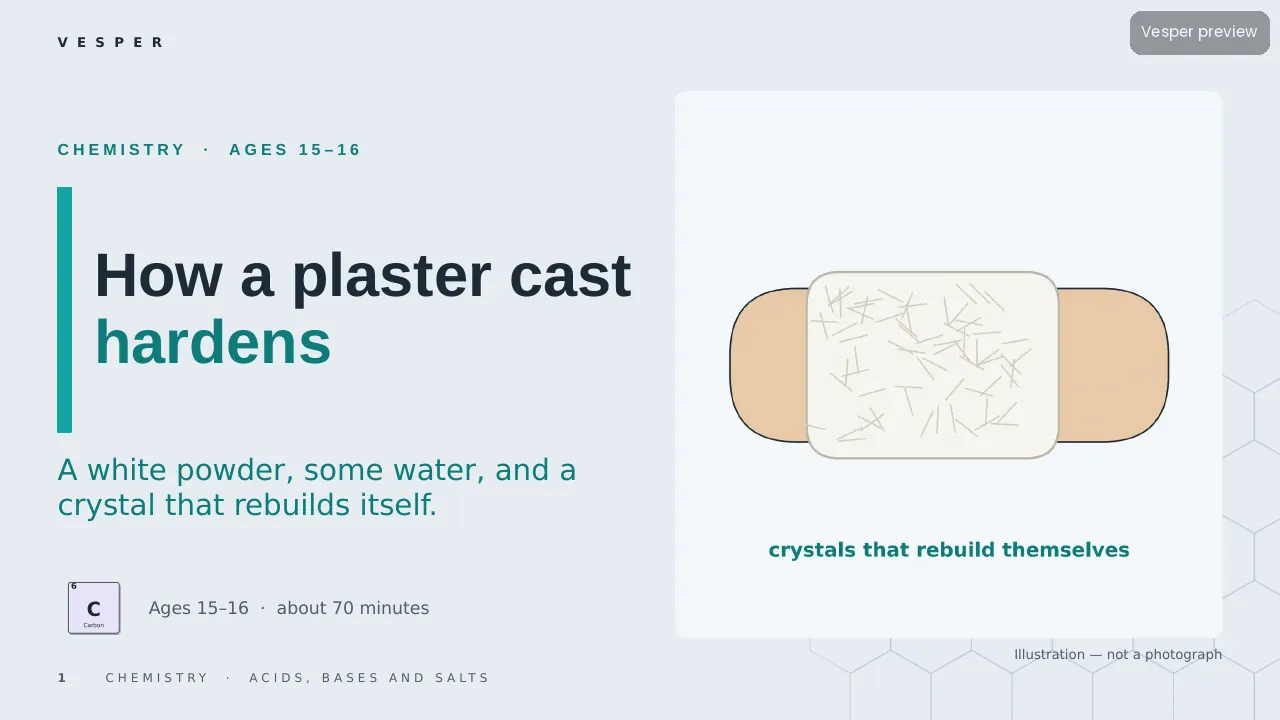
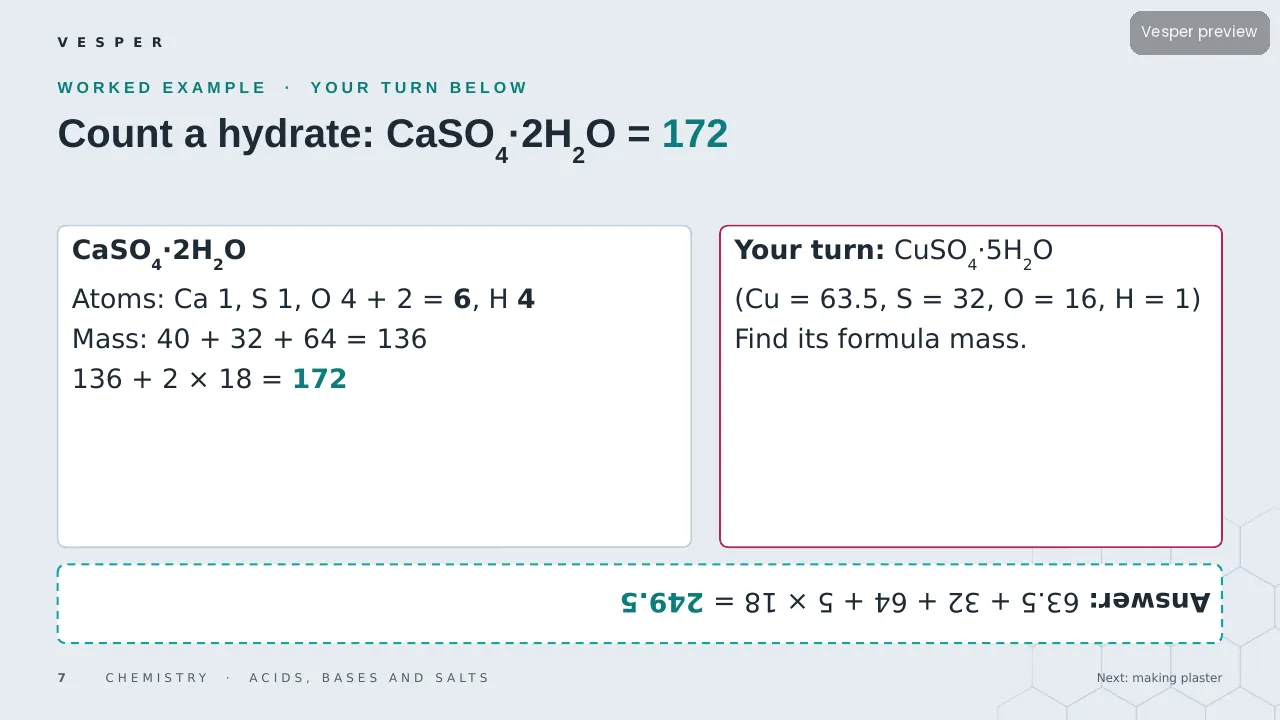
A wet bandage turns rock hard and warm in about 15 minutes. Is it drying? No: the water joins the crystal. Students read hydrate formulas (CaSO4·2H2O), count atoms and formula masses (gypsum 172, plaster 145), and see why plaster is written with half a water molecule: two units share one.
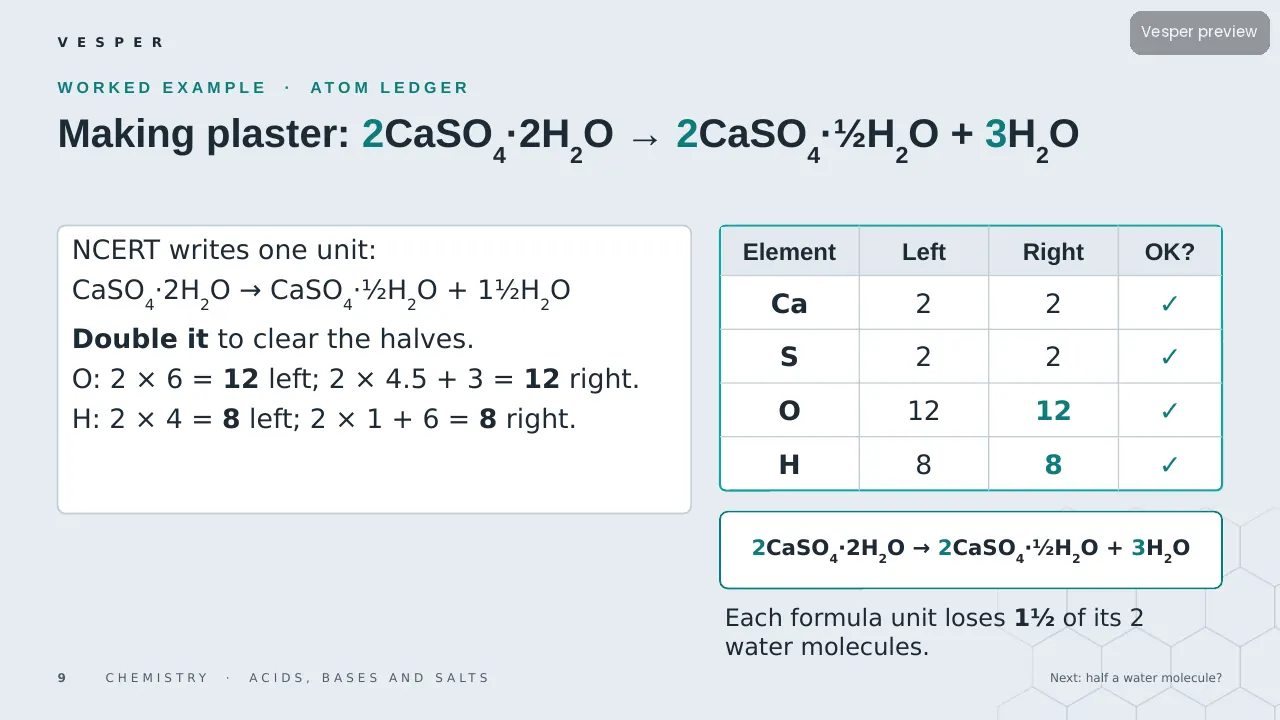
They balance making plaster at 373 K and setting it again with atom ledgers, check both by mass (172 g in, 145 g plus 27 g out), and find that 100 g of plaster needs only 18.6 g of water to react, though plasterers use about 70 g. Interlocking needle crystals, exothermic setting, moisture-proof storage, dead-burnt plaster, an 1851–52 army surgeon’s bandage, fire-resistant gypsum walls and blue copper sulfate complete the picture.
Inside the deck
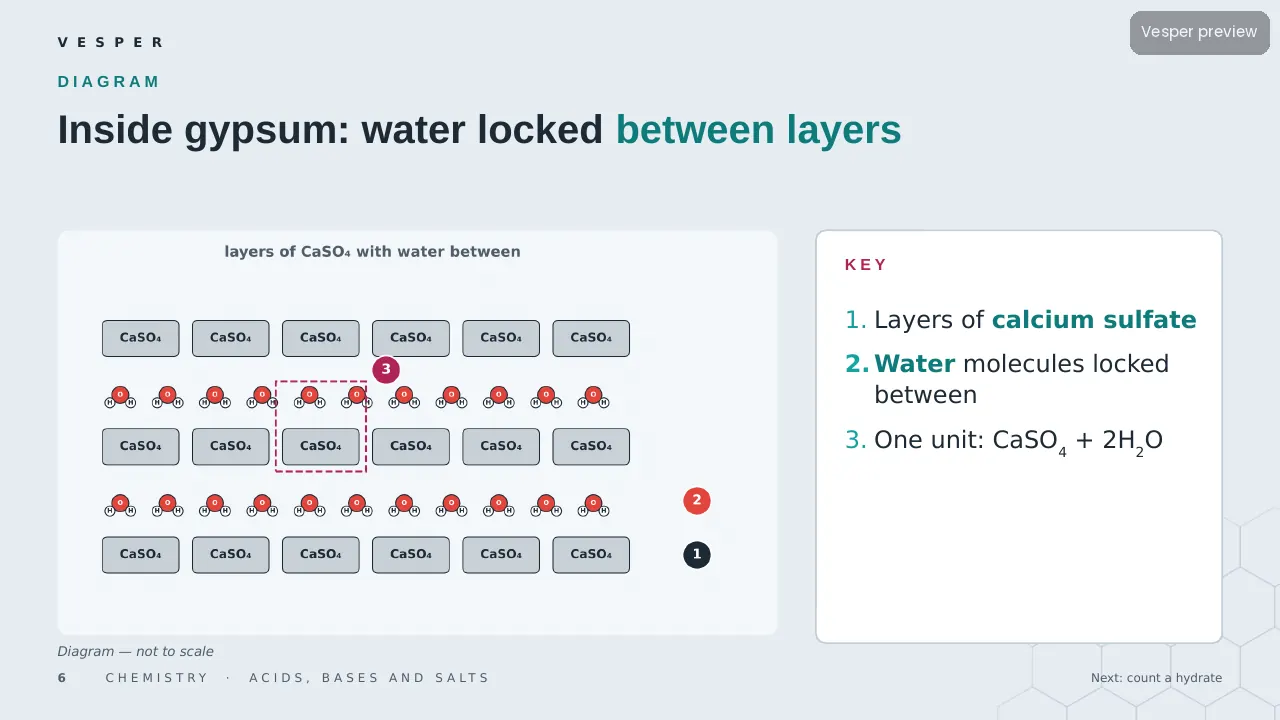
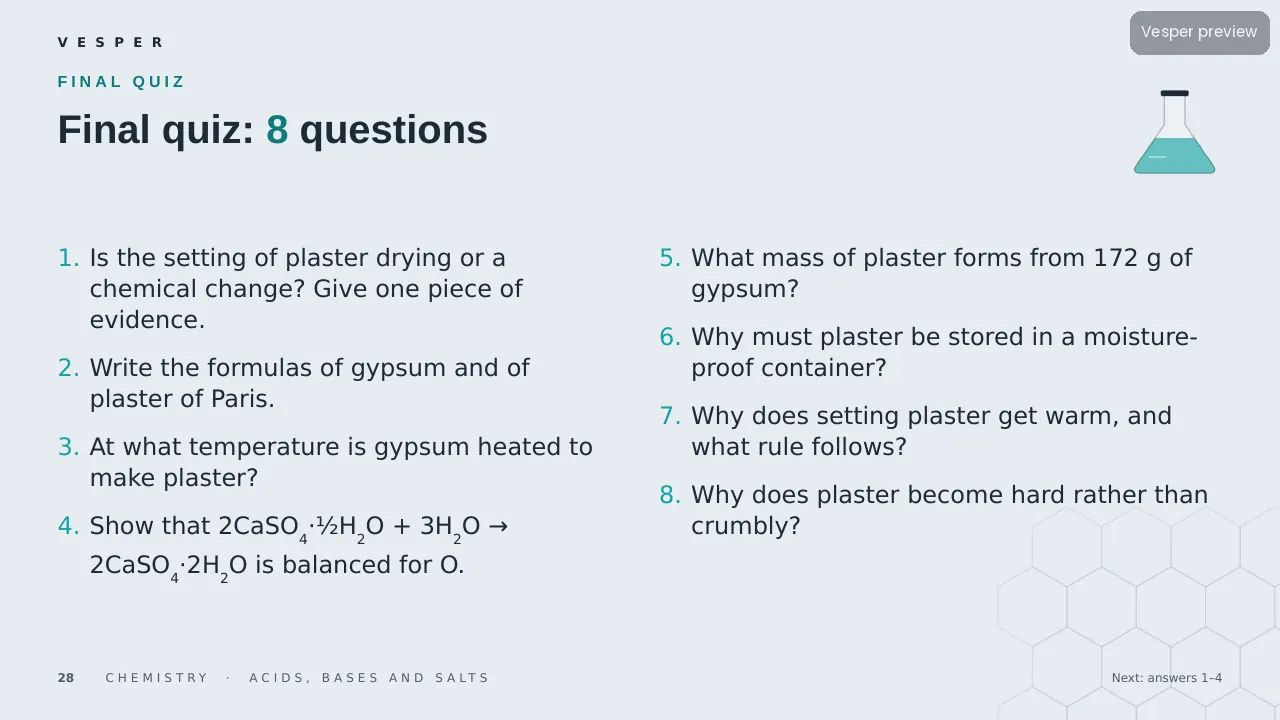
32 slides on the Flask template with three worked examples, a diagram of water locked between gypsum layers, a safety slide (never cast a hand), a spot-the-mistake about storing plaster in the monsoon, pause-and-predict slides, two checkpoints and an 8-question quiz with explained answers.
How to teach it
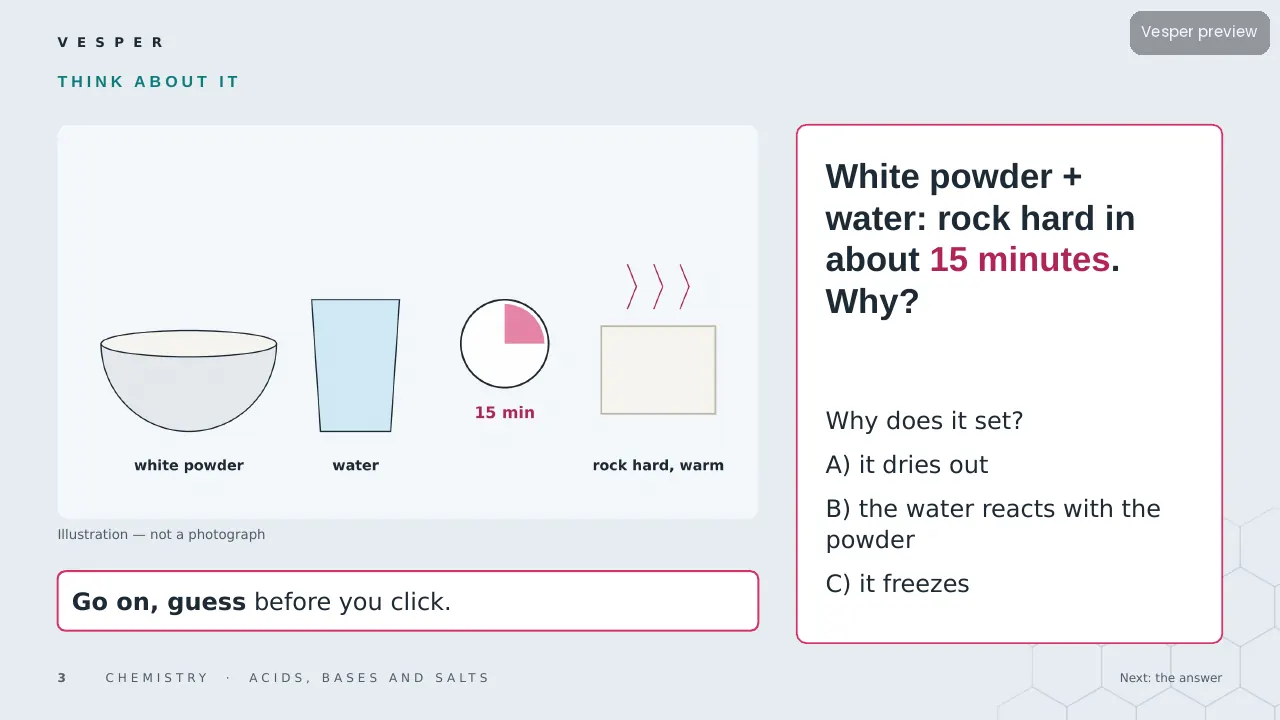
Allow about 70 minutes. The three-option hook on slide 3 sets up the key idea: take the vote before slide 4 gives the answer. The supervised setting-cup experiment on slide 24 times a cup of plaster with a thermometer; slide 25 shows a typical result peaking after about 20 minutes. Equations were checked by script. Notes on every slide give Say, Ask, Watch for and Time.
Who it’s for
For ages 15–16 studying salts, hydrates, water of crystallisation and exothermic reactions. It suits any class that has worn a cast or seen plasterers at work.