About this lesson
What students discover
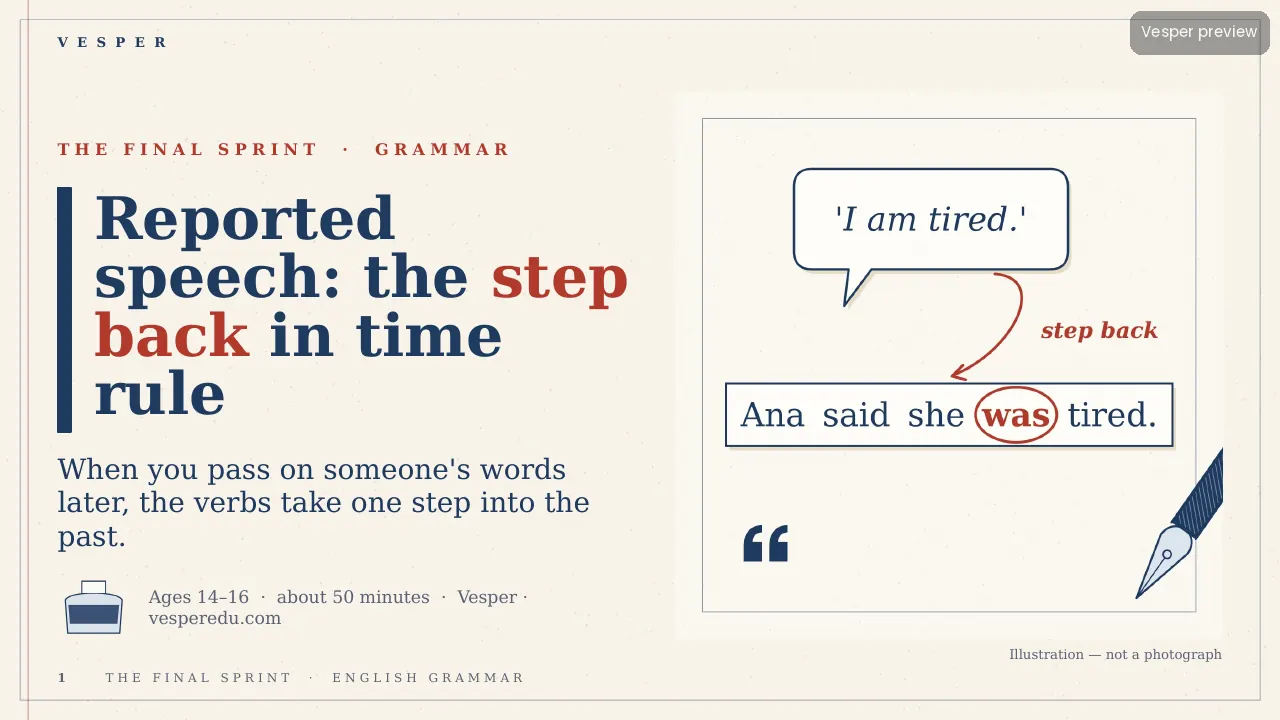
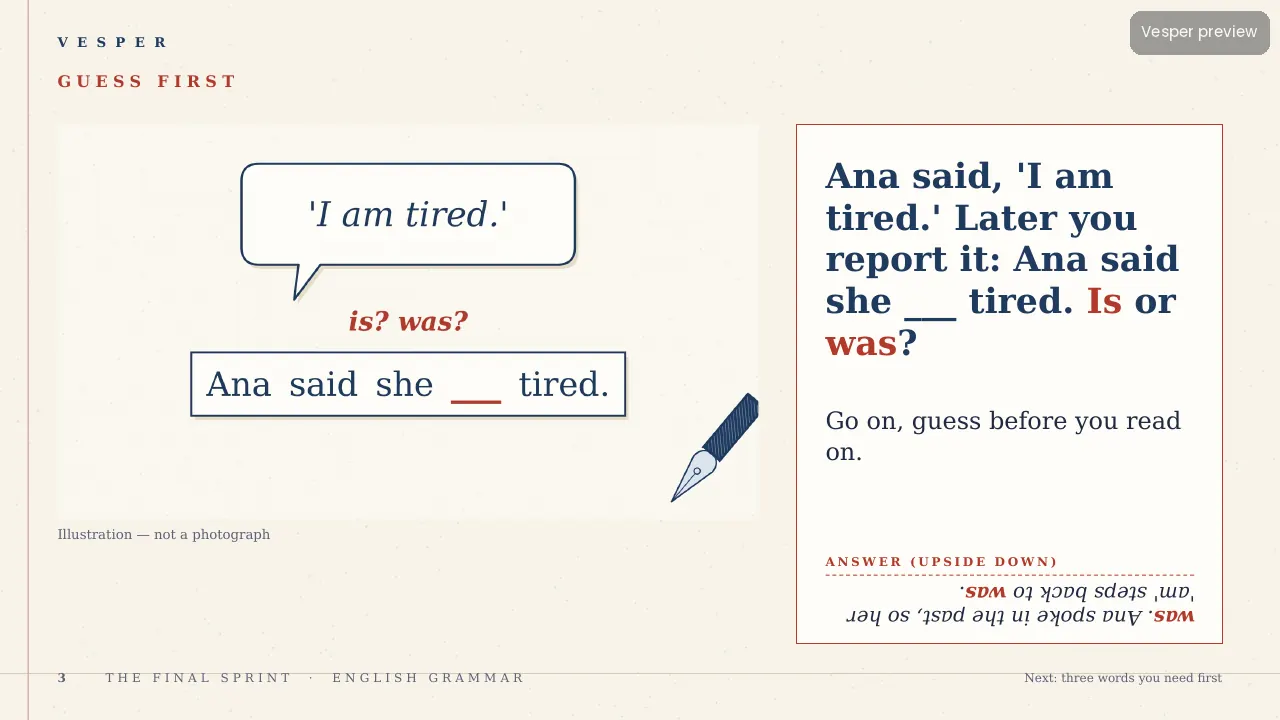
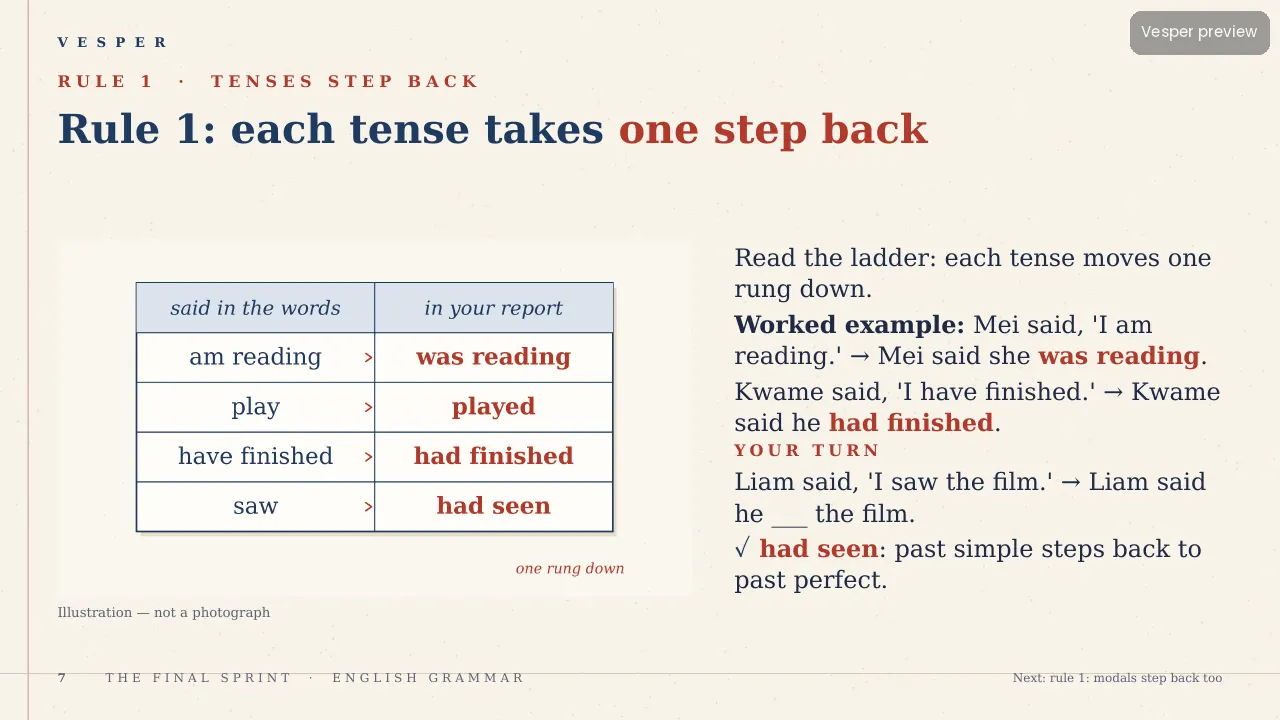
Reported speech looks like a long list of rules. Students find it is one idea: by the time you pass someone’s words on, the moment has passed, so each verb takes one step back in time. They learn the tense ladder (am → was, have finished → had finished, saw → had seen), modal verbs (will → would, can → could), pronouns, and time and place words.
Then come reported questions (if, whether and statement order) and commands (told + person + to), plus said versus told. Finally, they learn when not to step back: after says, and for facts that are still true.
Inside the deck
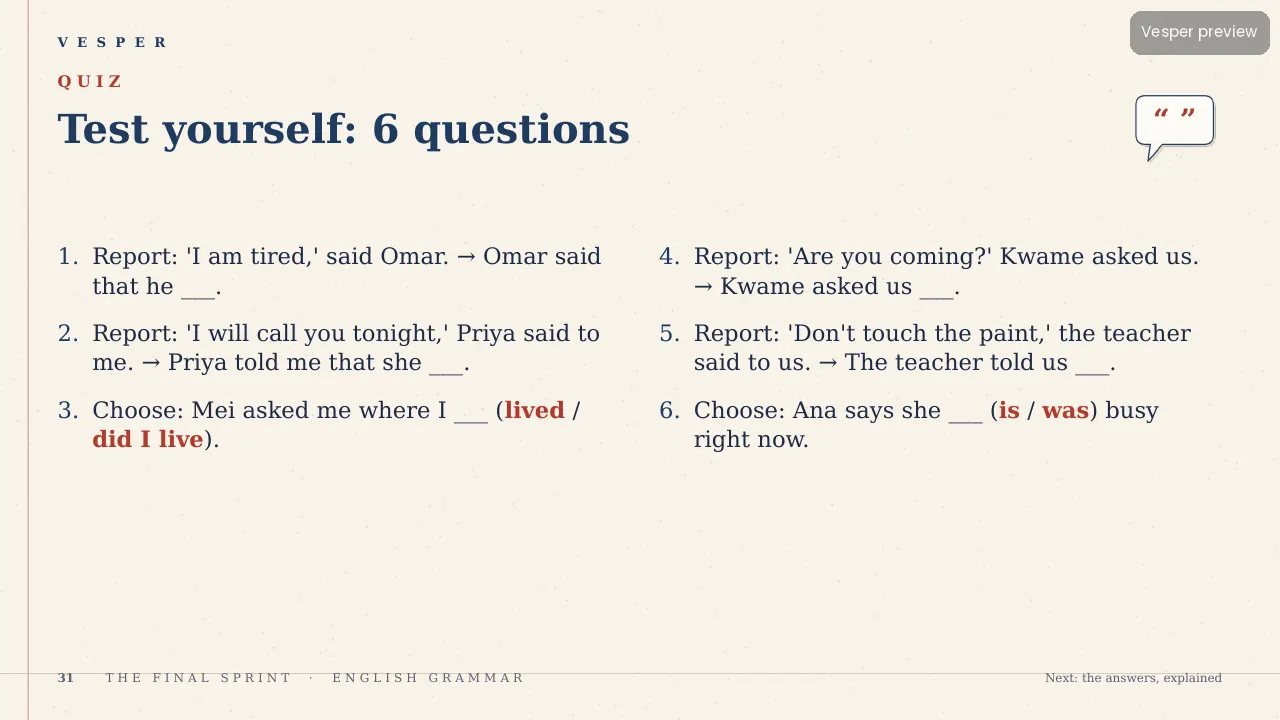
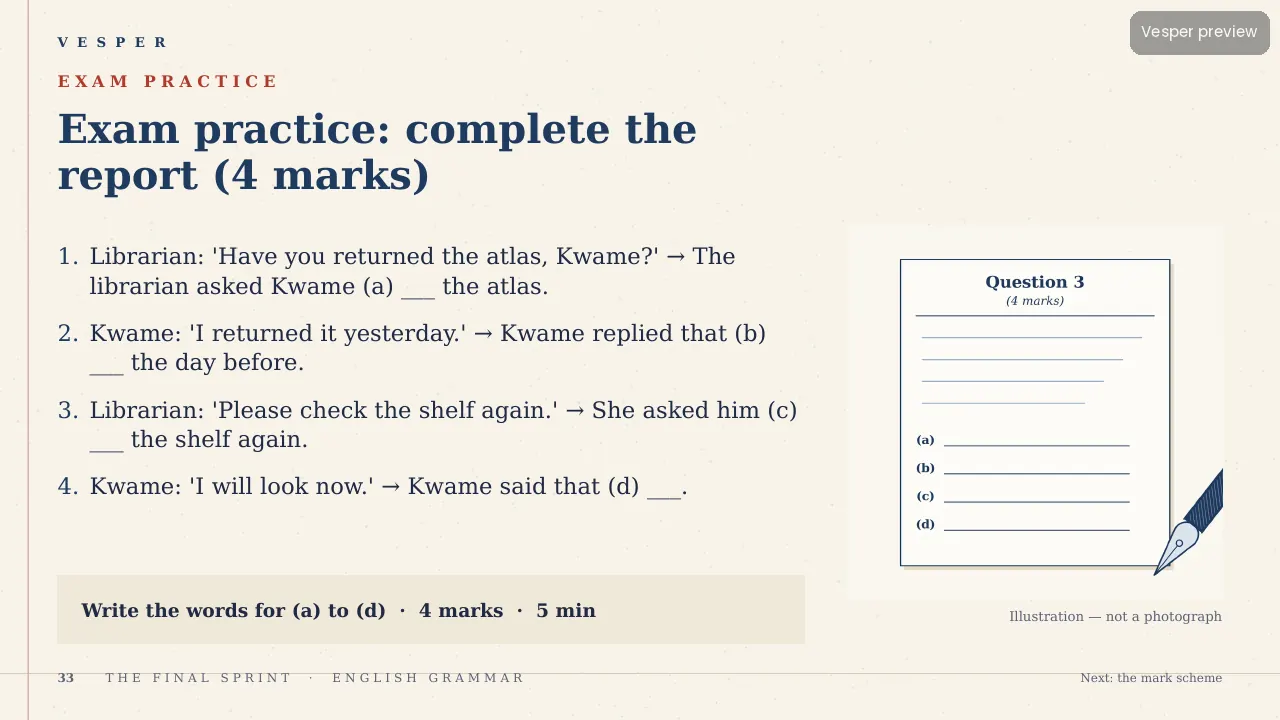
37 slides on the Inkwell template. Each of the six rules has a worked example, a your-turn with its answer, a wrong/right pair in red ink and a spot-the-mistake task. Two checkpoints, a quick poll, a myth buster, a news-report slide, two activities (find three errors, report each sentence), a 6-question quiz with explained answers and a 4-mark exam reporting task with a mark scheme.
How to teach it
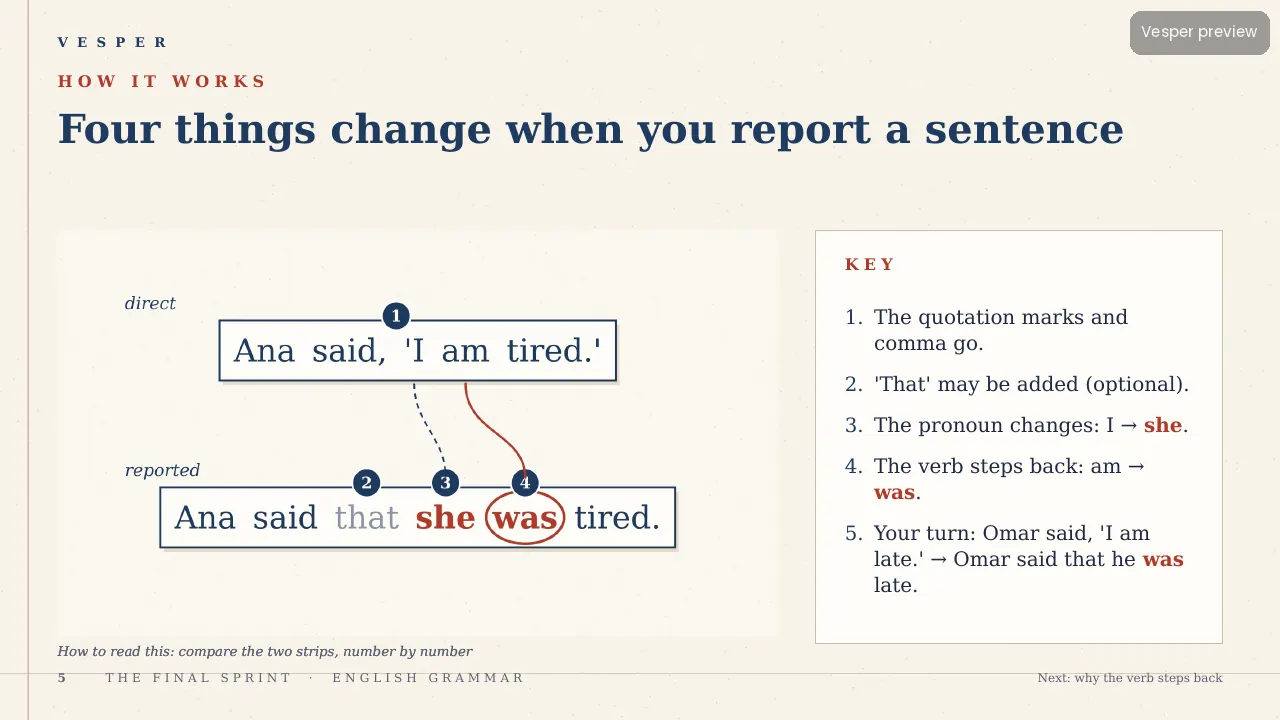
Allow about 50 minutes, as the cover says. With every activity in the notes it runs to about 84 minutes, so it also splits into two lessons: statements, pronouns and time words (slides 1–15), then questions, commands, exceptions and the exam task. Keep the four-changes diagram from slide 5 on the board throughout. The mark scheme is Vesper’s own, modelled on standard reporting tasks.
Who it’s for
For ages 14–16 preparing for grammar and writing questions in English exams. Part of The Final Sprint, 15 exam lessons that each end with an exam-style question and mark scheme. Every example sentence is original.