About this lesson
What students discover
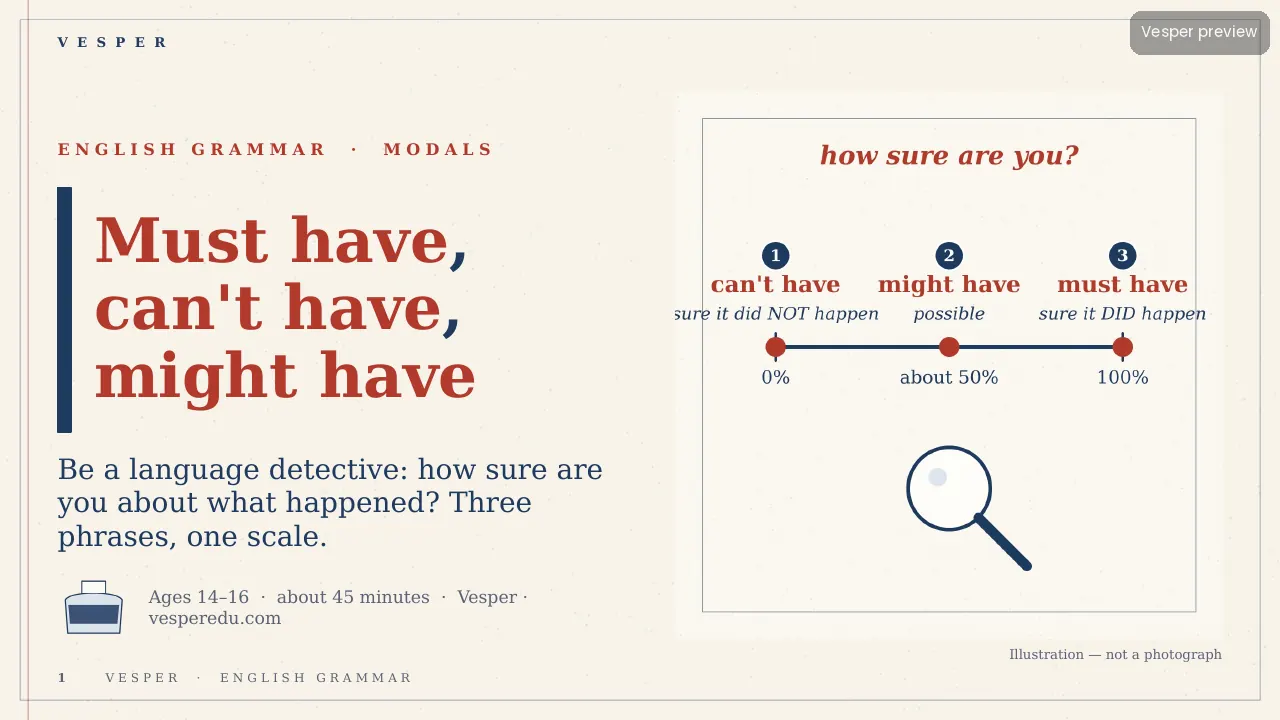
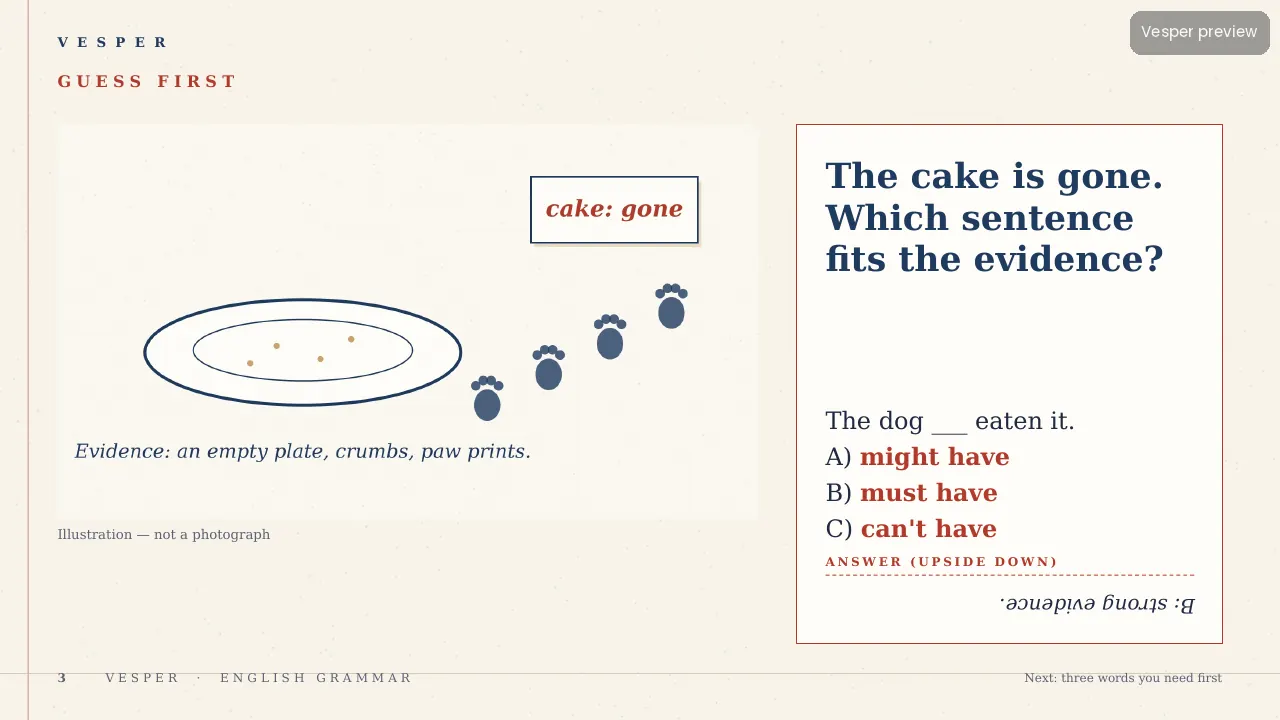
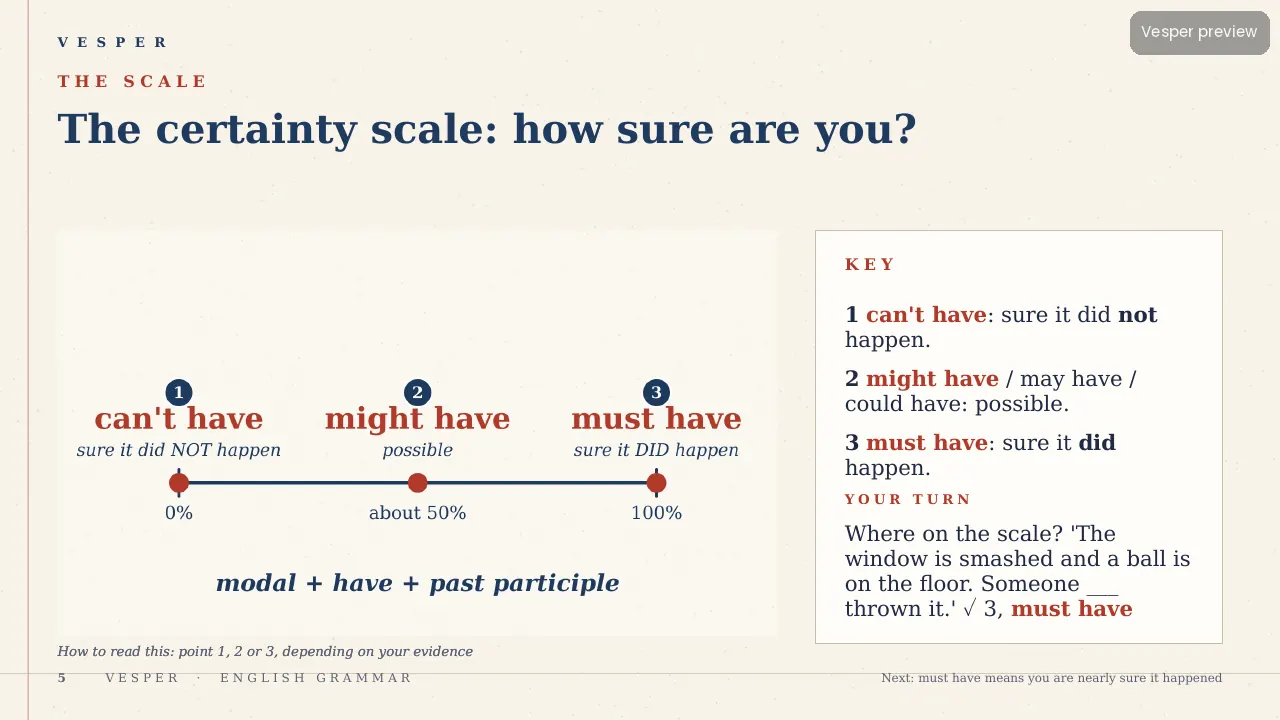
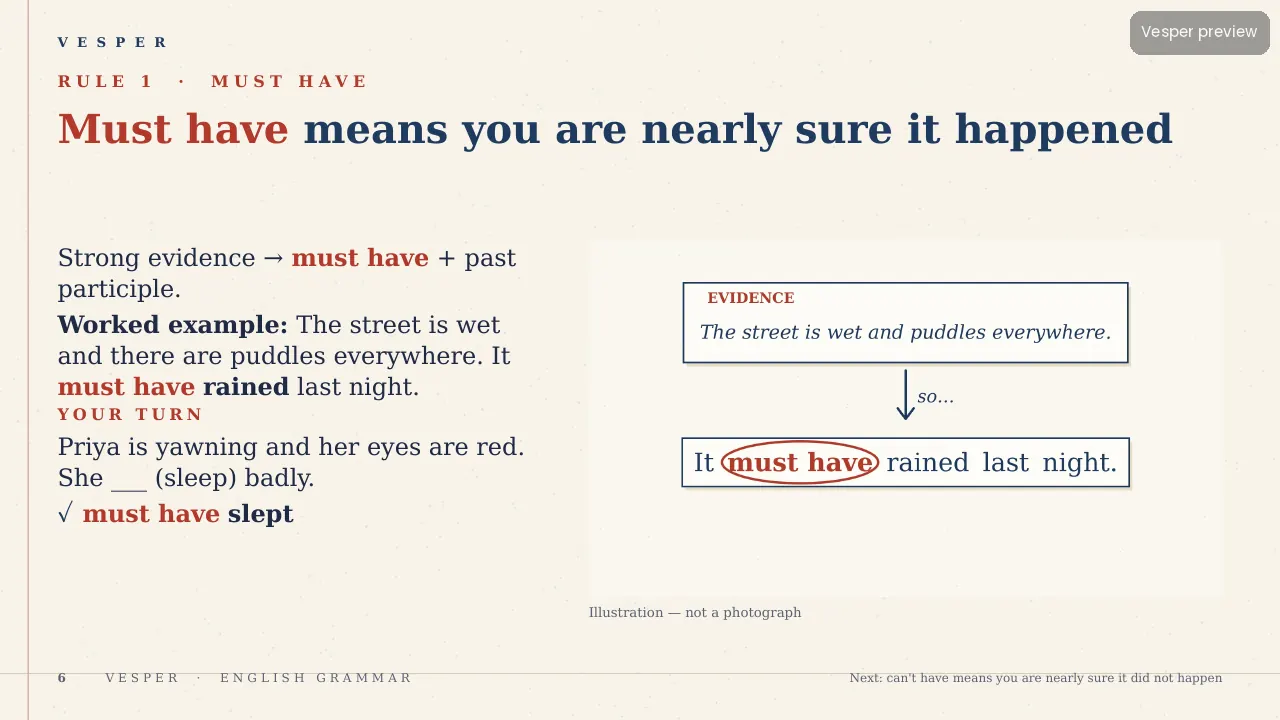
The cake is gone and there are paw prints by the plate. The dog must have eaten it. Students learn the language of deduction about the past on one certainty scale: must have (nearly sure it happened), might, may or could have (possible) and can’t have (nearly sure it didn’t).
They learn the fixed form, modal + have + past participle, and fix the classic errors: ‘mustn’t have’ for a negative deduction in British English, ‘might of’, and ‘must have went’. Then they contrast present deductions (they must be out) with past ones (they must have been out), meet the second job of could have (a missed chance) and see how a geologist reasons from fossil shells high on a mountain.
Inside the deck
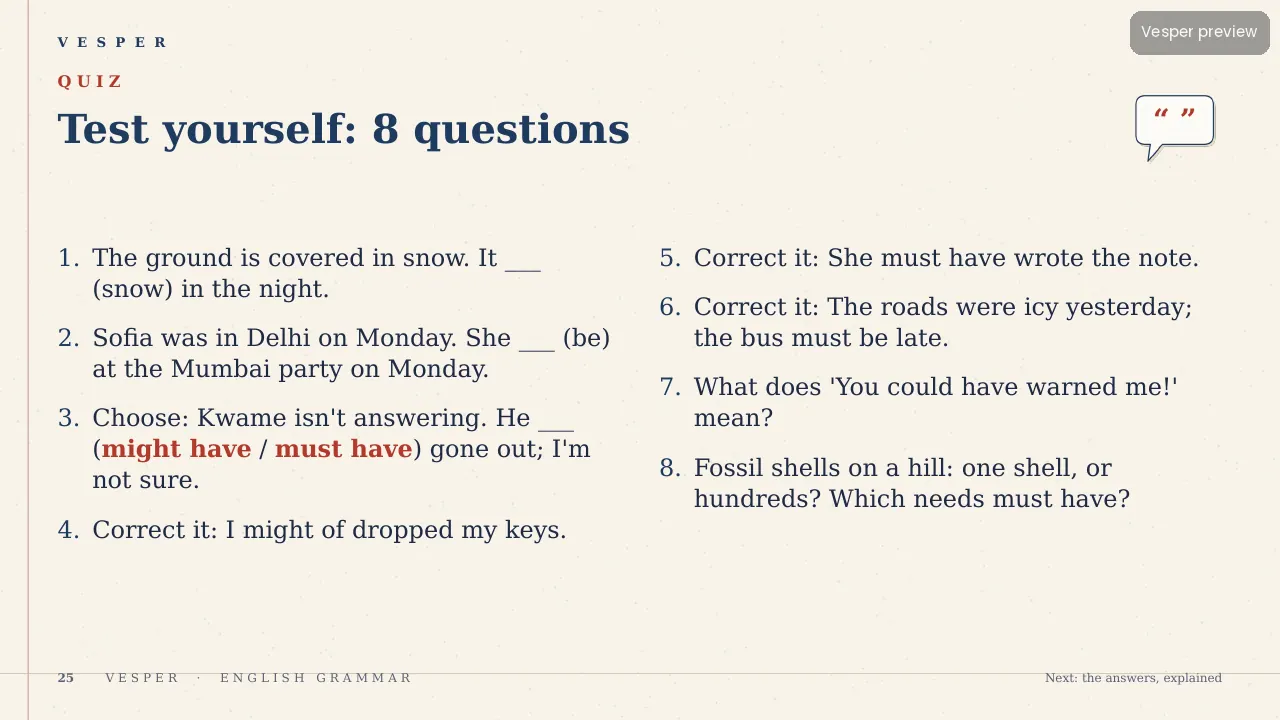
29 slides on the Inkwell template. Every rule has a worked example, a your-turn question with its answer, a red-ink wrong/right pair and a spot-the-mistake task. There is a certainty-scale diagram, a missing-biscuits case where students write three deductions, a detective’s notes with three mistakes to find, two checkpoints and an 8-question quiz with explained answers. Every example sentence is original.
How to teach it
Allow about 45 minutes. Start with the cake and the three sentences on slide 3, and ask which one fits the evidence before naming any grammar. Keep the certainty scale from slide 5 on the board for the rest of the lesson. The detective activity on slide 22 works well in pairs. Notes on every slide give Say, Ask, Watch for and Time.
Who it’s for
For ages 14–16 working on modal verbs, writing and exam grammar. It also helps older learners of English who say ‘must have went’. The deck is editable, so you can add your own case or mystery.