About this lesson
What students discover
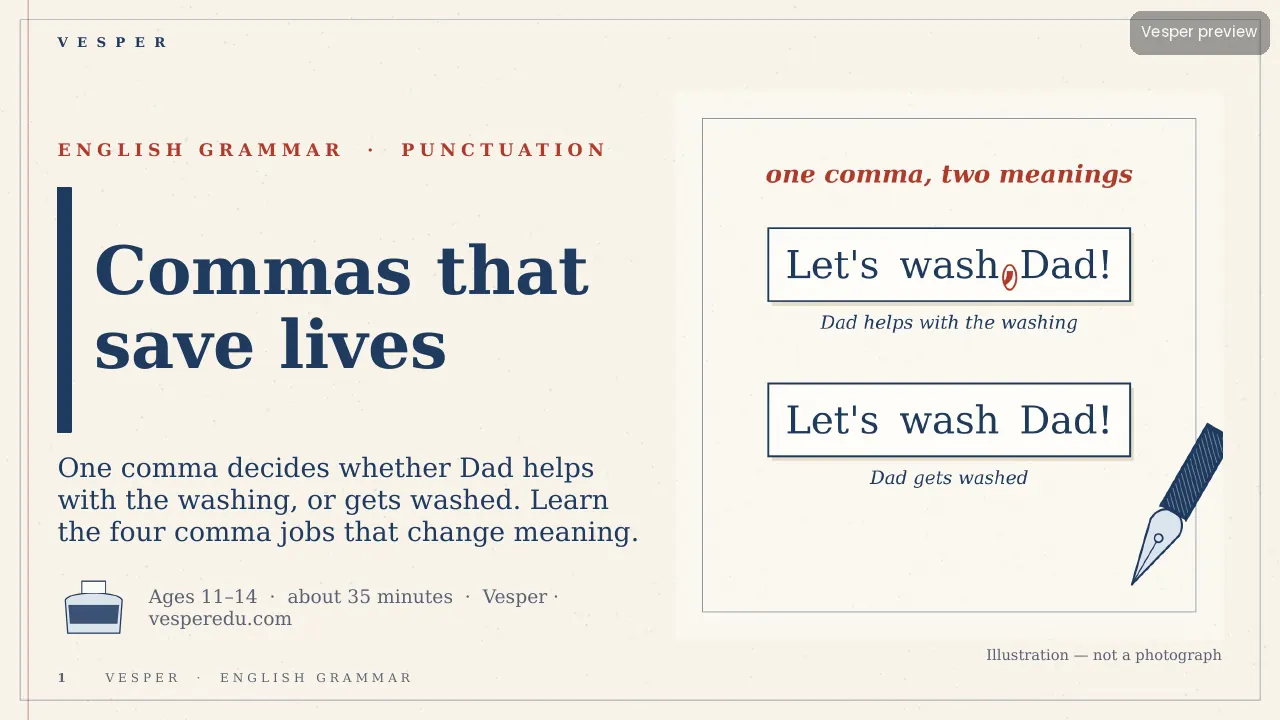
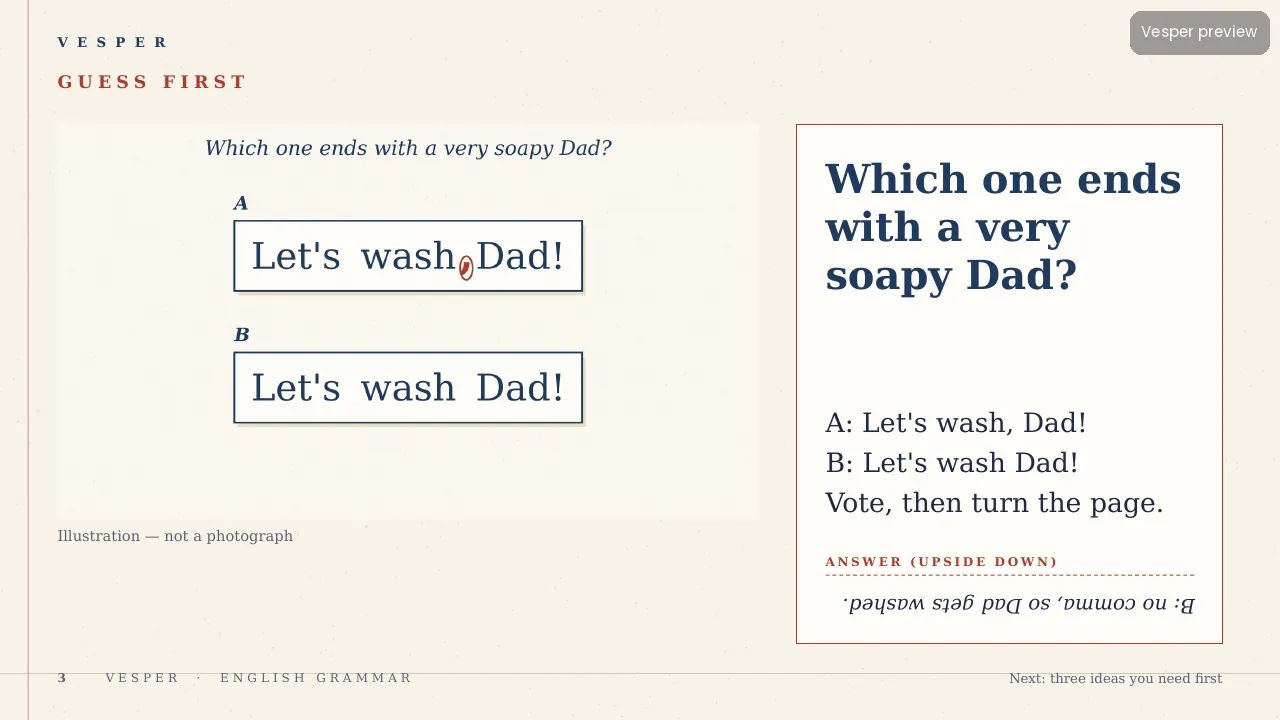
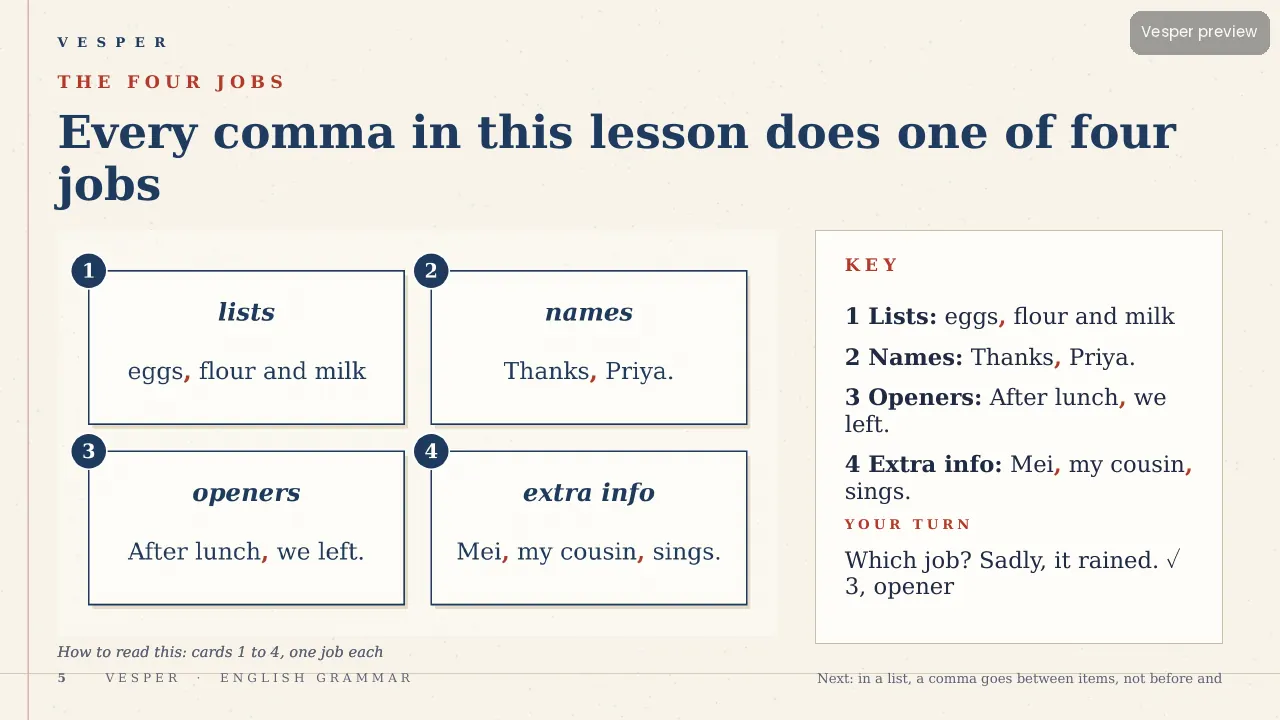
‘Let’s wash, Dad!’ or ‘Let’s wash Dad!’? One comma decides whether Dad helps or gets soapy. This lesson teaches the four comma jobs that change meaning: separating items in a list, marking the name of the person you are talking to, closing off an opener (‘When the bell rang, …’) and wrapping extra information in a pair of commas (‘My cousin, who lives in Goa, is visiting’).
Each job comes with a slip to fix. List items blur together without commas. A missing comma turns Kwame from the person spoken to into the person being hurried. An opener’s comma goes at the end of the opener, not inside it, and extra information needs both commas of the pair. Students then meet the optional serial (Oxford) comma and the sentence where it saves the meaning, bust the myth that commas go wherever you breathe, and see how two commas decide whether every student passed.
Inside the deck
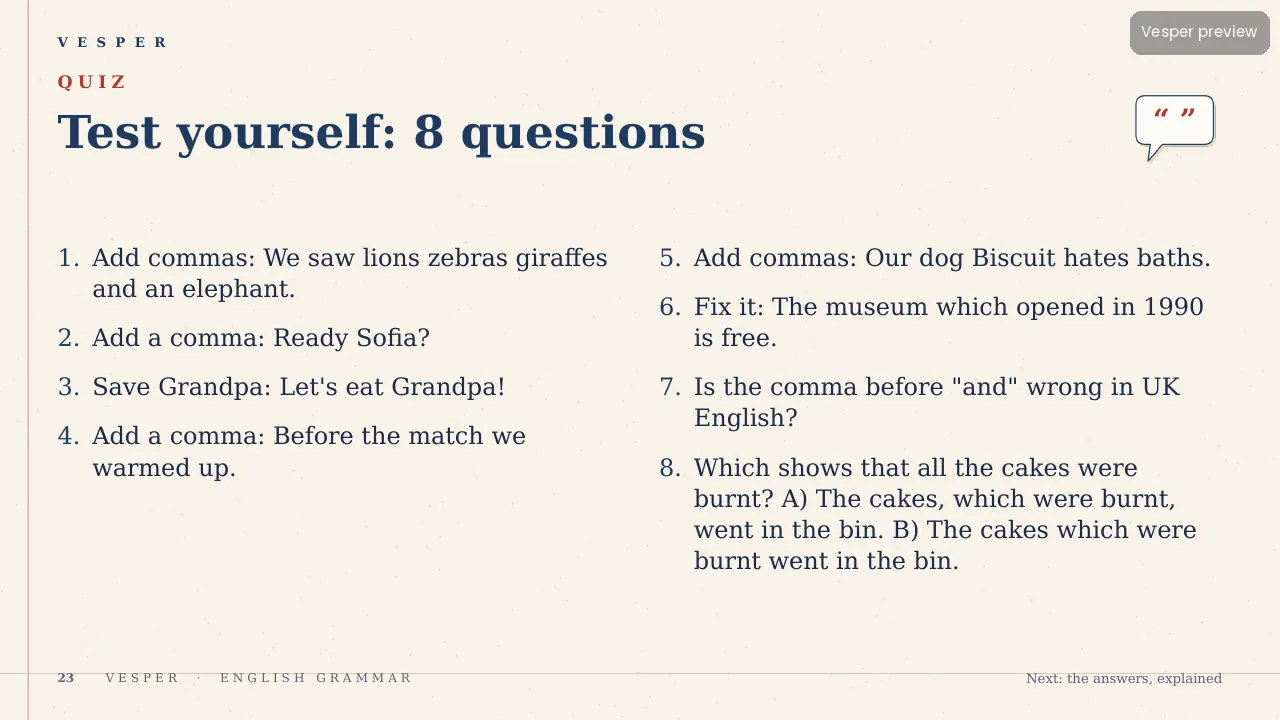
27 slides on the Inkwell template: a guess-first poll, a primer, a diagram walk of the four jobs, six your-turn tasks with answers, red-ink wrong/right pairs and two checkpoints. The activity is a postcard to Nani with three comma mistakes to find. An eight-question quiz has explained answers, and every example sentence is original.
How to teach it
About 35 minutes, so it fits a short lesson or half of a longer one. The one-card summary (lists, names, openers, extra information) works as a desk reminder for the next piece of writing. Speaker notes sit on every slide.
Who it’s for
Learners aged 11–14, and any teacher who has marked ‘Let’s eat Grandpa’ and wanted a lesson that makes the joke do the teaching.