About this lesson
What students discover
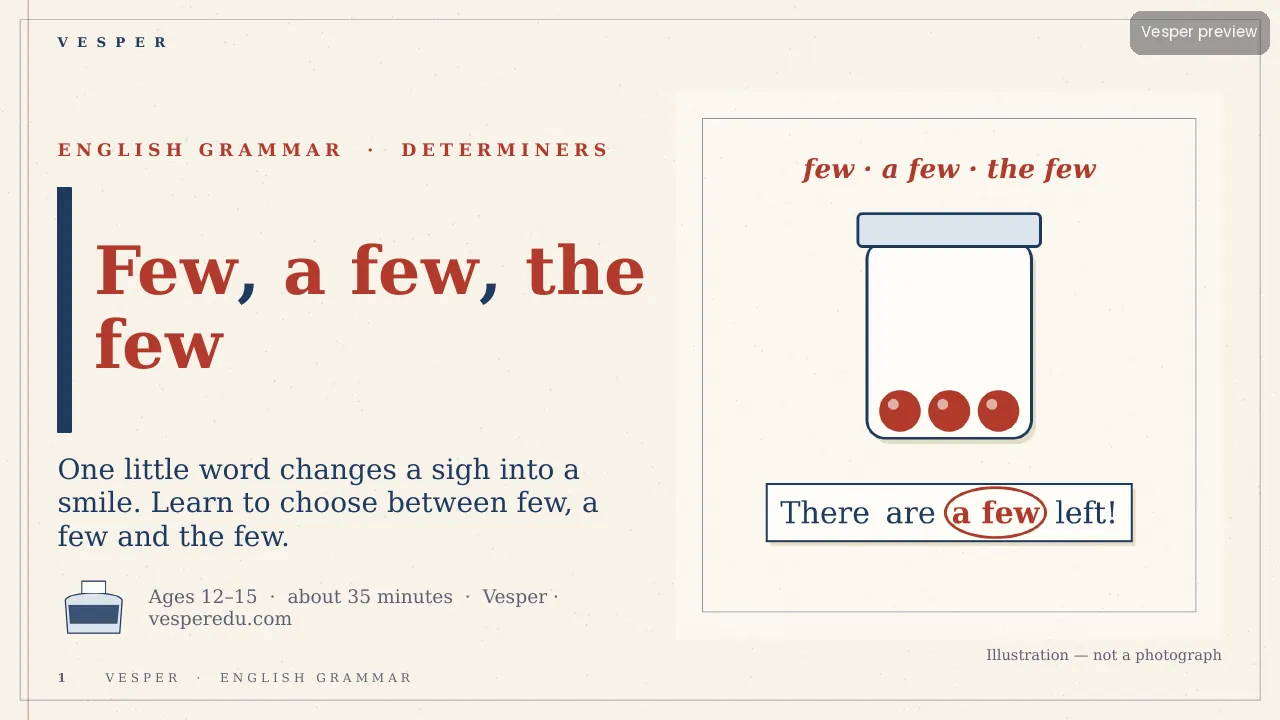
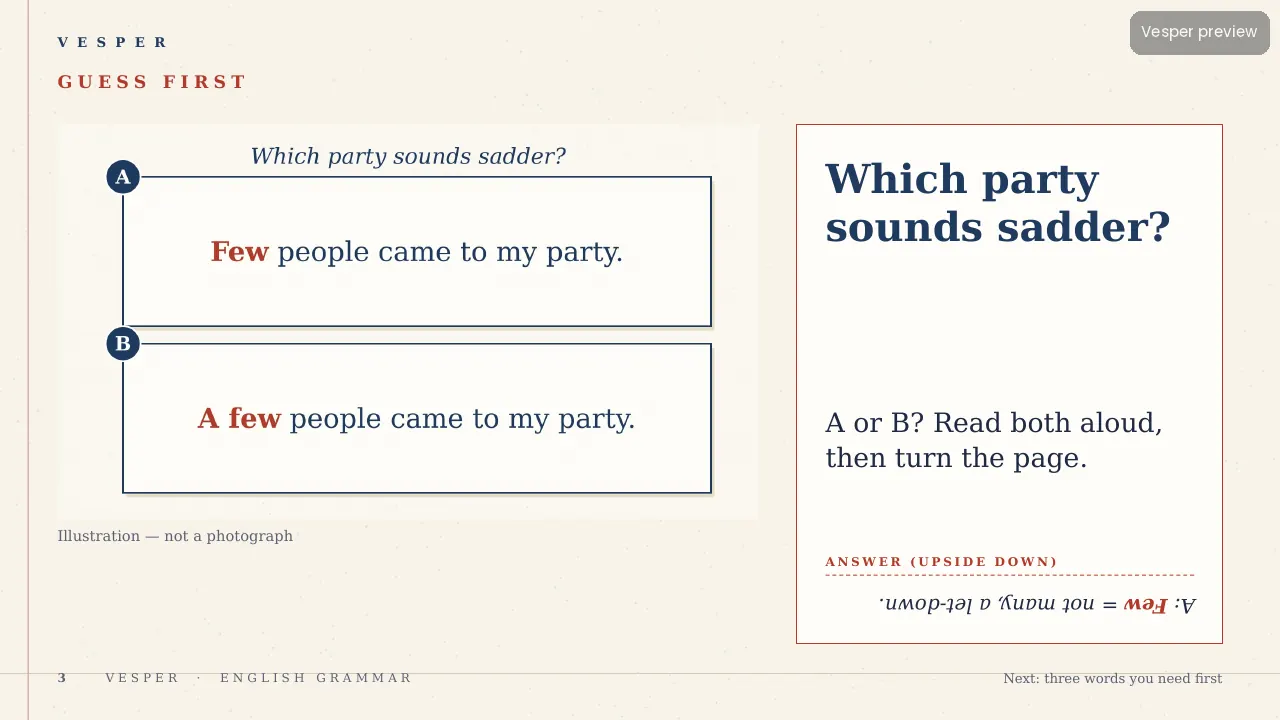
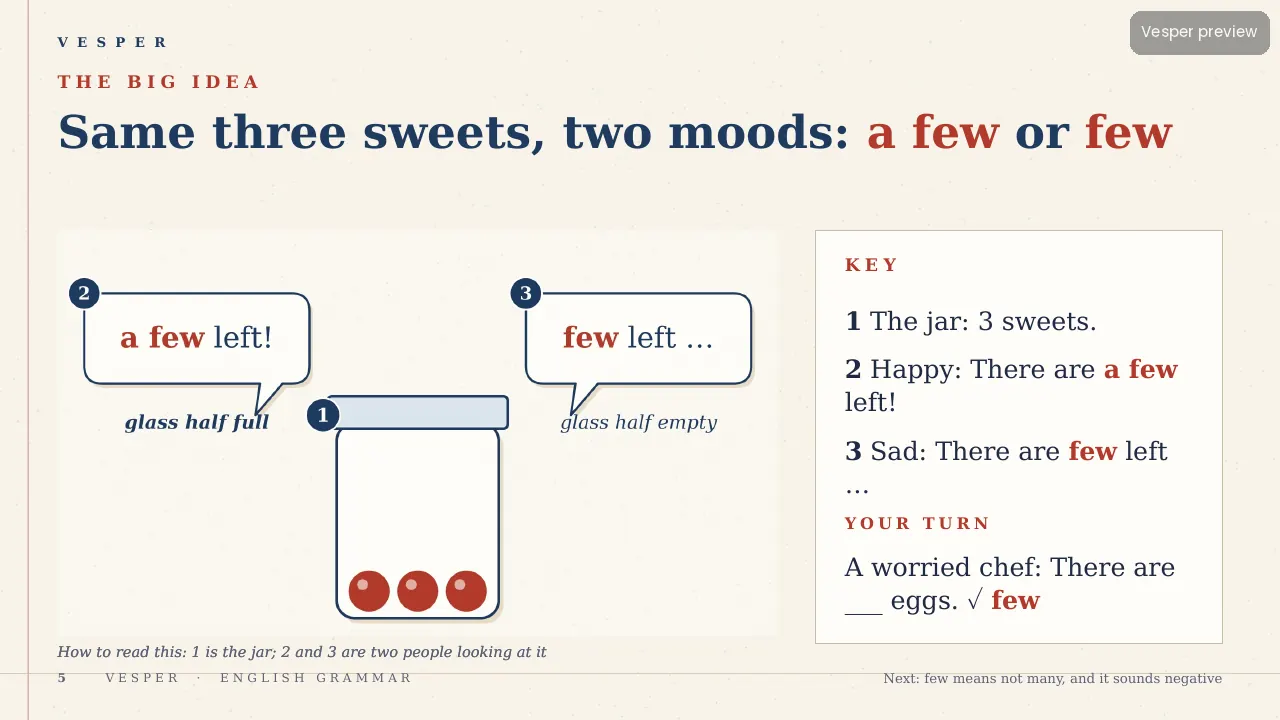
‘Few people came’ is a sigh. ‘A few people came’ is a smile. This lesson shows how one small word changes the mood. Few means not many (negative), a few means some (positive), and the few means the whole of a small group that exists (‘the few tickets left sold in minutes’). A sweet jar with exactly three sweets proves the point: the same three can be ‘a few’ or ‘few’, depending on how you feel about it.
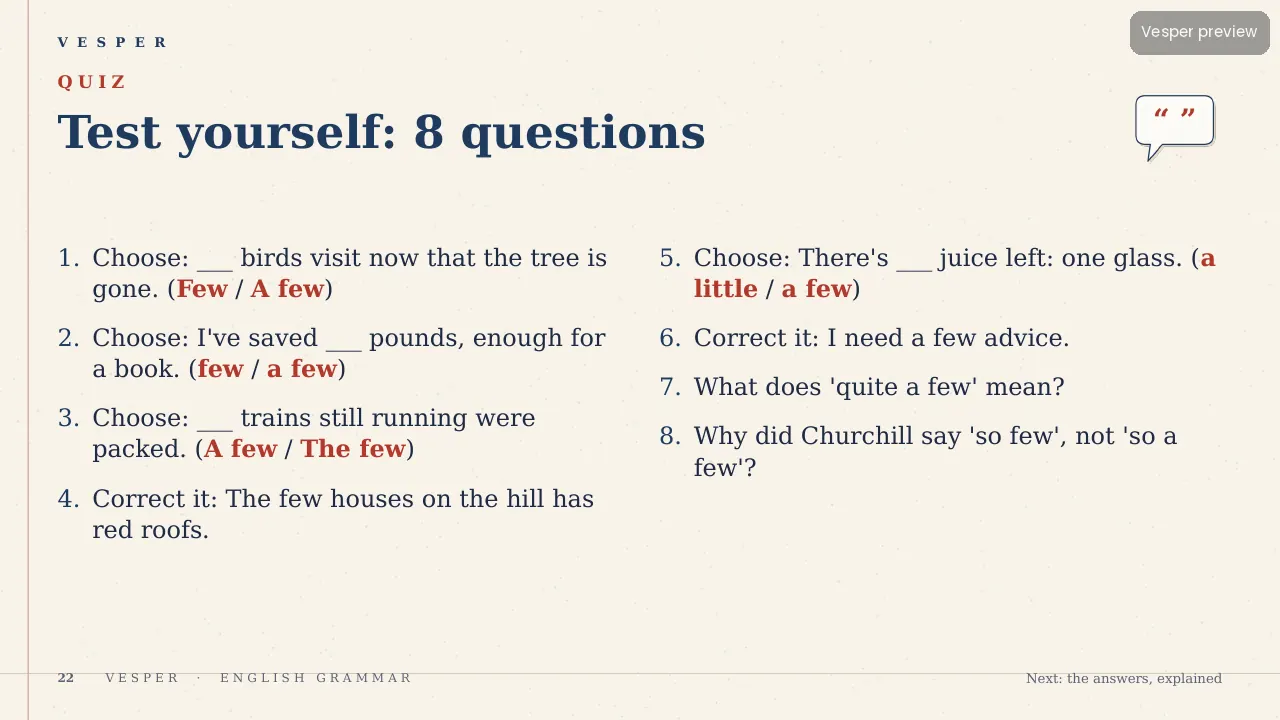
Students then meet the uncountable partners, little and a little (‘There’s a little juice left: one glass’), and fix ‘I need a few advice’. The few always takes a plural verb, so ‘the few houses on the hill has red roofs’ gets corrected in red ink. A bet-you-didn’t-know brings the surprise that ‘quite a few’ means quite a lot, and a real-world slide looks at how Churchill used ‘the few’ to praise a small group in his speech of 20 August 1940.
Inside the deck
26 slides on the Inkwell template: a guess-first poll (‘which party sounds sadder?’), a primer on countable and uncountable nouns, a diagram walk with the sweet jar, five your-turn tasks with answers, wrong/right pairs, two checkpoints and a three-gap quick poll. The activity is a message with three mistakes to find. An eight-question quiz has explained answers, and every example sentence is original.
How to teach it
About 35 minutes. Ask students to read the hook sentences aloud: the mood difference is easier to hear than to explain. Speaker notes sit on every slide.
Who it’s for
Learners aged 12–15, including those learning English as an additional language, for whom few and a few are a classic trap.