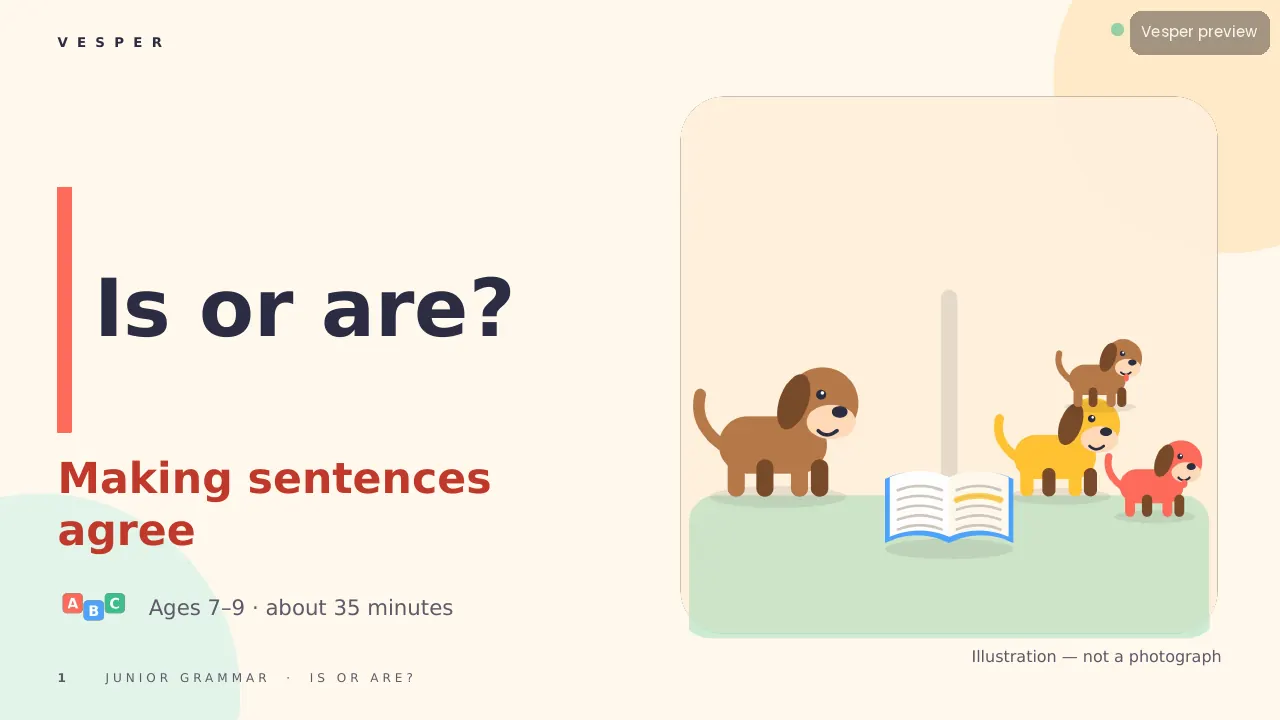
About this lesson
What students discover
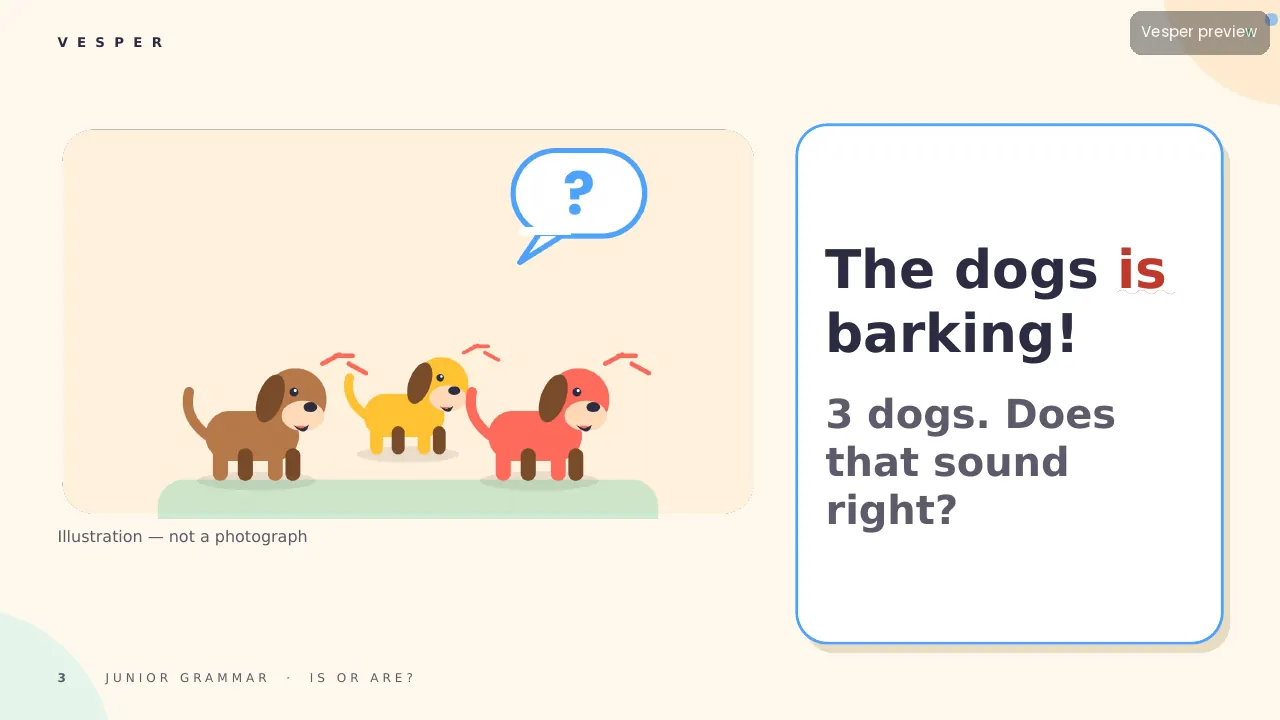
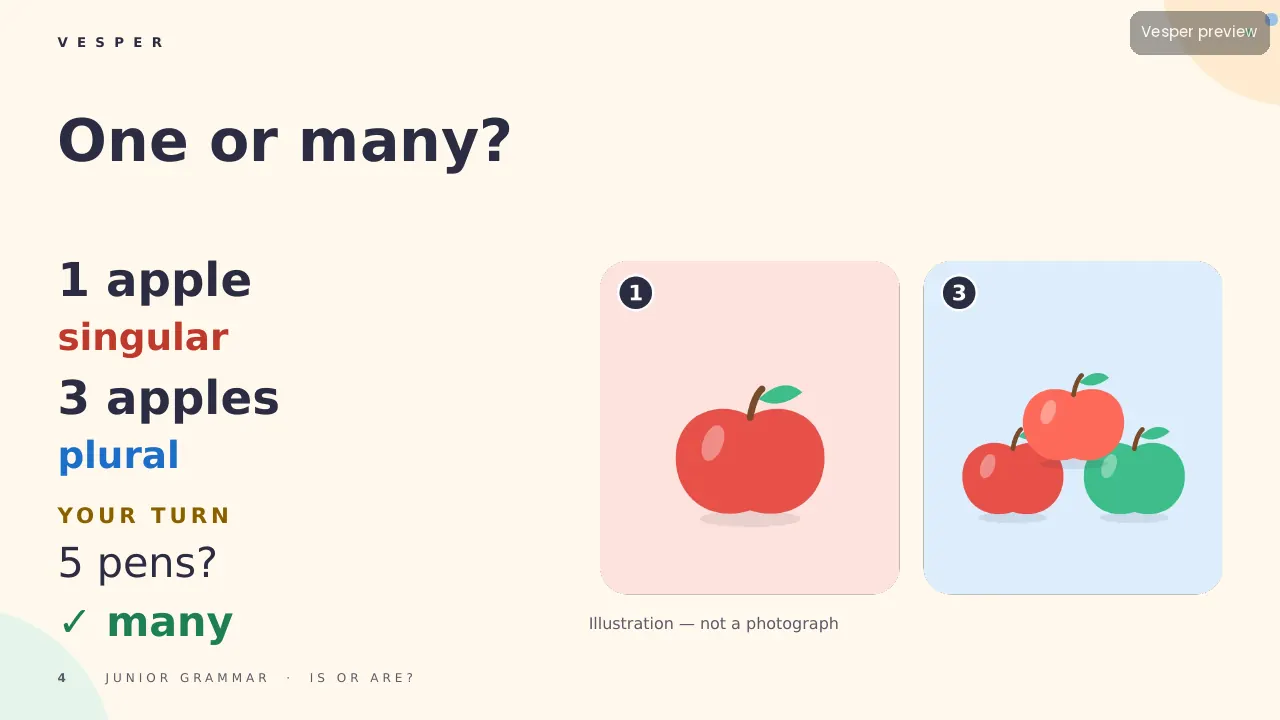
Children hear ‘The dogs is barking’ and know something is off. This lesson shows them why, one small idea per slide. They learn to count the naming word (one or many?), then choose the doing word that matches: the -s rule (he runs, they run), is and are, was and were, has and have.
Three tricky cases follow: two names joined by and (‘Ana and Kwame are painting’), everyone (‘Everyone is clapping’), and the special words I and you (I am, you are).
Inside the deck
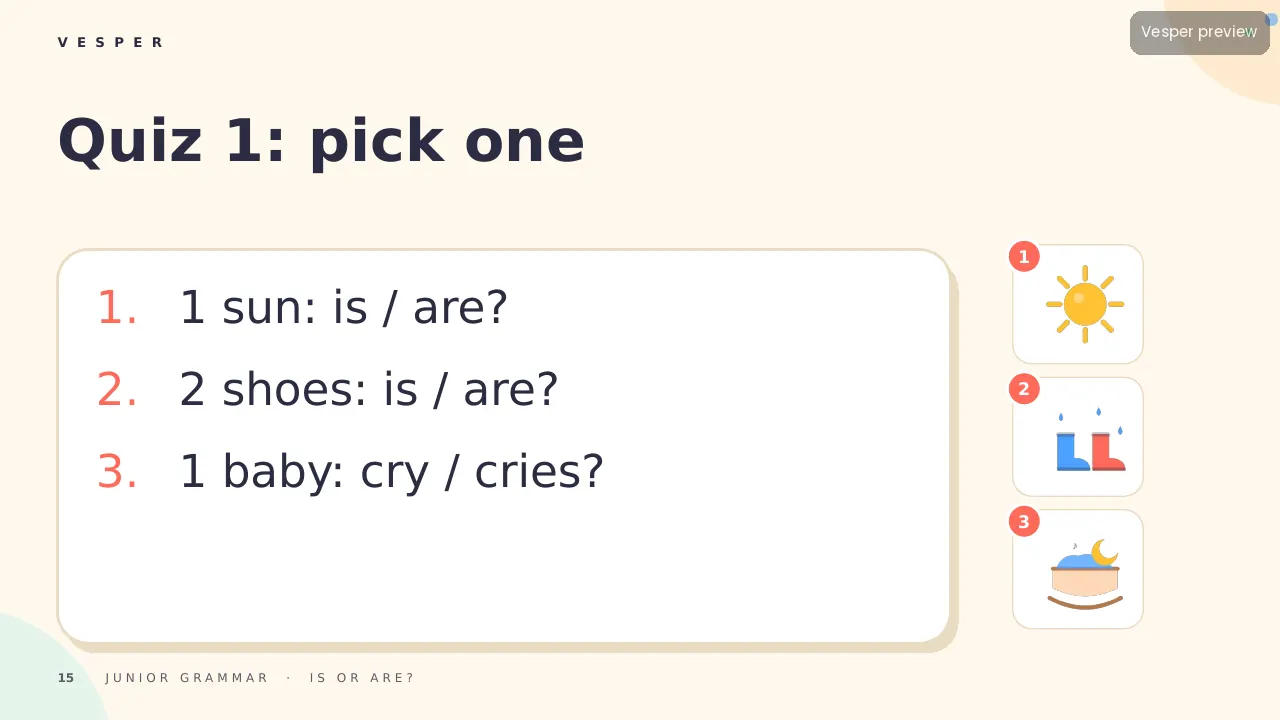
22 slides on the Sprout template, made for young readers: big text, no more than 12 words on any slide, and bright, friendly pictures of cats, dogs, ducks and bees. Every rule has a real example and a ‘Your turn’ sentence with its answer on the slide. There is a quick ‘Which is right?’ check, a circle-the-word activity, a six-question quiz in two parts with answers, and a ‘Remember’ card. A two-page printable worksheet with 13 questions and an answer key comes with it.
How to teach it
Plan on about 35 minutes. Read the hook aloud and let the children say whether it sounds right before you explain. On each ‘Your turn’ slide, ask the class to call out the answer before you reveal the tick. The worksheet works as homework or a quick check the next day, and its answer key includes tips for grown-ups helping at home.
Who it’s for
For children aged 7–9 learning to write in full sentences, and for parents helping with grammar at home. Teachers can add their own sentences on the named Sprout layouts.