About this lesson
What students discover
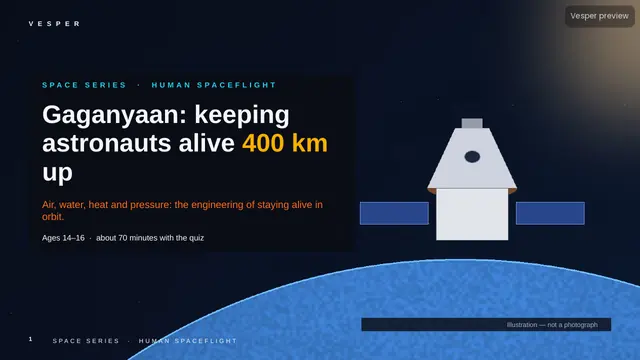
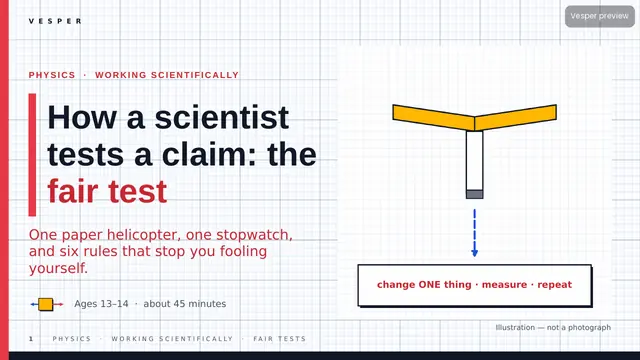
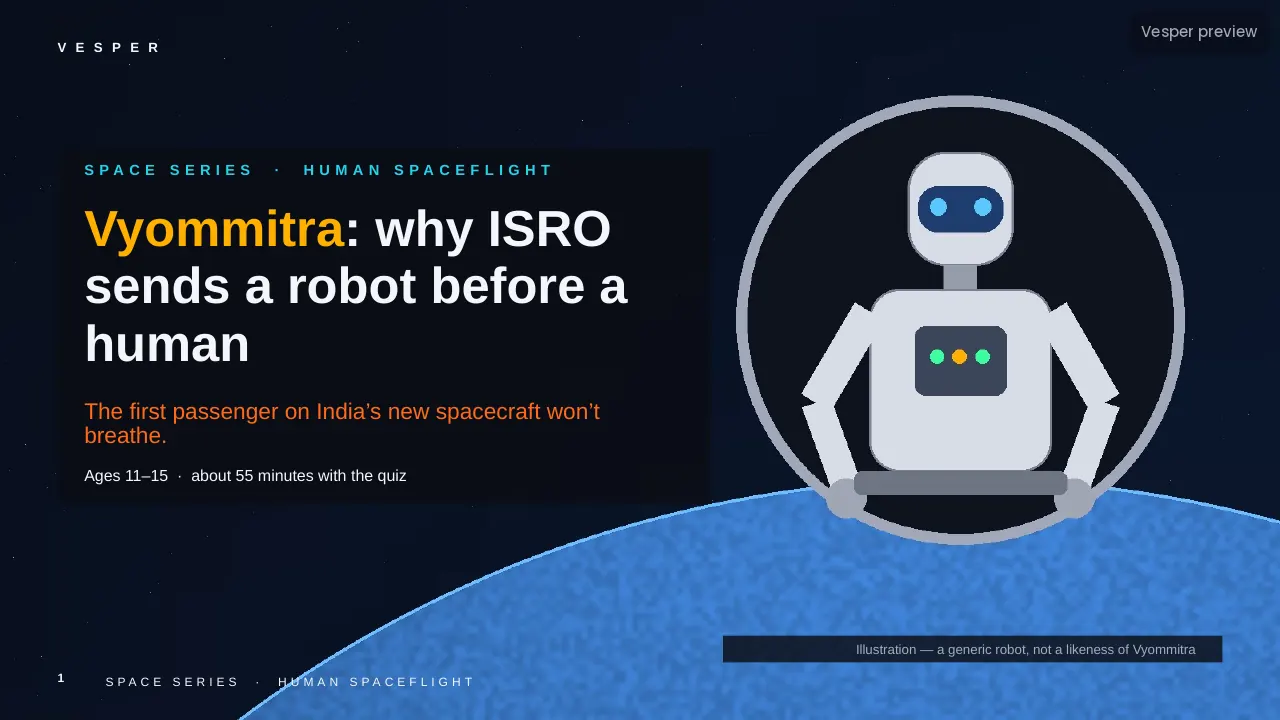
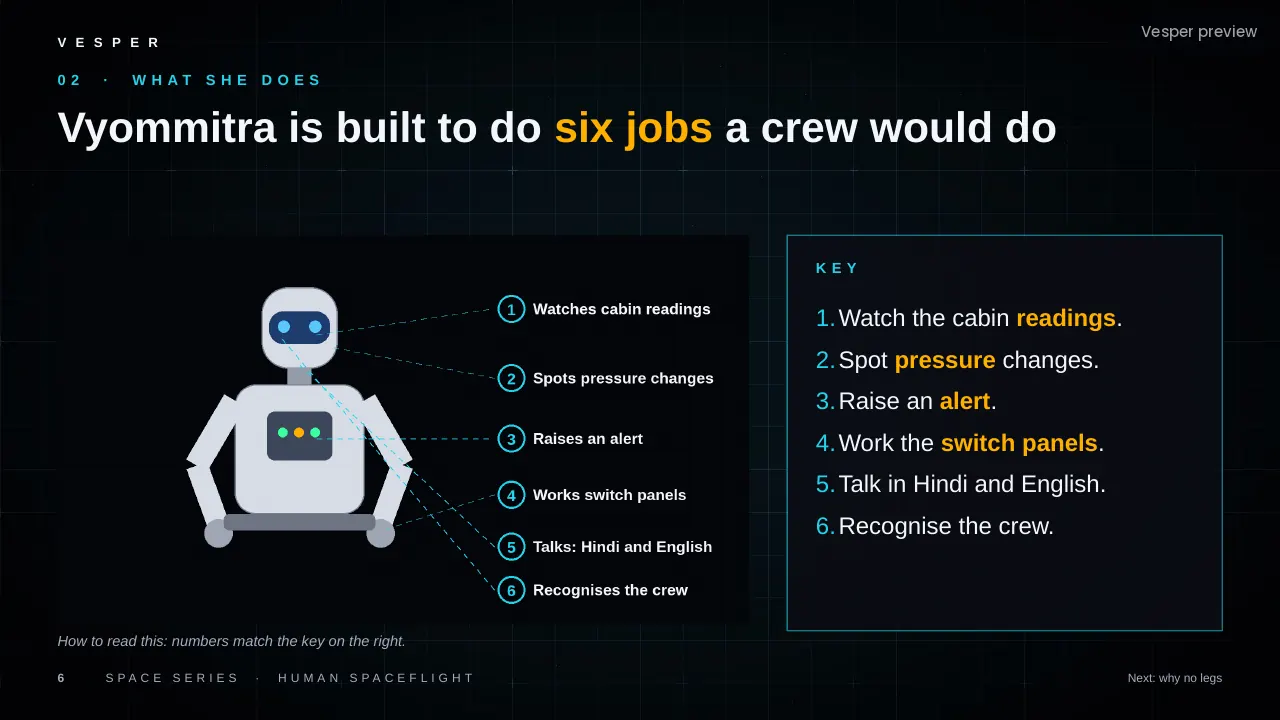
India’s first Gaganyaan flight has one passenger, and she doesn’t breathe. Students use Vyommitra, ISRO’s half-humanoid robot, to learn the core of investigative science: the fair test. They find out what she is built to do (six jobs a crew would do), why she has no legs, and how her flight changes one variable while keeping the capsule, rocket and orbit the same.
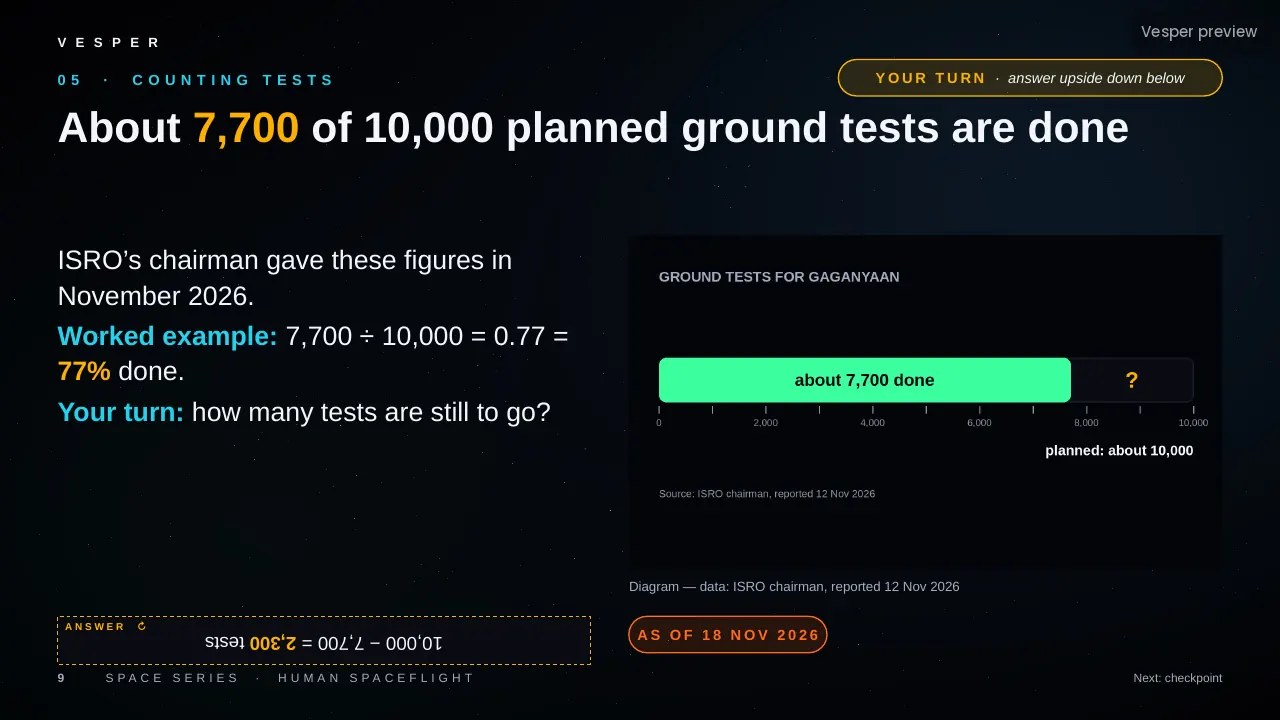
History supplies the evidence: a chimpanzee flew 94 days before the first American, a dummy 18 days before Yuri Gagarin, and NASA flew detector-packed torsos round the Moon in 2022. Real numbers run throughout: 7,700 of 10,000 planned ground tests done, a 50 kg person feeling like 150 kg at 3 g, and fruit flies that share about 75% of human disease genes.
Inside the deck
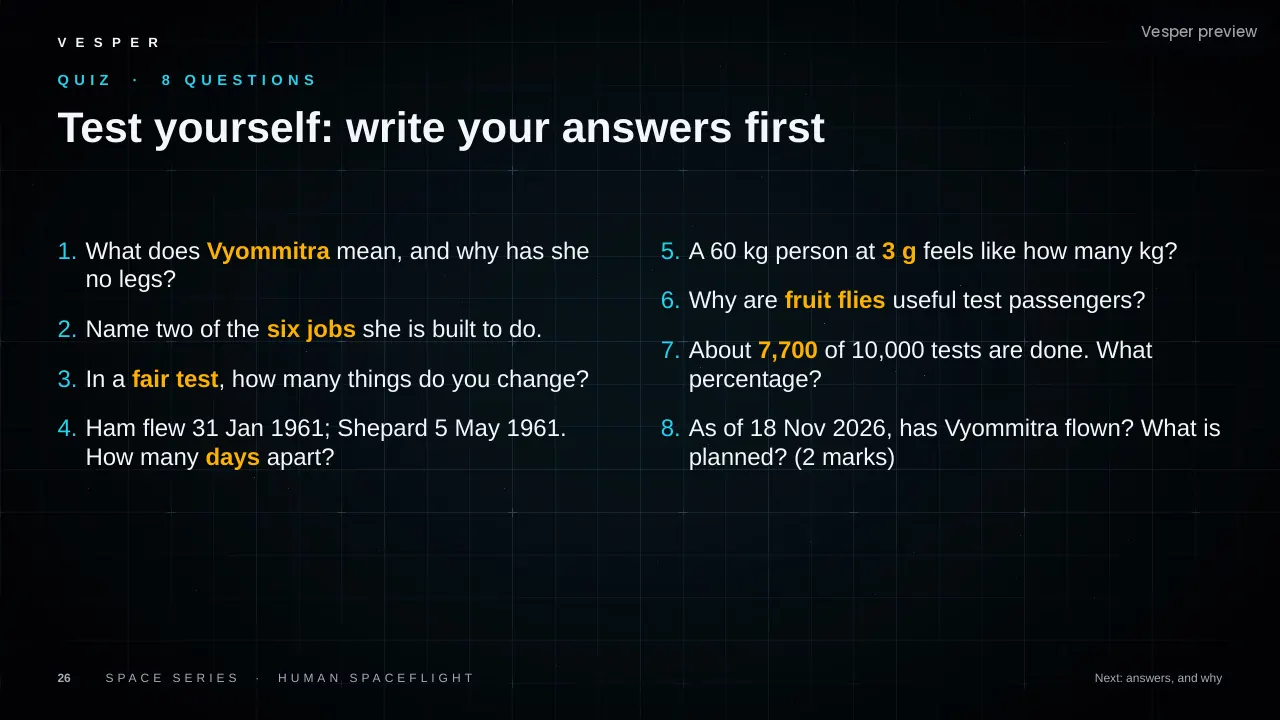
30 slides on the Nova template. A your-turn where students give the robot four sensors, a myth buster (‘sending a robot means the spacecraft isn’t safe’), crash-test dummies, a safe egg-drop robot-first activity, polls, guess-first prompts, upside-down answers, two checkpoints and an 8-question quiz with explained answers. Mission dates are given as plans dated 18 Nov 2026, never as outcomes.
How to teach it
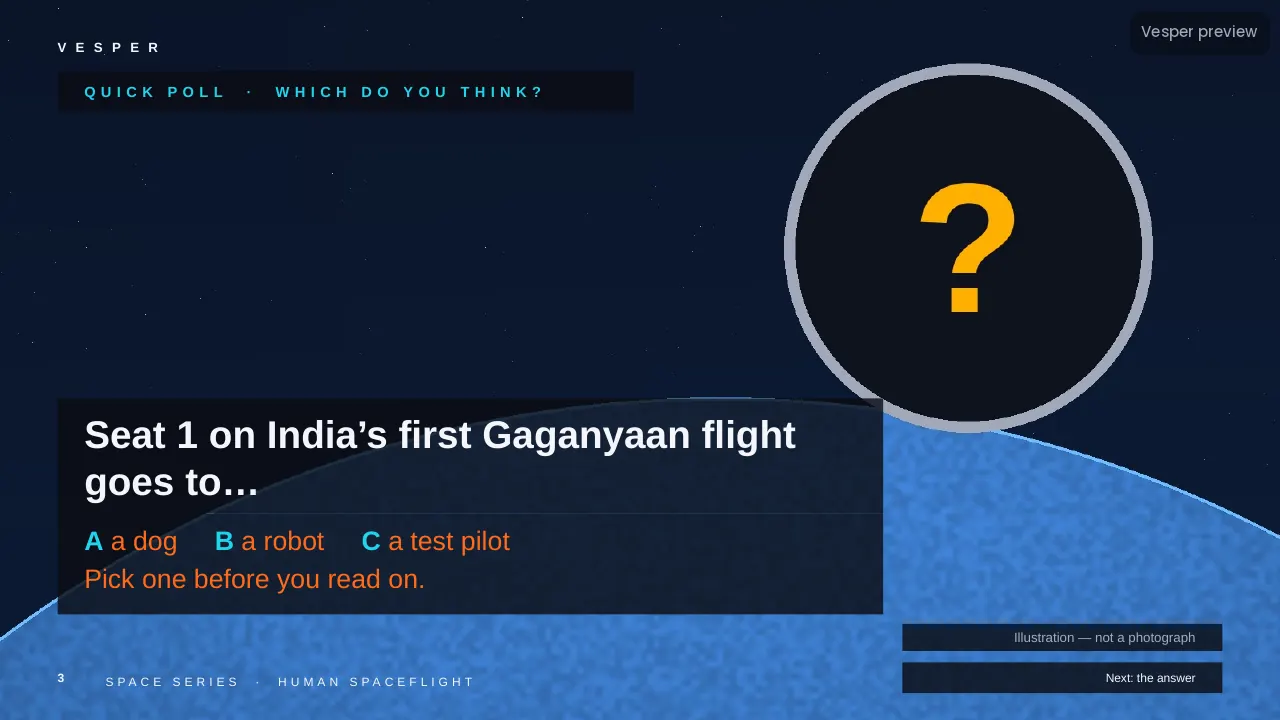
Allow about 55 minutes. Ask the hook (who gets seat 1?) before revealing the robot. The egg-drop activity on slide 21 works in groups: protect an egg ‘passenger’ and test the design before anyone would ride in it. Check the mission news before teaching, as the planned dates may move. Notes on every slide give Say, Ask, Watch for and Time.
Who it’s for
For ages 11–15 learning fair testing and variables, and for space fans following India’s human spaceflight programme. Editable PowerPoint with named layouts.