About this lesson
What students discover
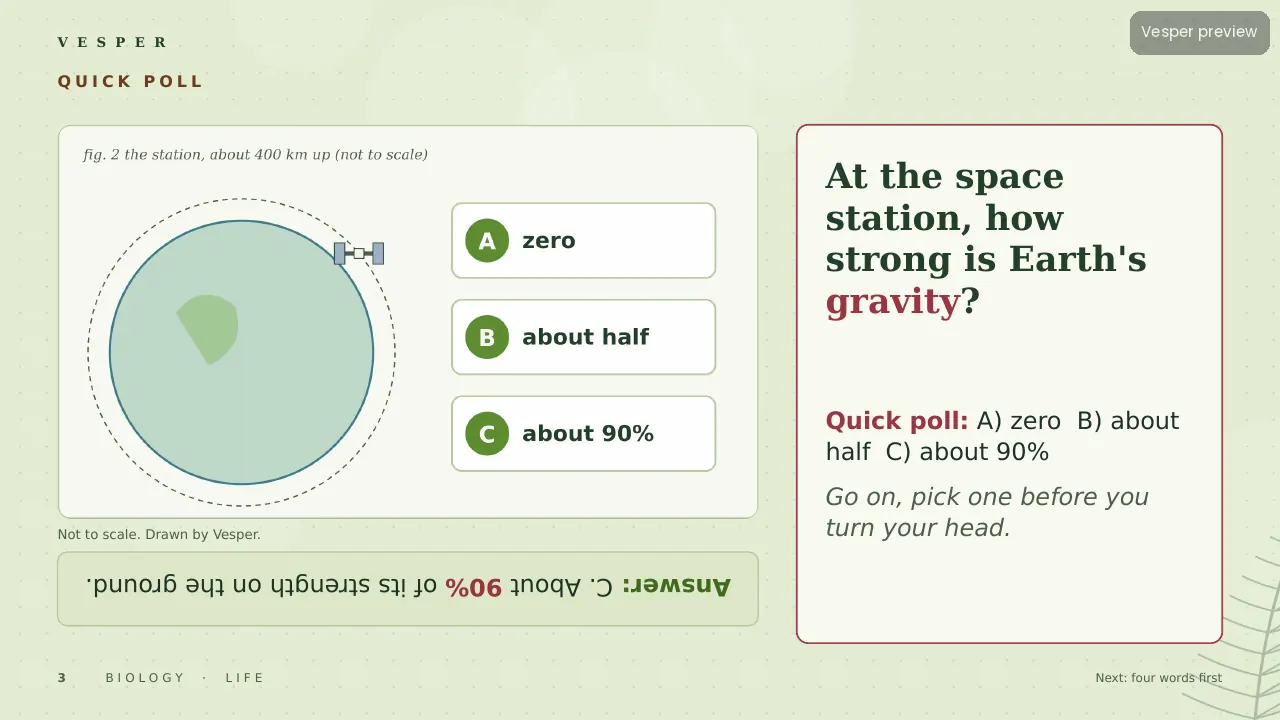
Astronauts float, but gravity at the space station is still about 89% as strong as on the ground. Students calculate it with (6,371 ÷ 6,771)² and learn that floating is free fall. Then they follow the body system by system using space-agency figures.
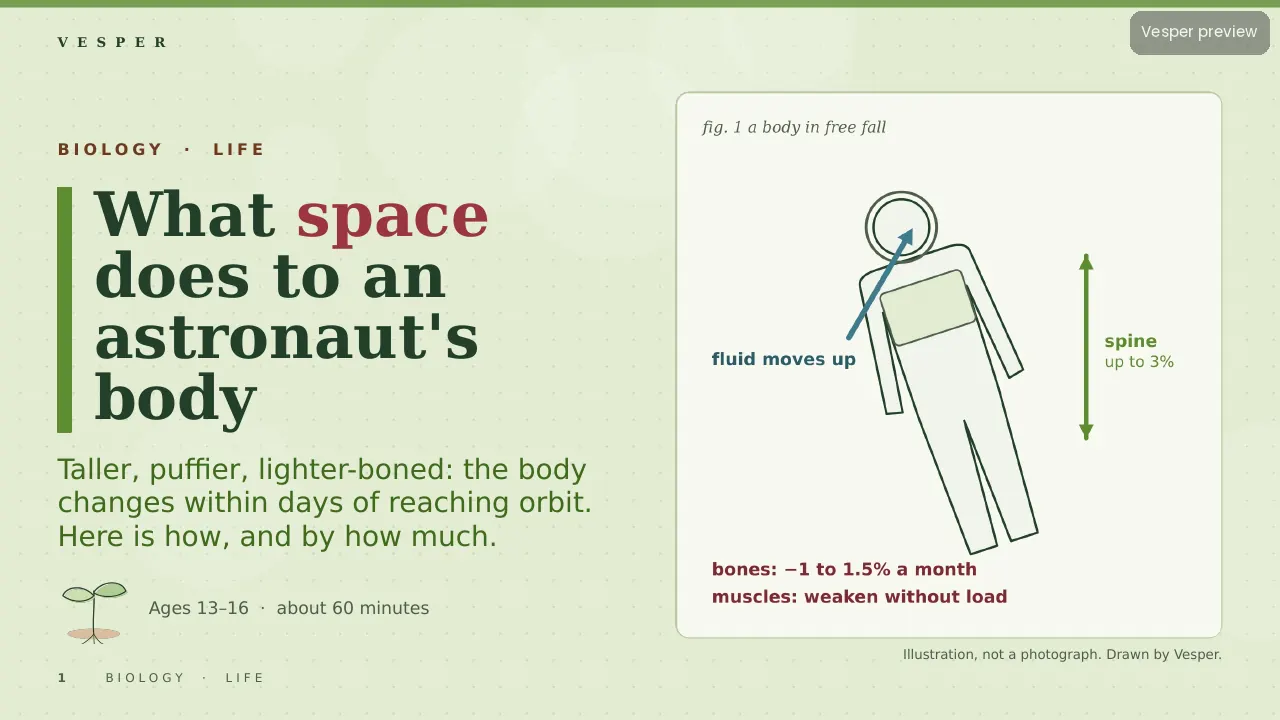
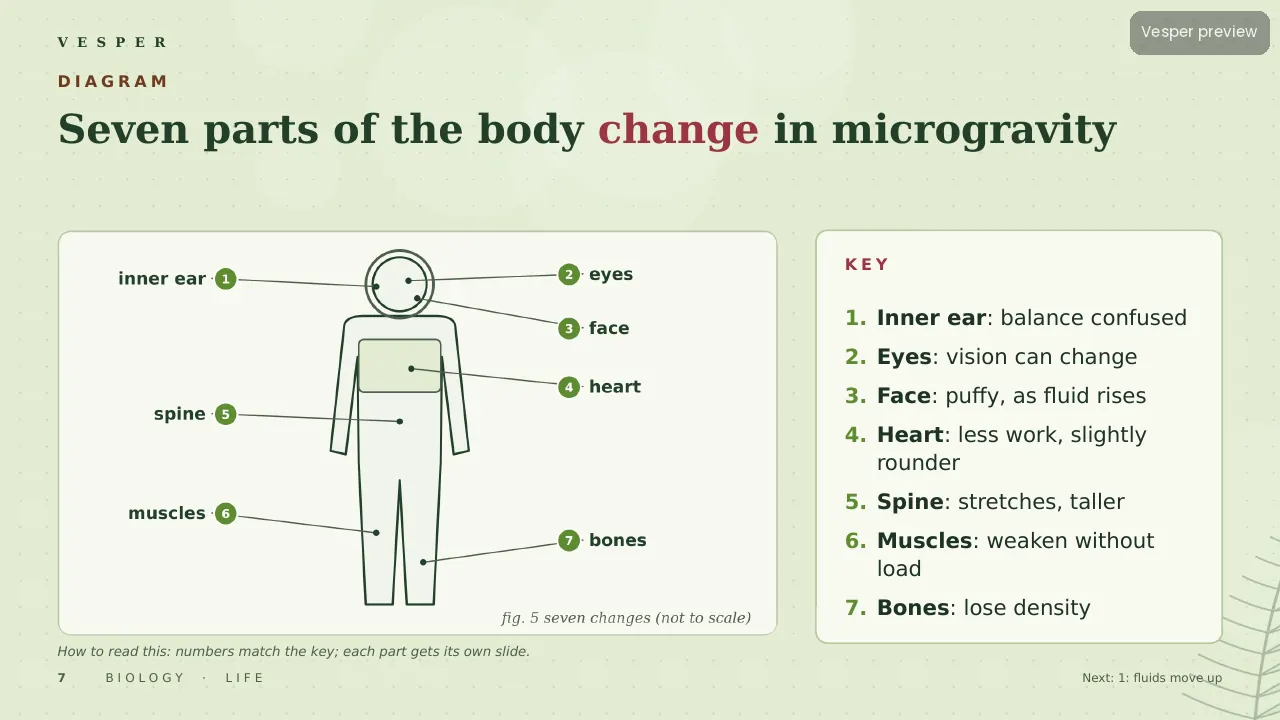
About 2 litres of fluid shift towards the head (puffy faces, ‘bird legs’). The spine lengthens by up to 3% (170 cm gains 5.1 cm). Weight-bearing bones lose 1–1.5% of their density a month, because bone-removing cells win when there is no load, so crews exercise about 2 hours a day. The inner ear confuses the brain for a few days, some astronauts’ eyes change shape (labelled as an open question), and the heart works less hard, not harder.
Inside the deck
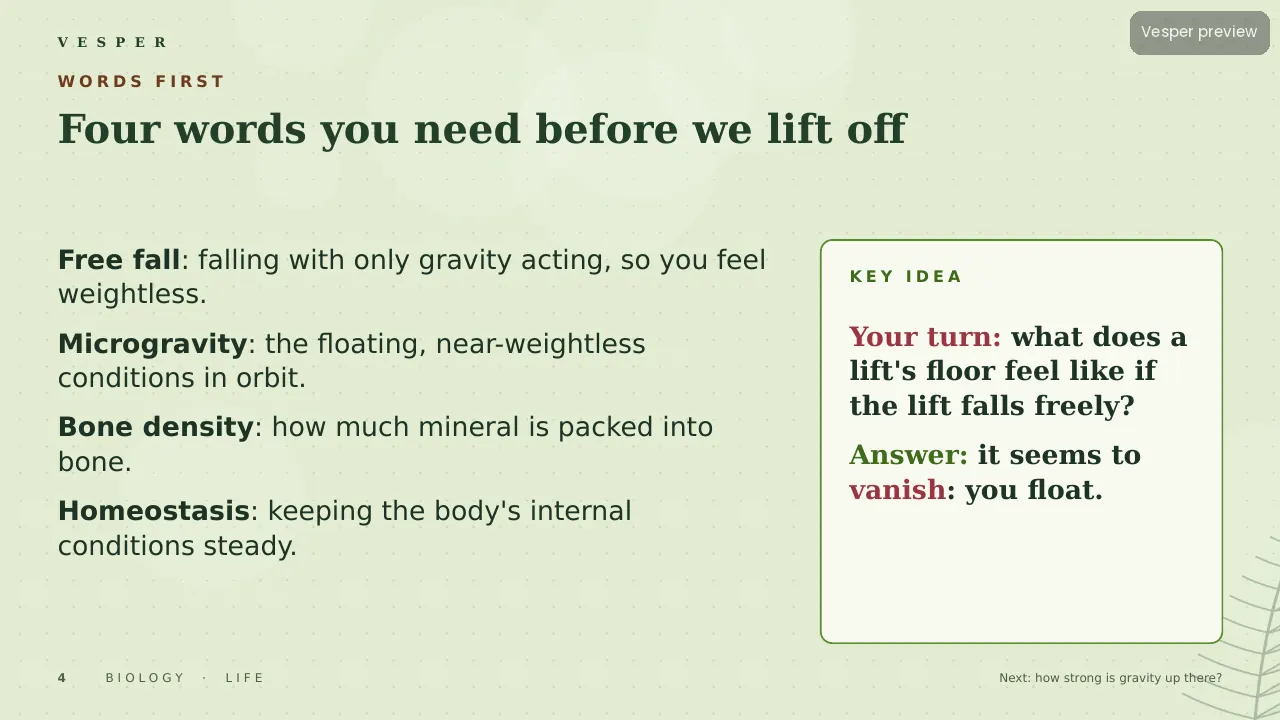
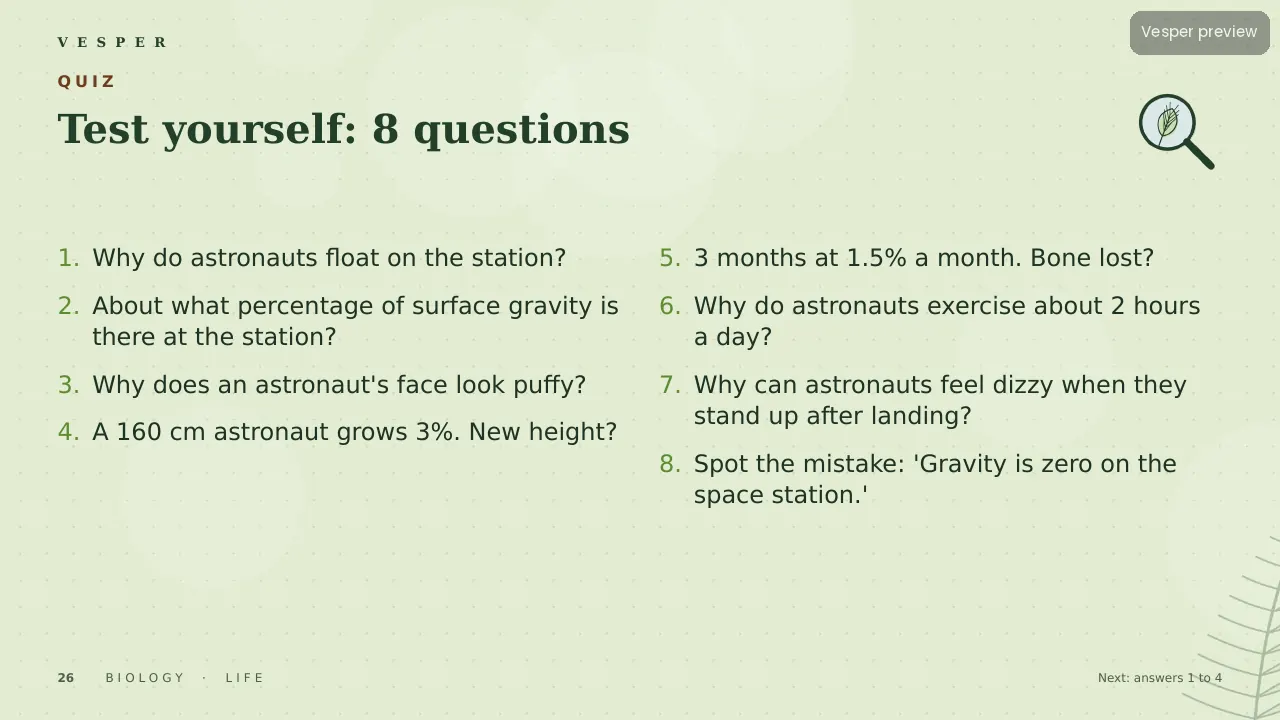
30 slides on the Field Notes template with ten your-turn questions. A diagram of seven body changes, a safe one-foot balance test, a twin who spent 340 days in space, head-down bed-rest research that also helps patients, a frontier slide on Mars and one-third gravity, two myth slides, two checkpoints and an 8-question quiz with explained answers.
How to teach it
Allow about 60 minutes. Take a vote on the hook (how strong is gravity at the station?) before showing the calculation; most students guess zero. The balance test on slide 14 takes two minutes, eyes open then closed. Notes on every slide give Say, Ask, Watch for and Time.
Who it’s for
For ages 13–16 studying body systems, homeostasis, bones and muscles, or forces and gravity. It works well as a link lesson between biology and physics. Editable PowerPoint with named layouts.