About this lesson
What students discover
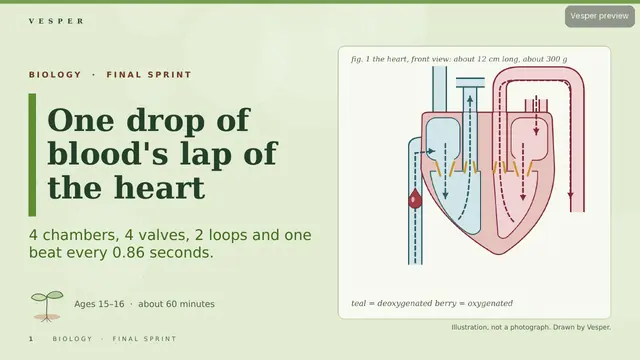
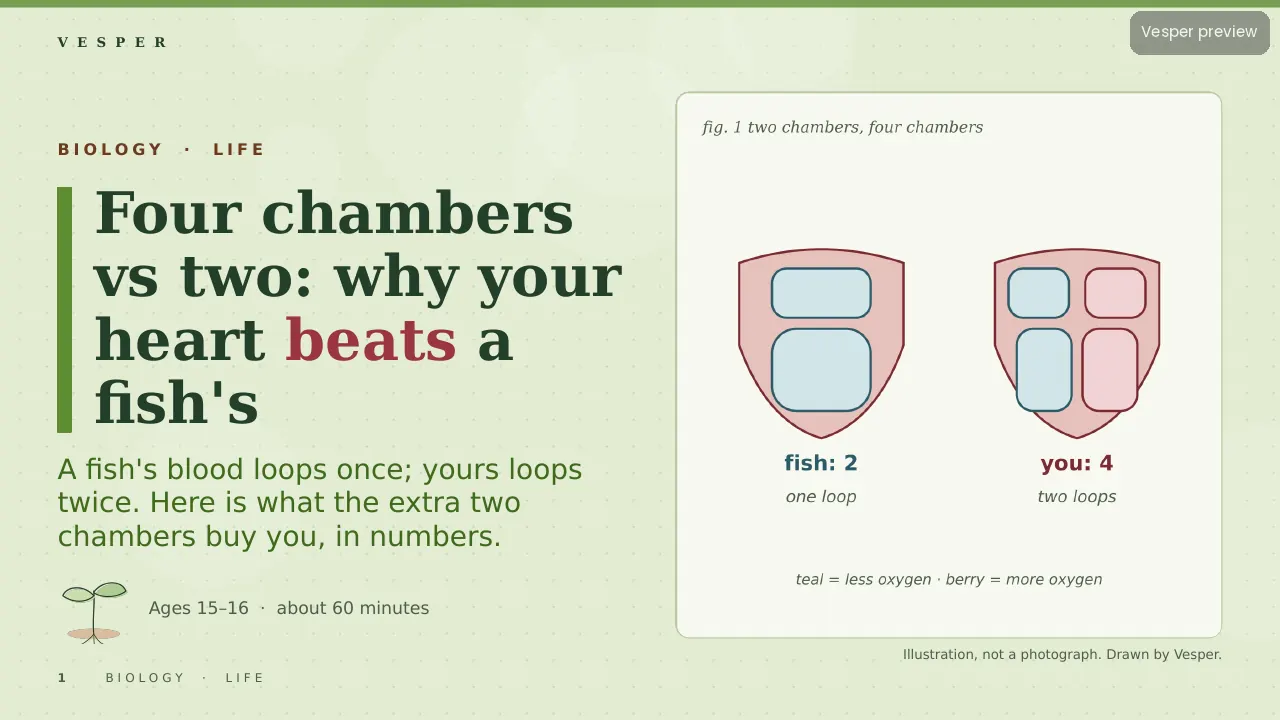
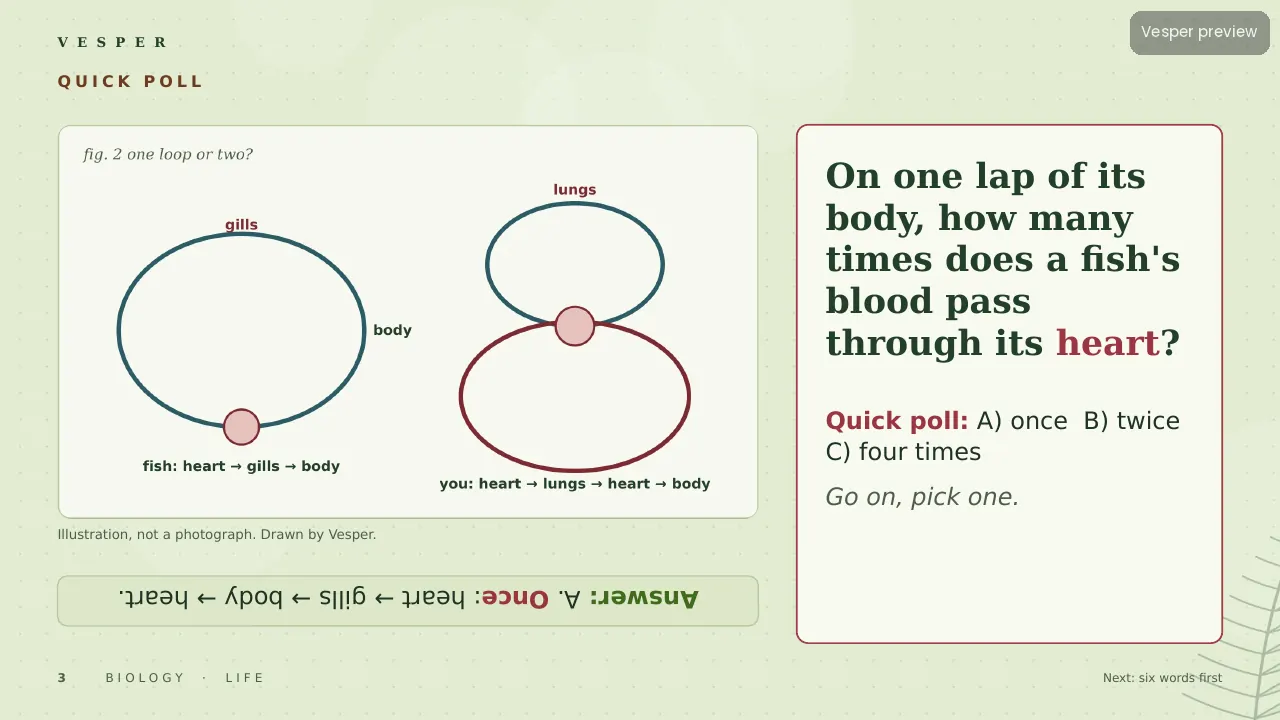
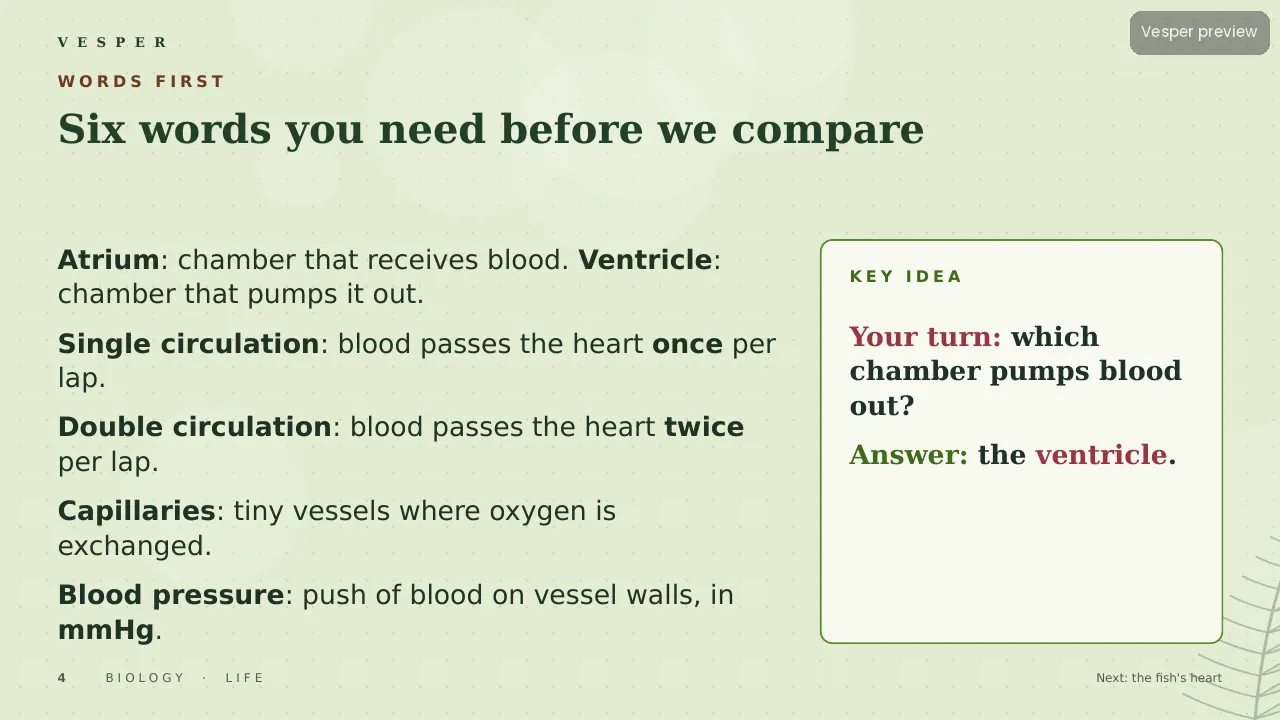
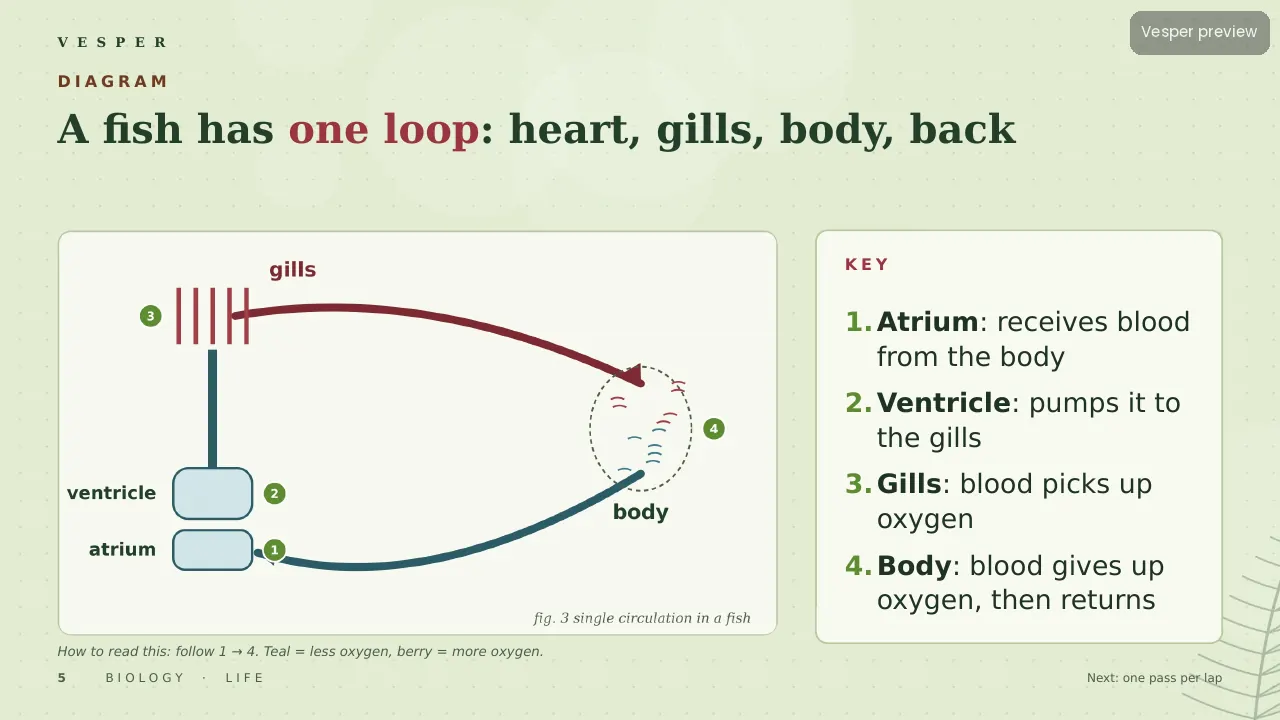
Why do mammals need four heart chambers when fish manage with two? This lesson compares the two designs with real numbers. A fish’s blood loops once: atrium, ventricle, gills, body. One pump must push blood through two capillary beds in a row, and in resting rainbow trout, measured in 1967, the pressure falls from about 40 mmHg leaving the heart to 29 mmHg after the gills, a loss of about 28%.
Our blood loops twice. The right ventricle sends it to the lungs at about 25 mmHg, low enough to protect the thin lung capillaries, and then the left ventricle pushes it round the body at about 120 mmHg. A septum keeps oxygen-rich blood (97% loaded) from mixing with returning blood (75%); mix them and you get 86%. Students meet the hearts in between (amphibians with three chambers, most reptiles with a partly divided ventricle), crocodiles that have four chambers and can still bypass their lungs, and lungfish with a partly divided atrium. A myth slide fixes ‘a fish heart is a worse heart’: it suits life in water at the water’s temperature.
Inside the deck
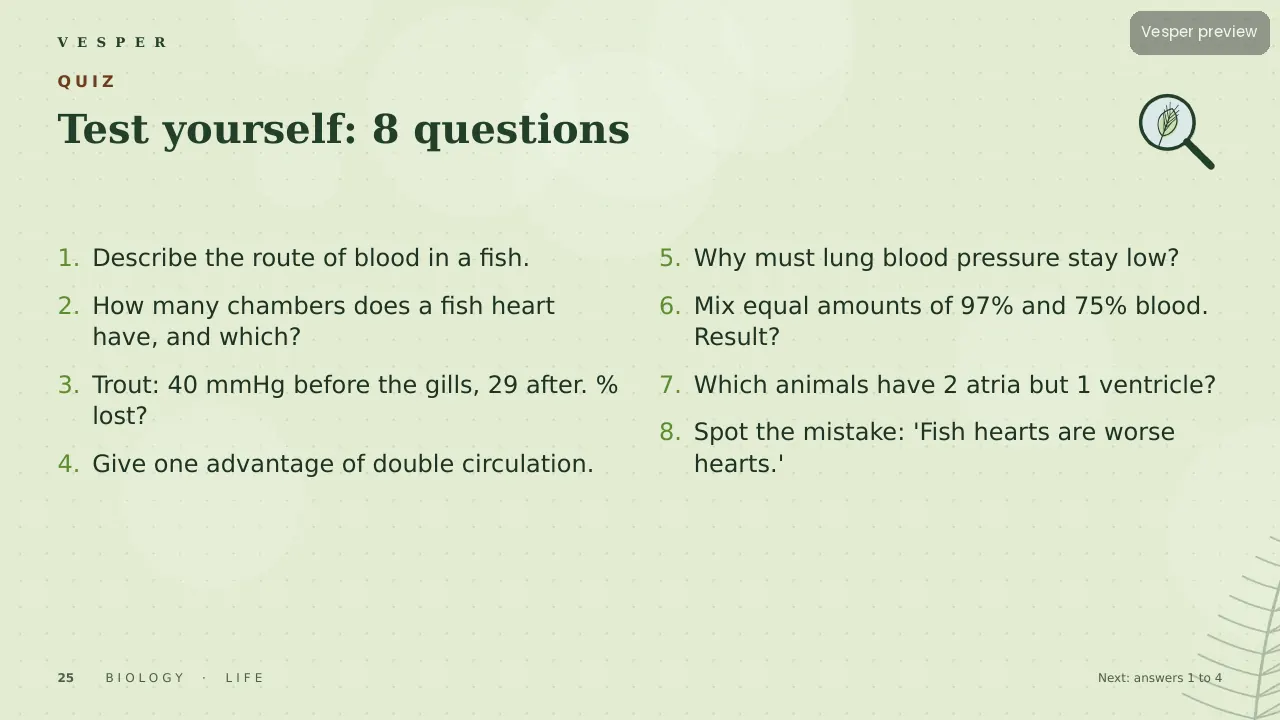
29 slides on the Field Notes template: a quick-poll hook, a six-word primer, three diagrams, two evidence slides, worked examples with eight your-turn moments, two checkpoints, a real-world slide on the hole between the atria before birth, and a frontier slide on how birds and mammals evolved four chambers separately. An eight-question quiz has explained answers.
How to teach it
About 60 minutes. The pulse activity (count for 15 seconds, multiply by 4) turns students’ own heart rates into a cardiac-output sum. It pairs naturally with the one-drop-of-blood lesson that follows.
Who it’s for
Learners aged 15–16 studying transport in animals, and teachers who want ‘double circulation’ explained with evidence rather than a diagram alone.