About this lesson
What students discover
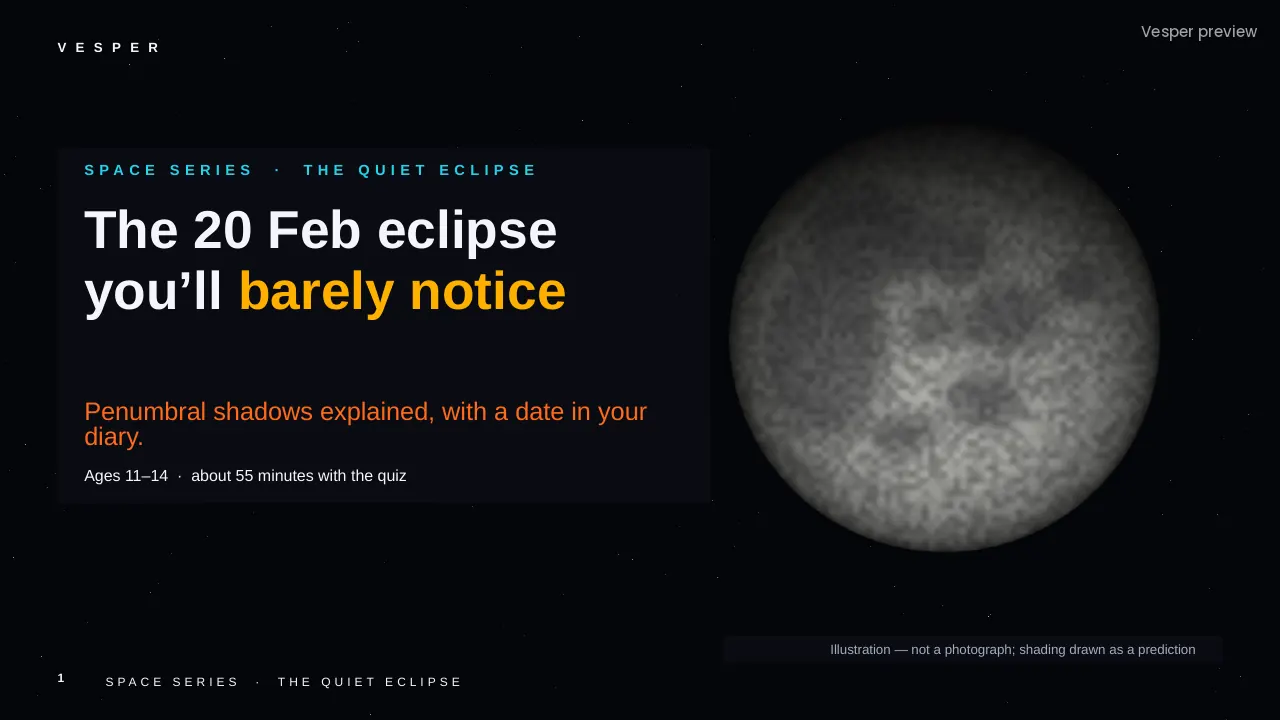
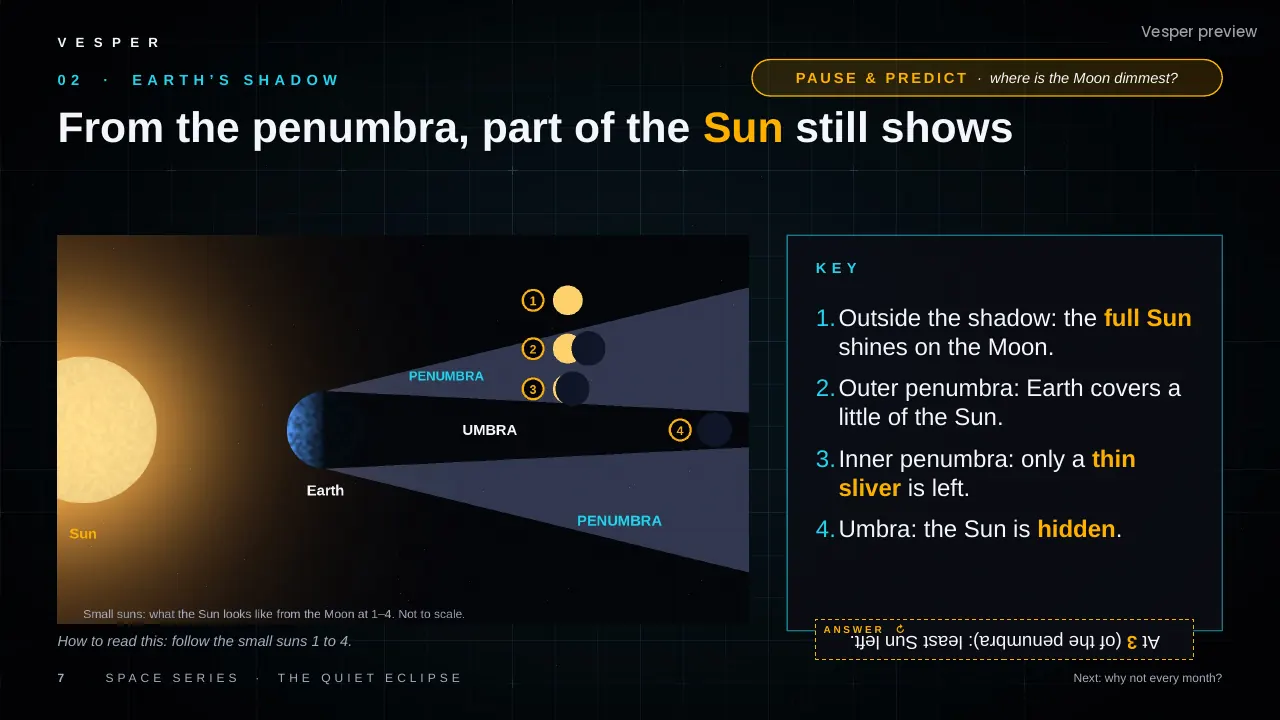
On the night of 20–21 February 2027 the full Moon slides into Earth’s shadow, and most people will never notice. Students find out why, and how to be one of the few who do. They make a penumbra with a lamp and their fist, then see Earth’s shadow from the Moon’s point of view: full Sun, partly covered Sun, a sliver, darkness.
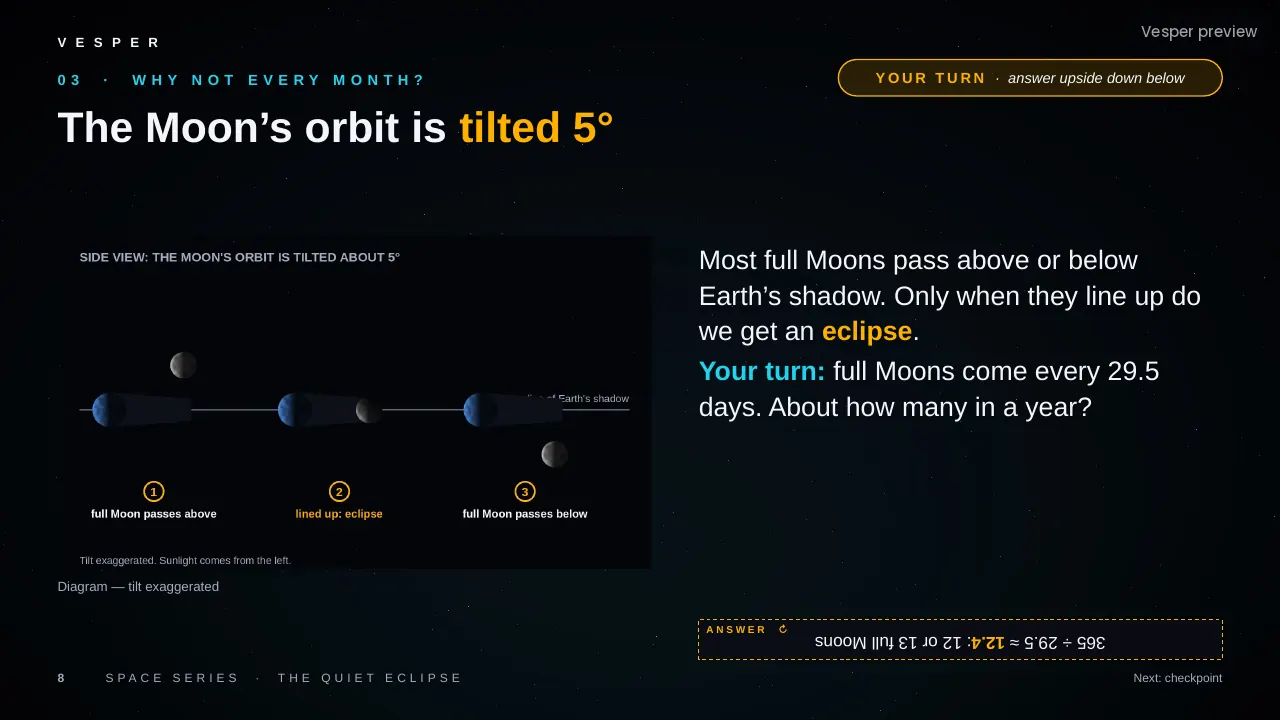
They learn why the Moon’s 5° tilt means only a few full Moons are eclipsed, map the Moon’s path using NASA’s figures (penumbral magnitude 0.93, no umbra), work out how long the eclipse lasts and convert 23:13 UT to their own time zone. Then they learn what to look for, why a camera beats the eye, and why eclipses come in seasons and repeat every 18 years 11 days.
Inside the deck
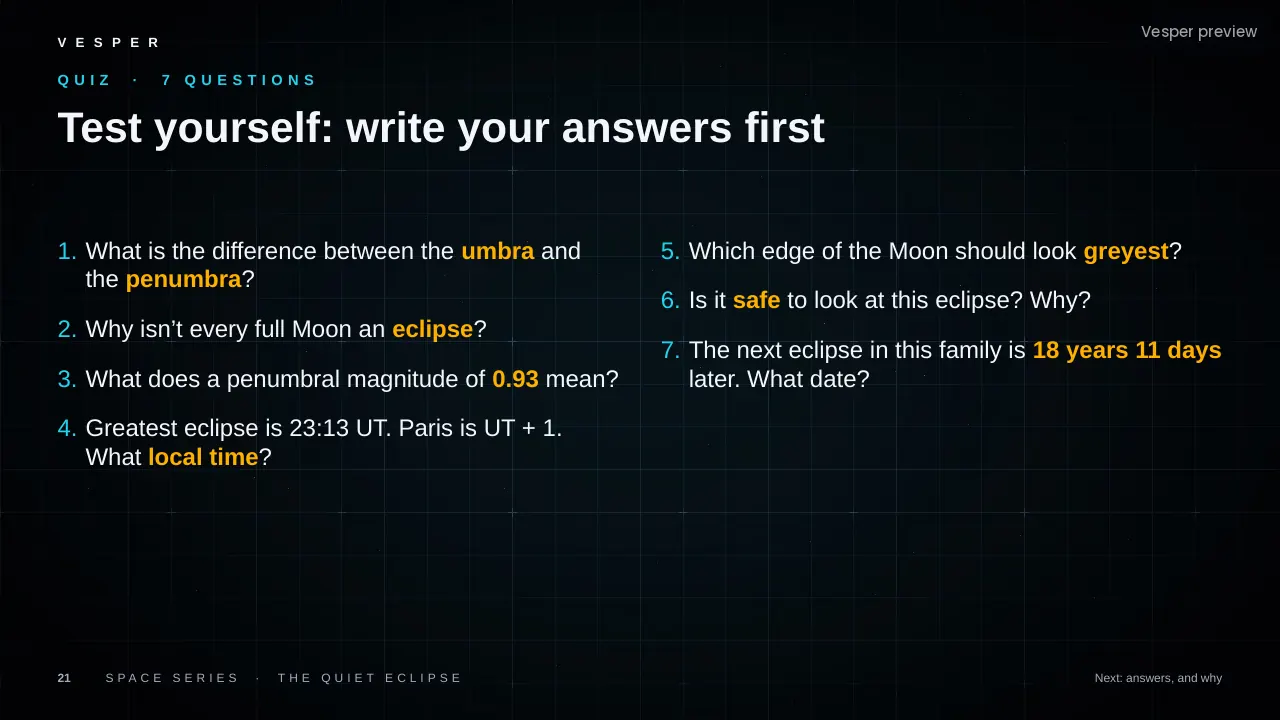
25 slides on the Nova template, every picture drawn in code from NASA data. A lamp-and-fist activity, polls, guess-first prompts, upside-down answers, a spot-the-mistake on lunar eclipse safety, two checkpoints, a 7-question quiz with explained answers and image credits.
How to teach it
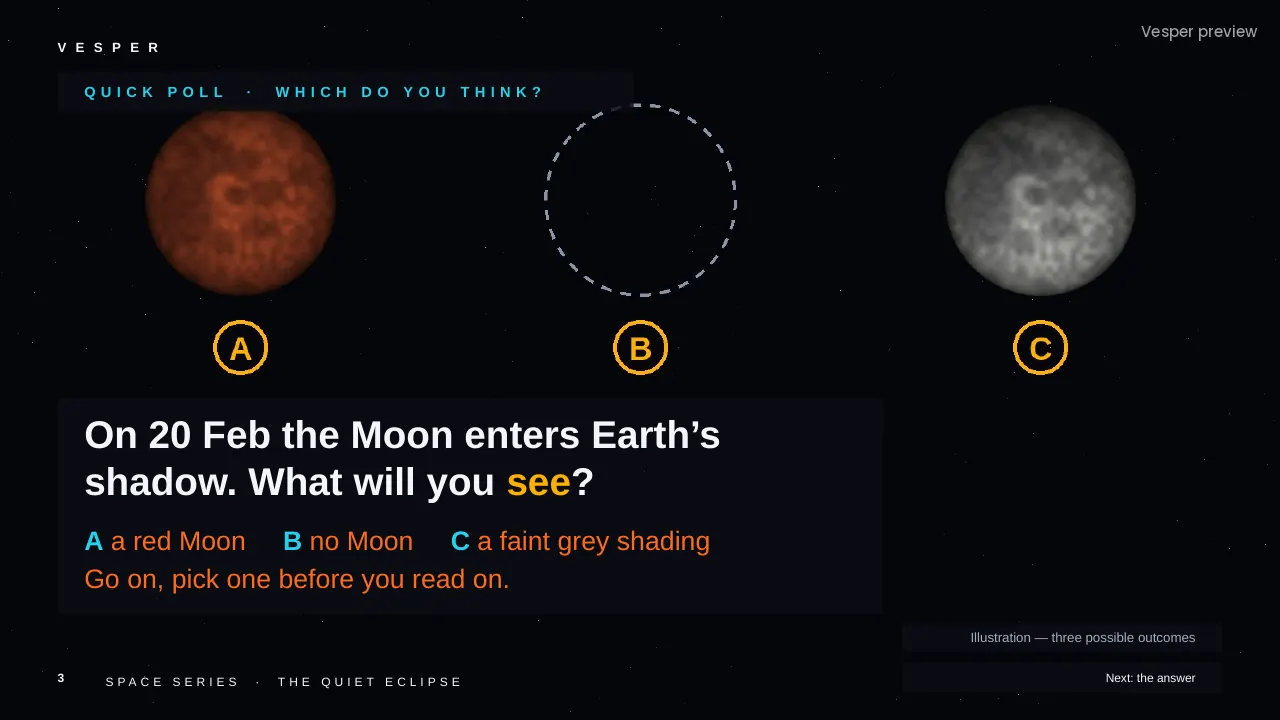
Allow about 55 minutes. Ask the hook question on slide 3 and take a vote before revealing that only faint grey shading is expected. The lamp-and-fist activity needs a bare bulb or torch and a dim room. Set the time-zone conversion on slide 12 for your own location, and suggest students photograph the Moon every 15 minutes on the night. Notes on every slide give Say, Ask, Watch for and Time.
Who it’s for
For ages 11–14 studying the Sun, Earth and Moon, shadows and eclipses. Ideal before February 2027, and still useful afterwards for teaching umbra and penumbra. Editable PowerPoint with named layouts.