About this lesson
What students discover
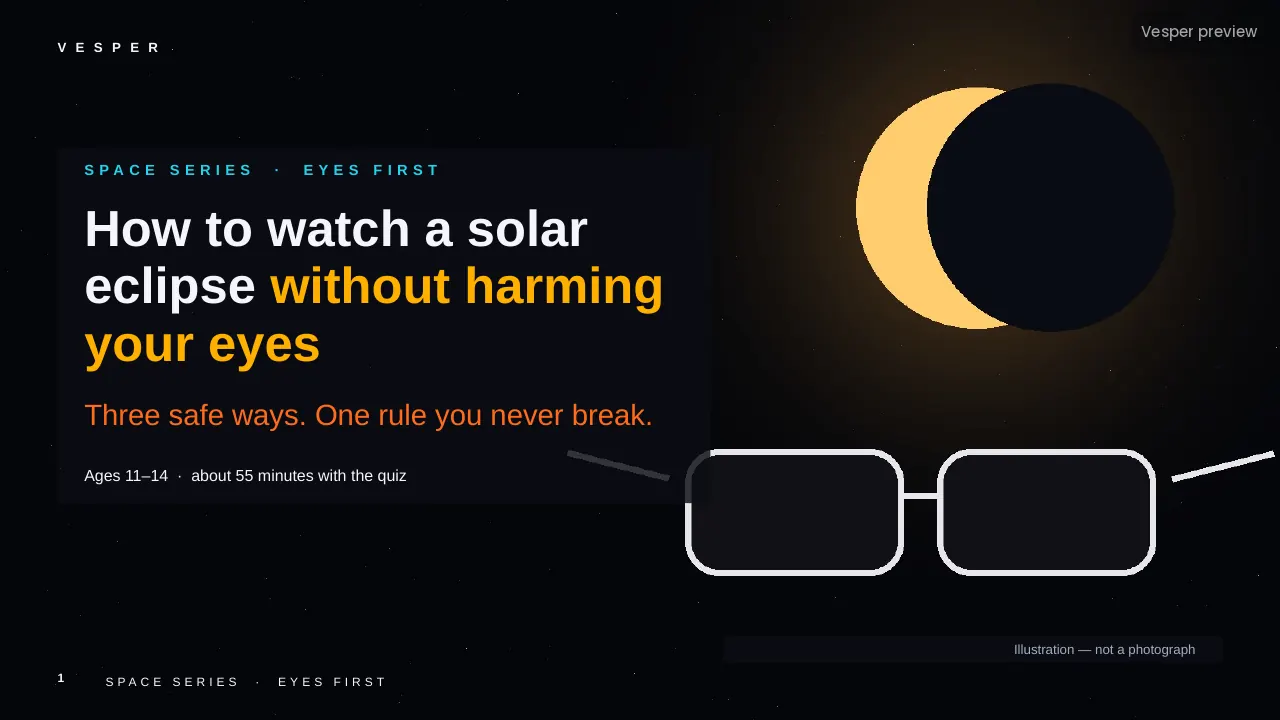
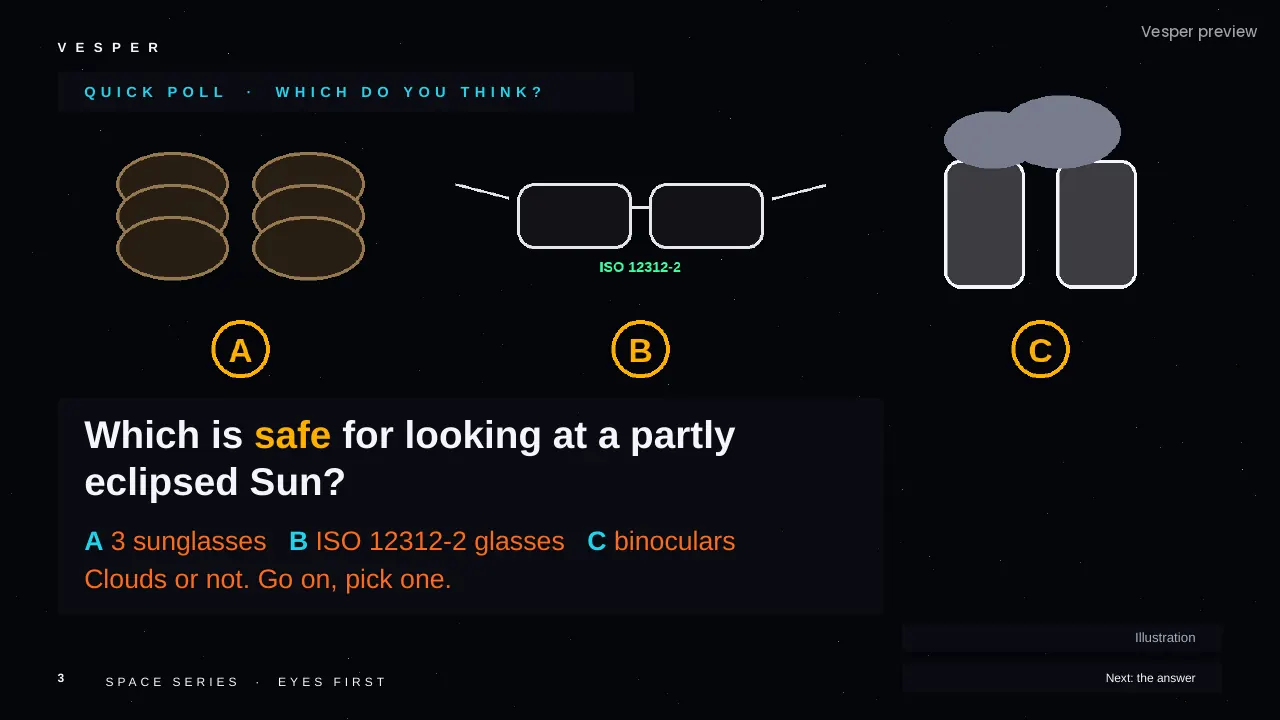
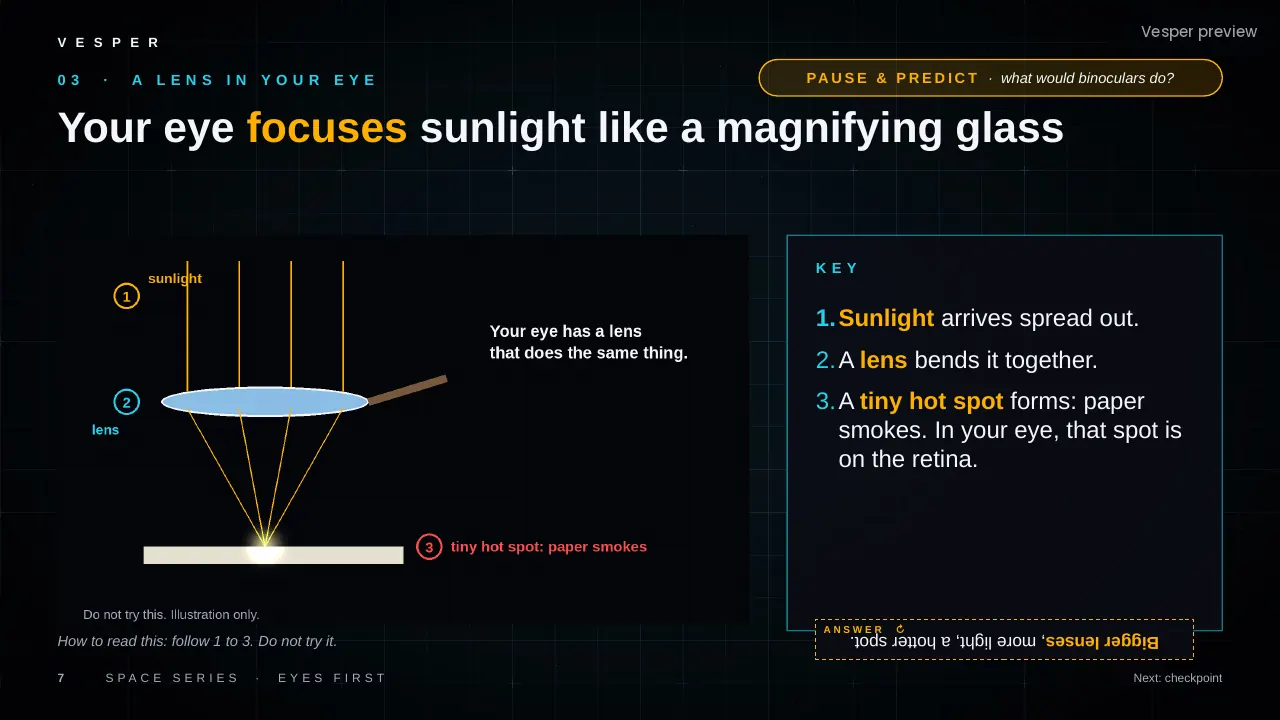
Which is safe for looking at a partly eclipsed Sun: three pairs of sunglasses, ISO 12312-2 glasses or binoculars? Only one, and this lesson explains why with numbers. Eclipse glasses made to ISO 12312-2 let through at most 0.0032% of visible light; sunglasses let through up to 18%. The eye’s lens focuses sunlight onto the retina like a magnifying glass, and the retina has no pain sensors, so damage can happen while you feel nothing.
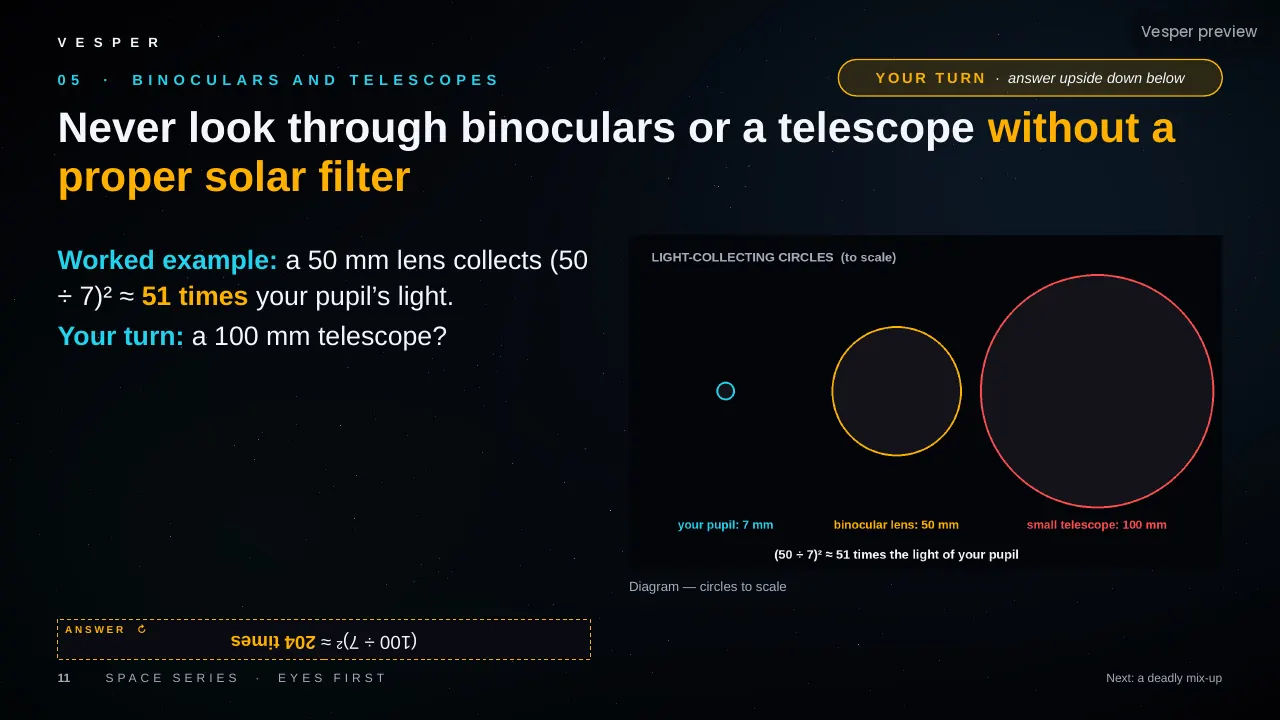
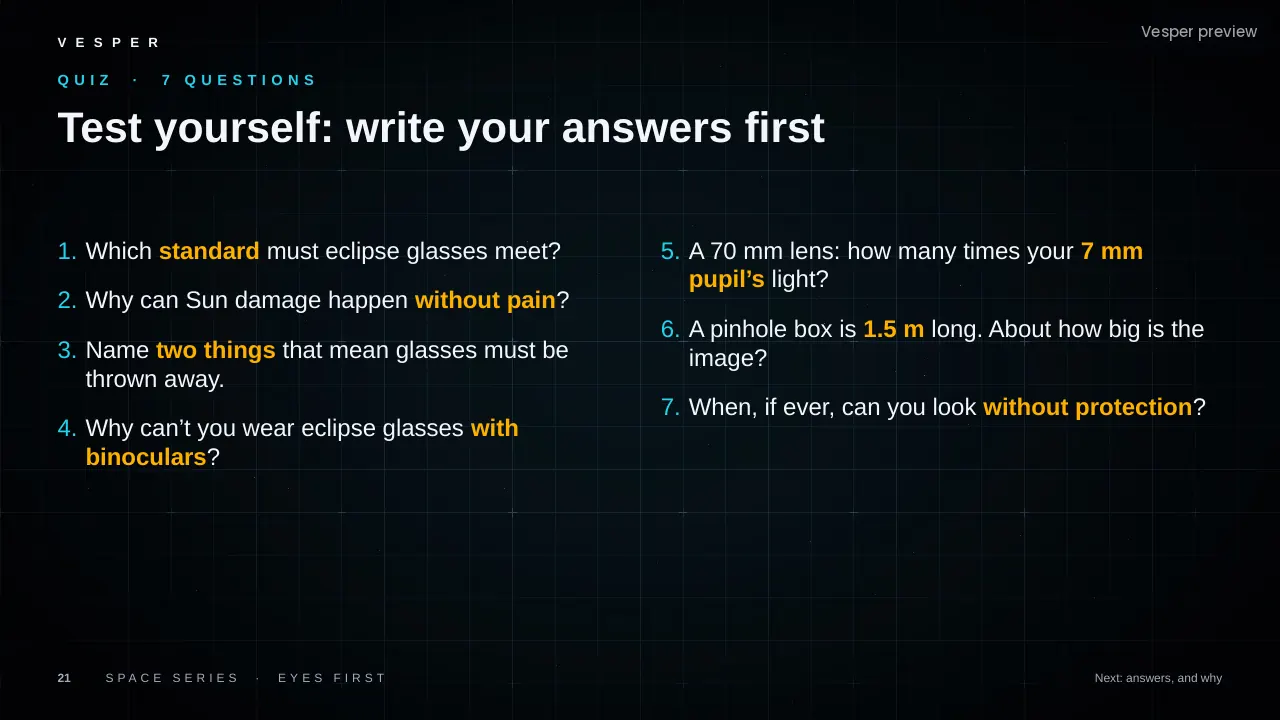
Students learn three safe ways to watch. They run four checks on a pair of glasses and bin any that are scratched, holed or torn. They work out why optics are so dangerous: a 50 mm lens collects about 51 times the light of a 7 mm pupil, and a myth slide fixes ‘wear eclipse glasses and use binoculars’. Welding glass is safe only at shade 12 or darker. Then they build a pinhole projector and predict the image size (box length ÷ 108), and see why tree shadows fill with tiny crescent suns.
Inside the deck
25 slides on the Nova template: a guess-first hook, a four-idea primer, two diagram walks, your-turn calculations, an evidence slide, two checkpoints and a printable safety card summary. A seven-question quiz has explained answers. The safety rules follow NASA and the American Astronomical Society, checked on 18 Nov 2026.
How to teach it
About 55 minutes with the quiz. Build the pinhole projector in class with a long box, foil and a pin, and test it on any sunny day before the eclipse. Speaker notes sit on every slide.
Who it’s for
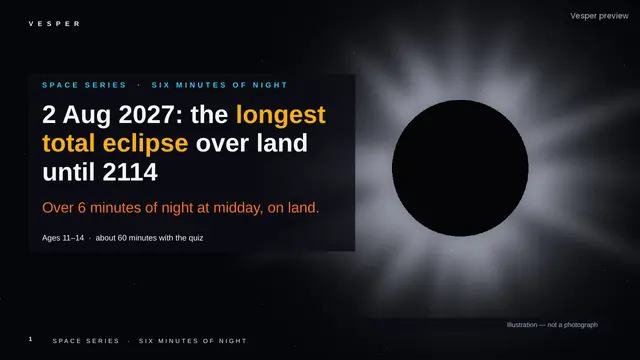
Learners aged 11–14, and any school planning to watch the 2026 or 2027 eclipses. Run it before eclipse day, not after.