About this lesson
What students discover
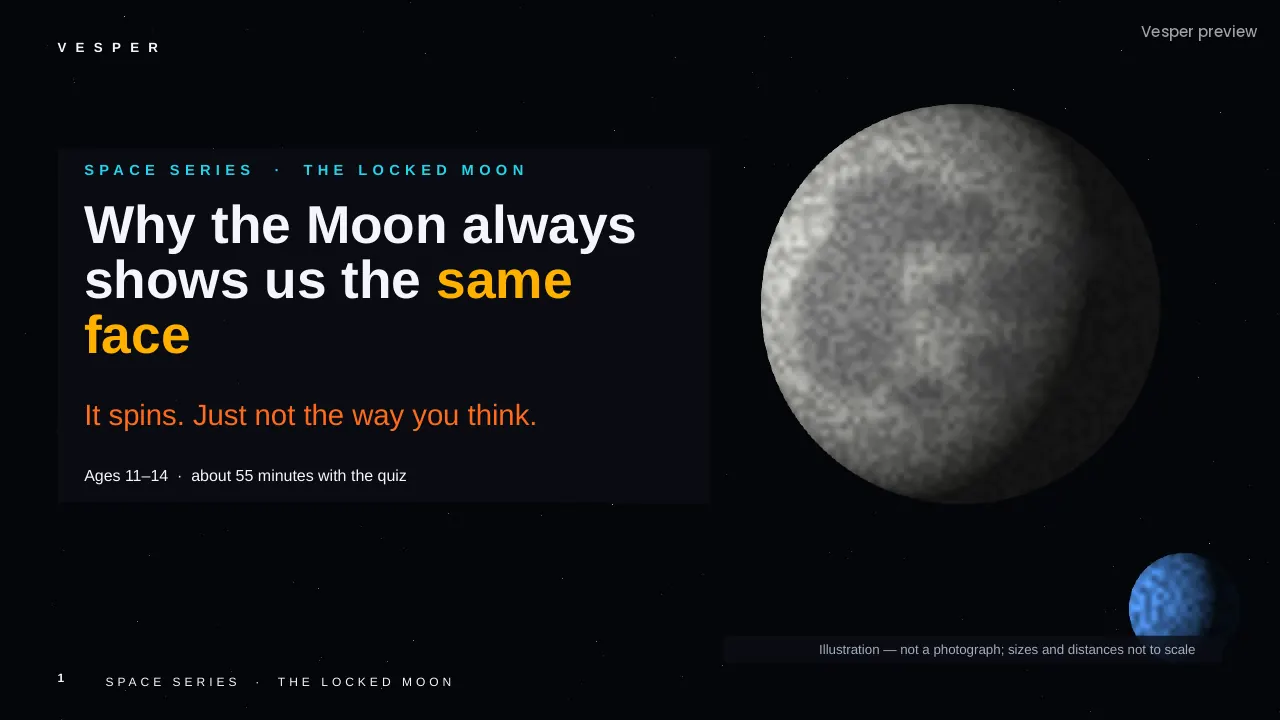
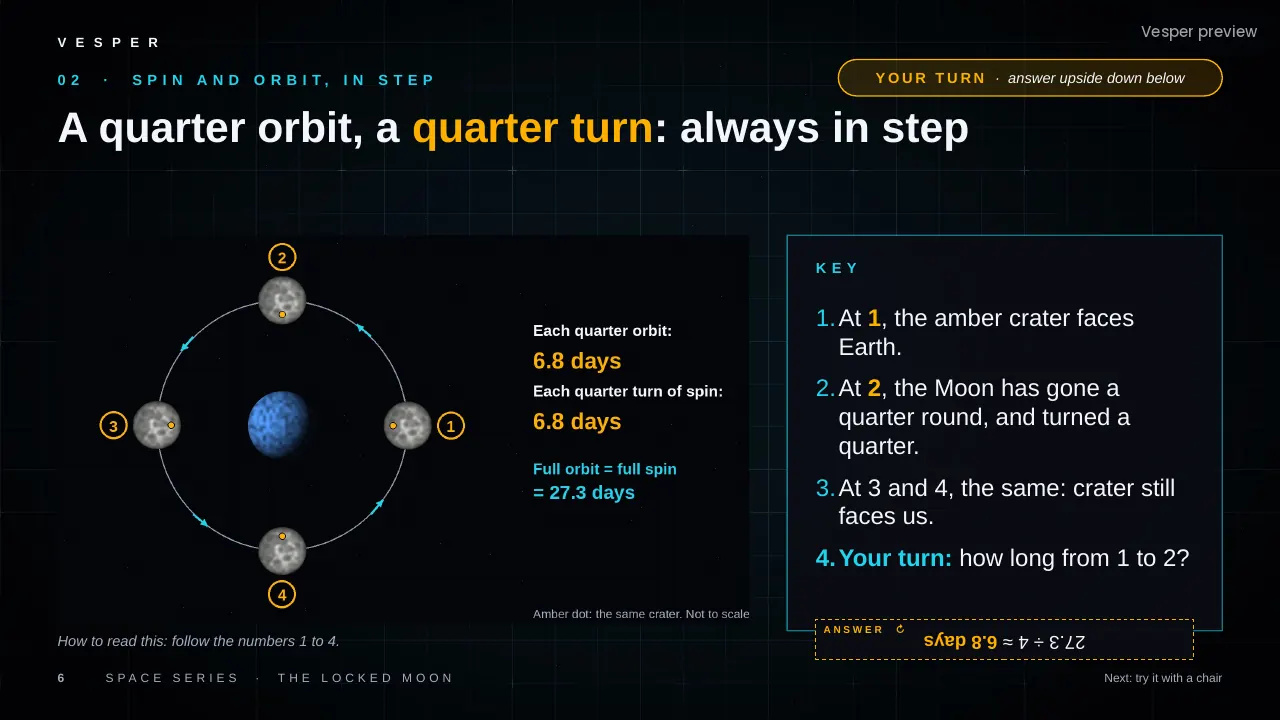
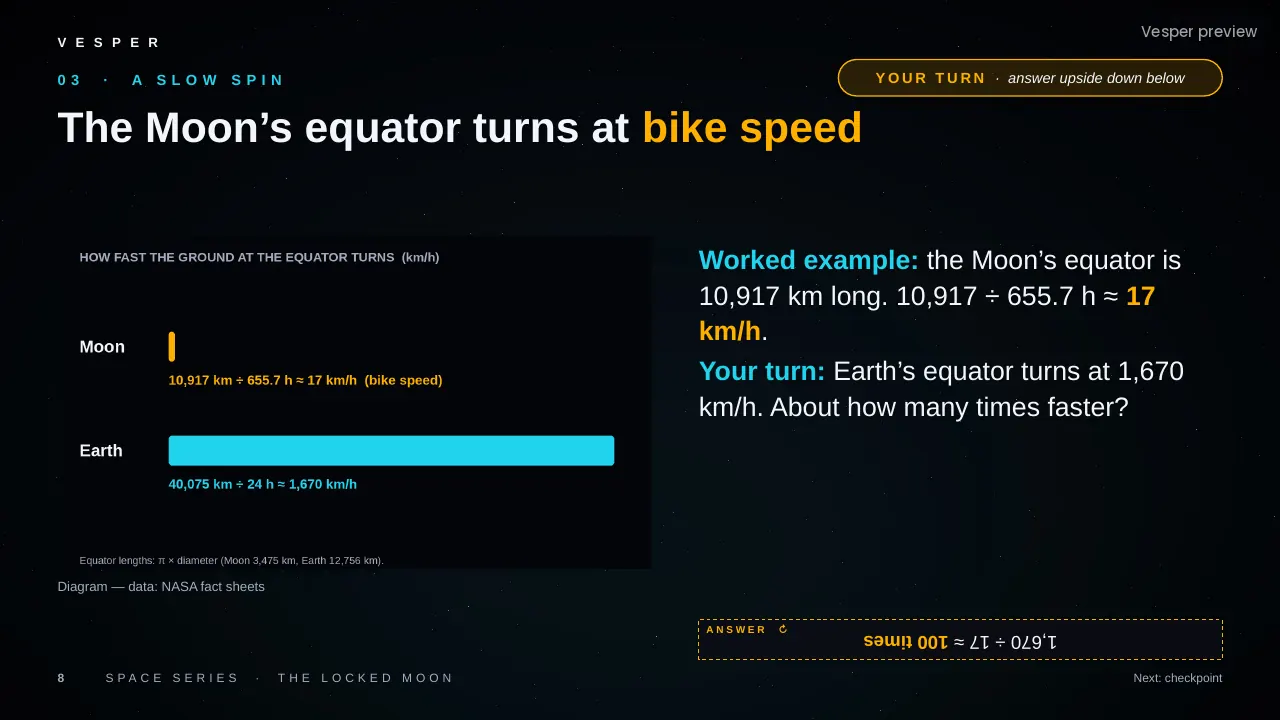
Most students think the Moon does not spin. It does: once every 27.3 days, exactly the time it takes to go round Earth. Students follow one marked crater round the orbit, then become the Moon themselves by walking round a chair. They work out that the Moon’s equator turns at about bike speed.
Next they see how Earth’s pull on a tidal bulge braked the young Moon’s spin, and that the tug works both ways: the Moon drifts 3.8 cm further away each year, measured with lasers fired at mirrors the Apollo crews left behind. They find out we can see 59% of the Moon, bust the ‘dark side’ myth, trace the far side from Luna 3 in 1959 to Chang’e 6, and meet Pluto and Charon, locked to each other.
Inside the deck
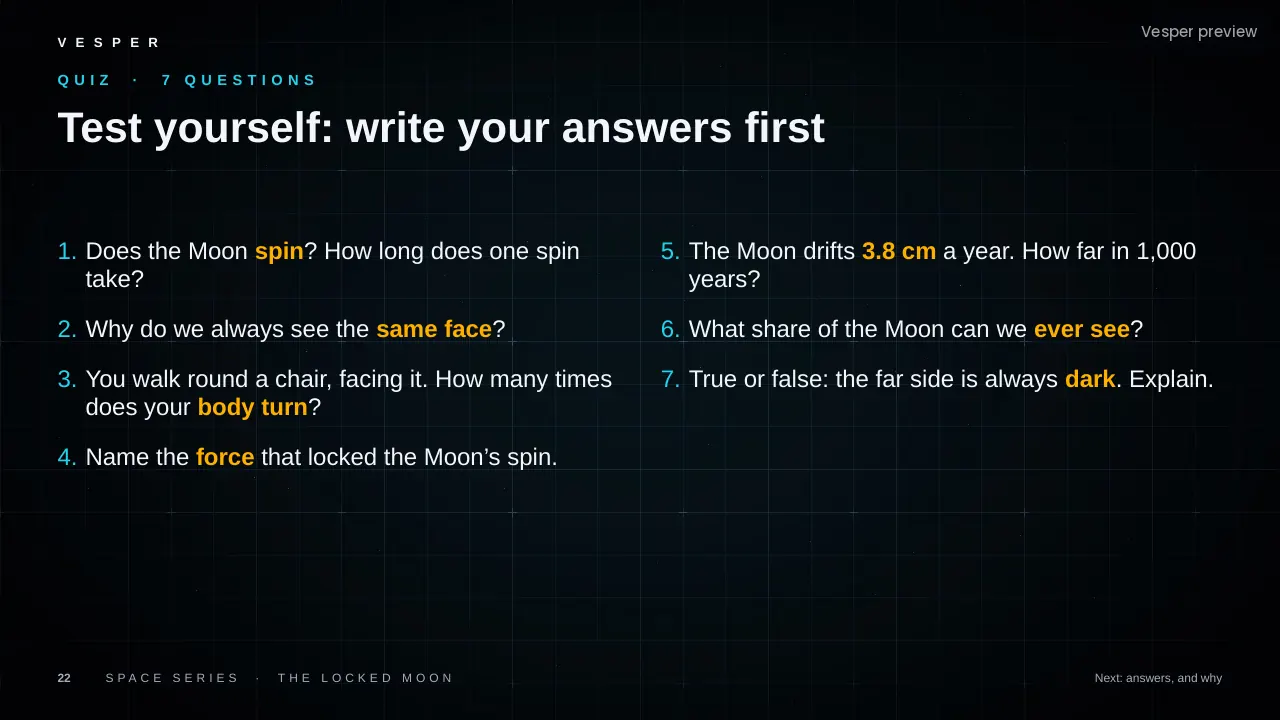
26 slides on the Nova template, with every picture drawn in code from NASA data. Polls, guess-first prompts, upside-down answers, a chair-walk activity, two checkpoints, a frontier slide on why the two faces look so different, and a 7-question quiz with explained answers.
How to teach it
Allow about 55 minutes. Take a vote on the hook (‘Does the Moon spin?’) and keep the result on the board until slide 6. The chair walk on slide 7 needs one chair and a volunteer: walk round it always facing it, and the class sees the walker turn once per lap. Speaker notes on every slide give Say, Ask, Watch for and Time.
Who it’s for
For ages 11–14 studying the Earth–Moon system, orbits and gravity. Good for a space club too. The Teacher Deck is editable, with named layouts for your own slides.