About this lesson
What students discover
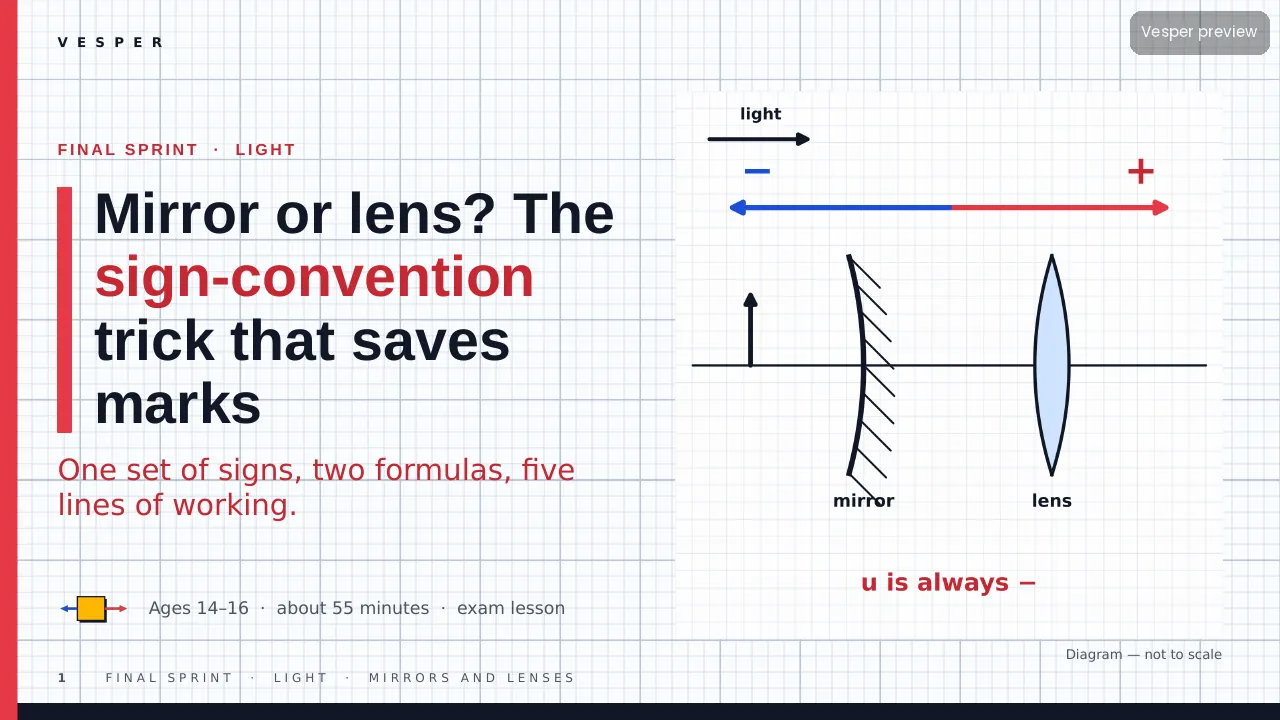
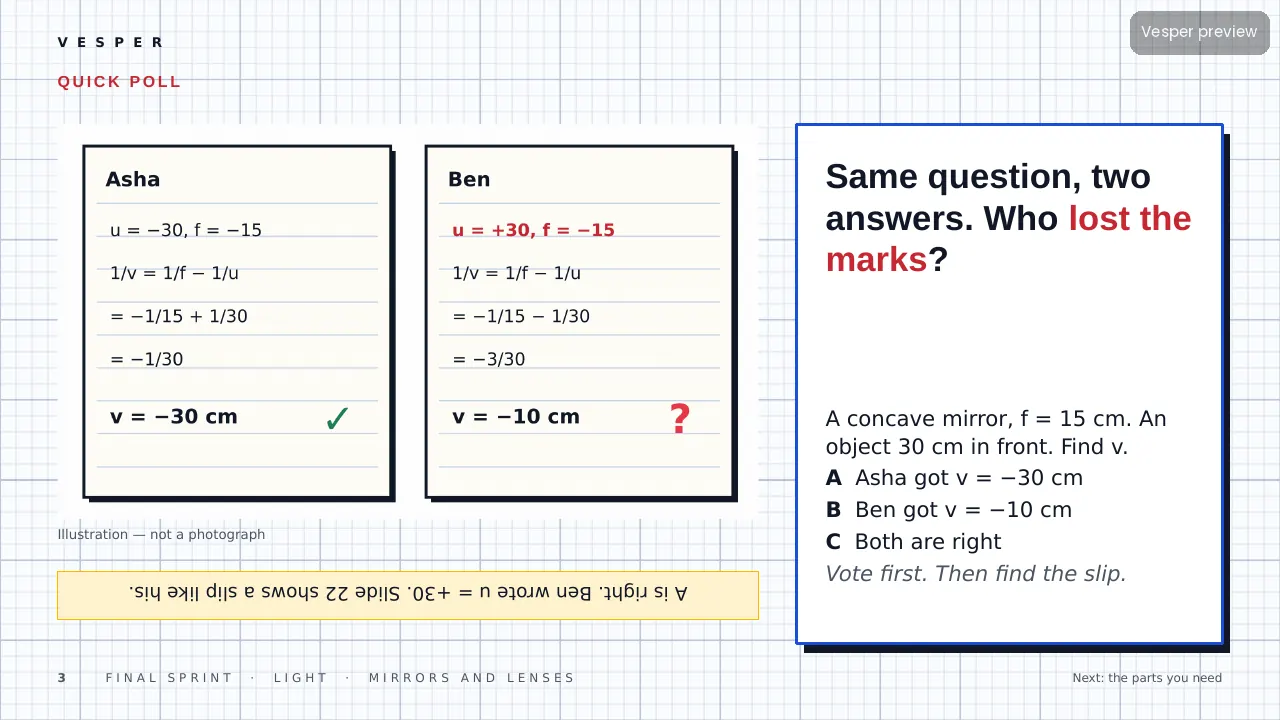
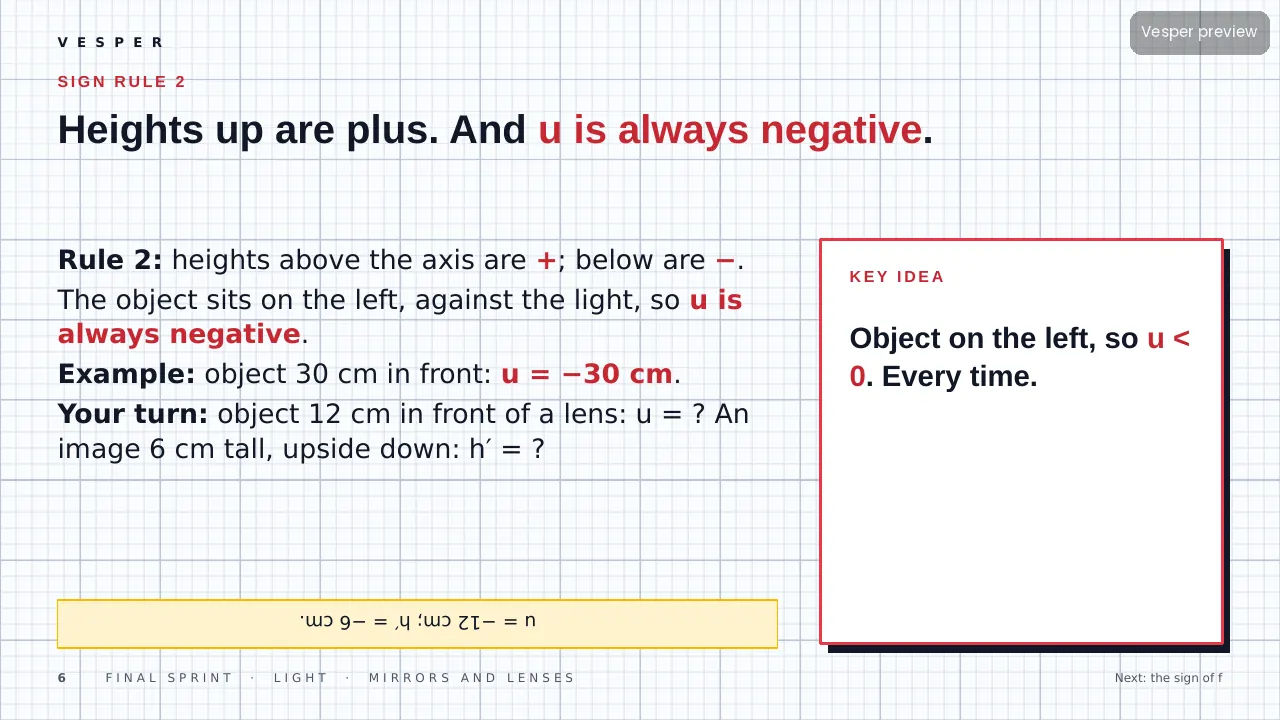
Most marks lost on mirror and lens questions are lost on one minus sign. The lesson opens with two students, one question and two answers, then builds the New Cartesian convention step by step: measure from the pole, with the light is plus, heights up are plus, and the object distance is always negative.
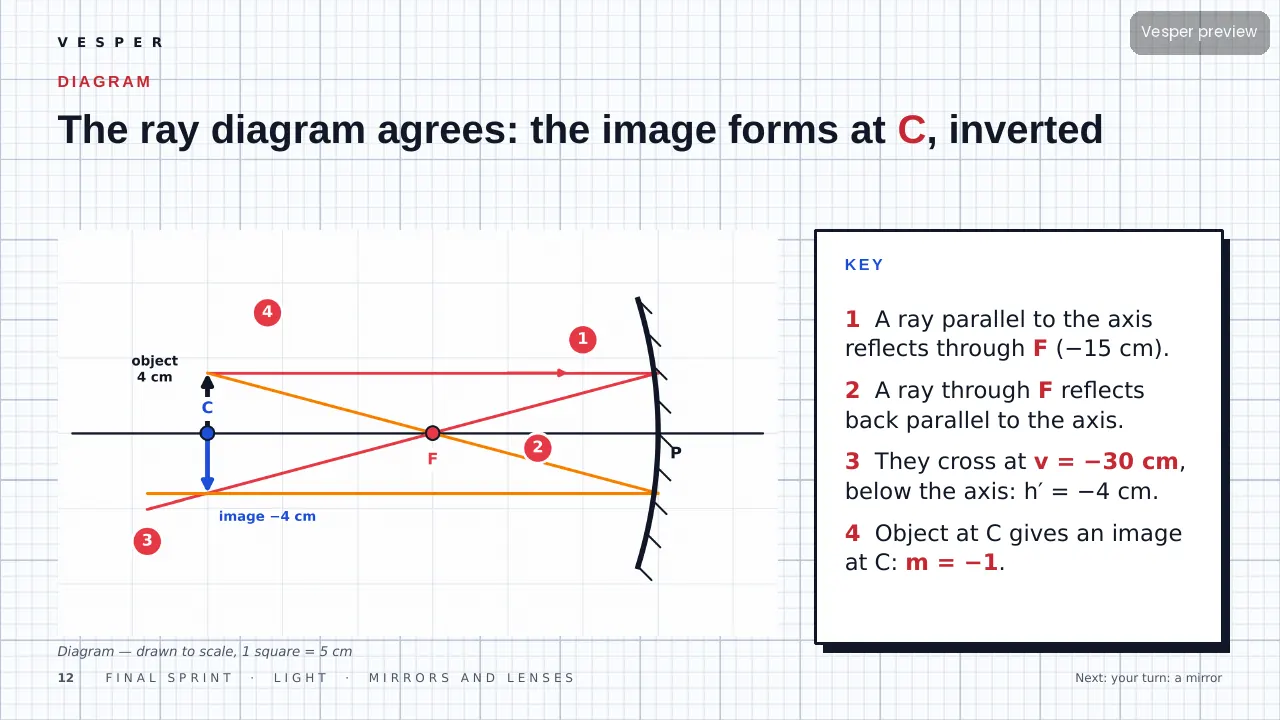
Students learn the sign of f for all four mirrors and lenses, then use the mirror formula and the lens formula with full worked examples (f = −15 cm, u = −30 cm gives v = −30 cm) checked against ray diagrams drawn to scale. A swap trick keeps the two formulas apart, and sign-reading tables turn answers into real or virtual, upright or inverted.
Inside the deck
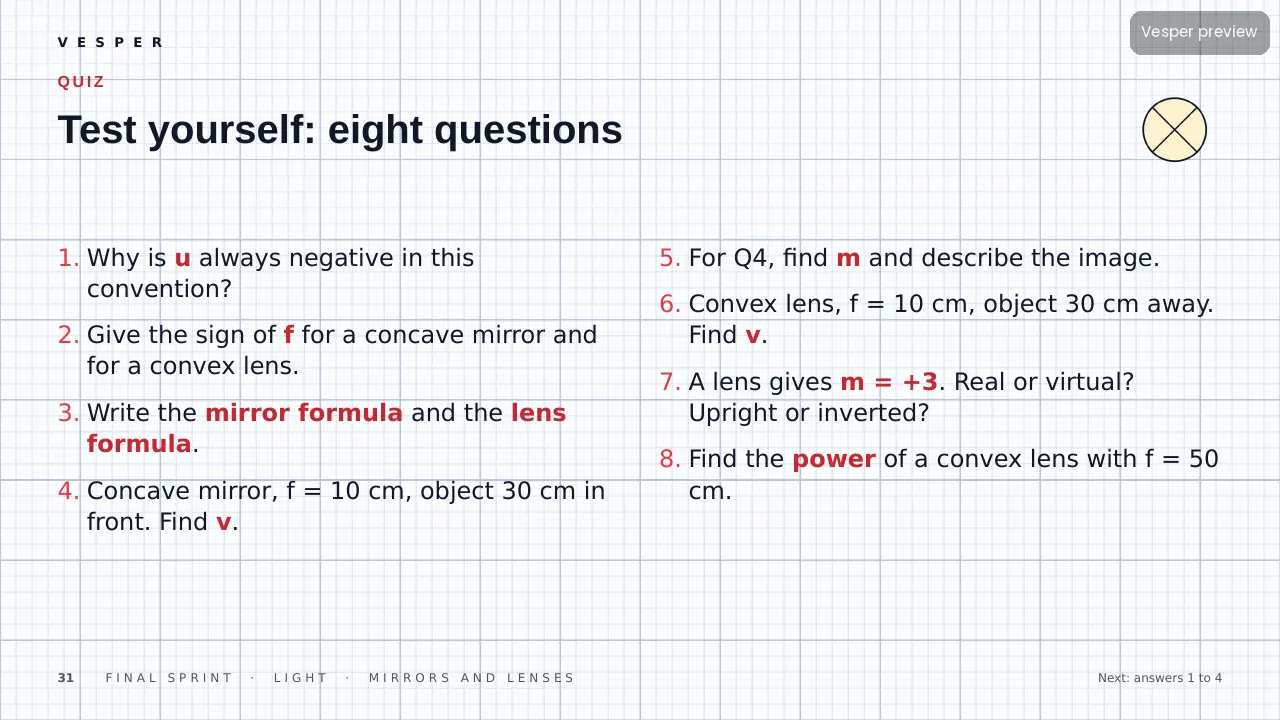
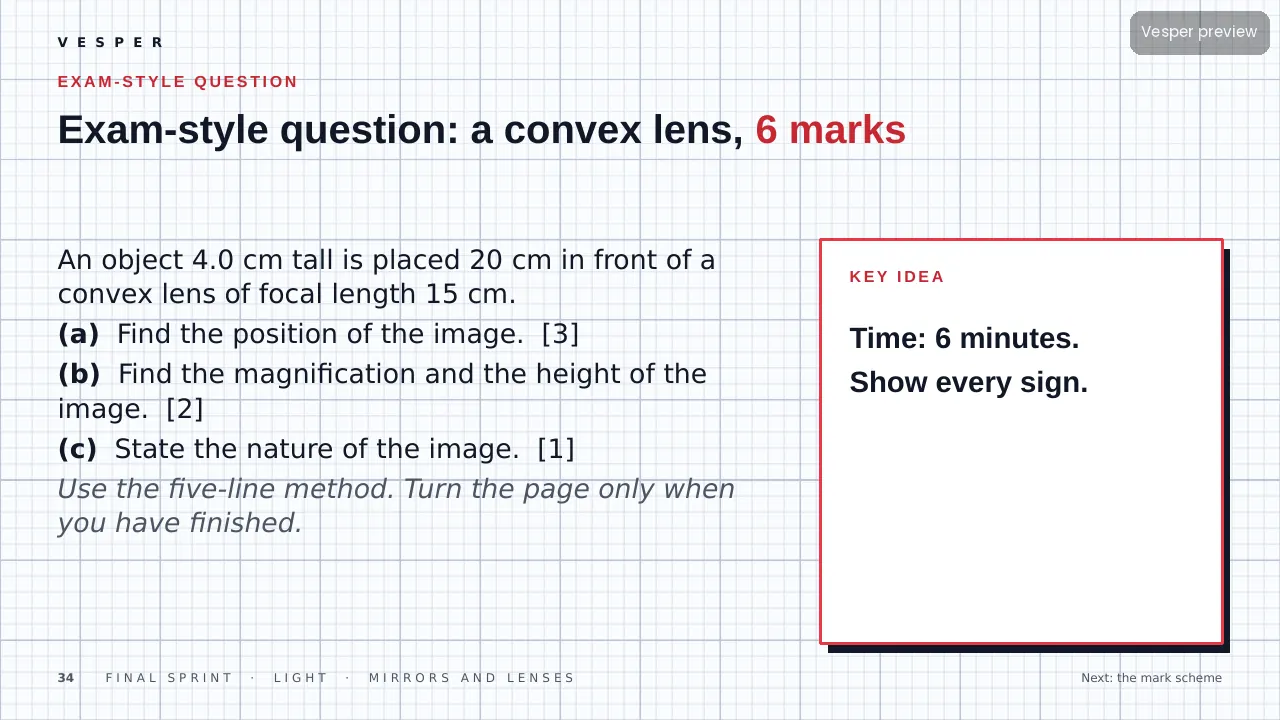
37 slides on the Vector template: a quick-fire plus-or-minus round, ten your-turn problems, a spot-the-mistake answer that scores 0 out of 3, power in dioptres, a car wing mirror, a make-up mirror that magnifies 2×, a five-line method for any question and a spoon experiment. It ends with an 8-question quiz, a timed 6-mark exam question and a mark scheme showing where the marks are won and lost.
How to teach it
Allow about 55 minutes, as the cover says. With every activity in the notes it runs to about 91 minutes, so it also fits two lessons. Teach the convention and mirrors in the first (slides 1–15), lenses and exam technique in the second. Have students write the five-line method on slide 27 at the top of every answer. The mark scheme is written in the style of a board paper and is labelled as unofficial.
Who it’s for
For ages 14–16 revising light for exams. Part of The Final Sprint, 15 exam lessons that each end with an exam-style question and mark scheme. It also suits a teacher who wants one consistent sign routine across a department.