About this lesson
What students discover
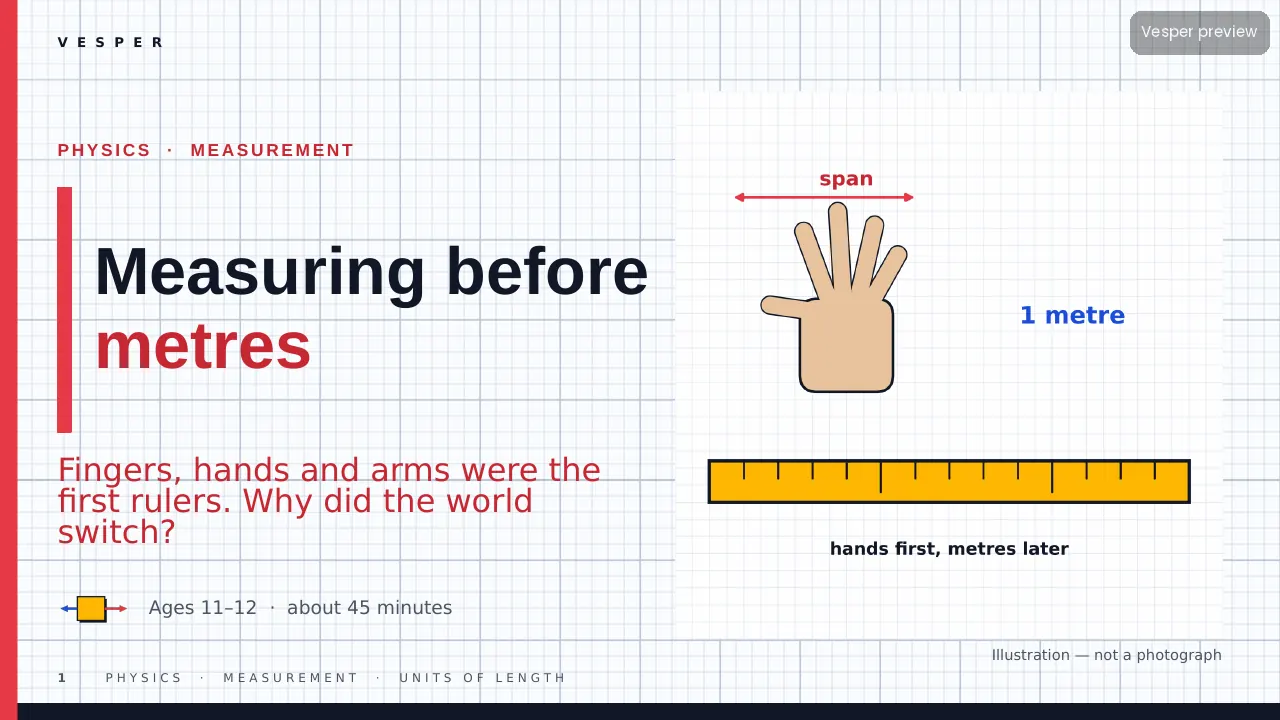
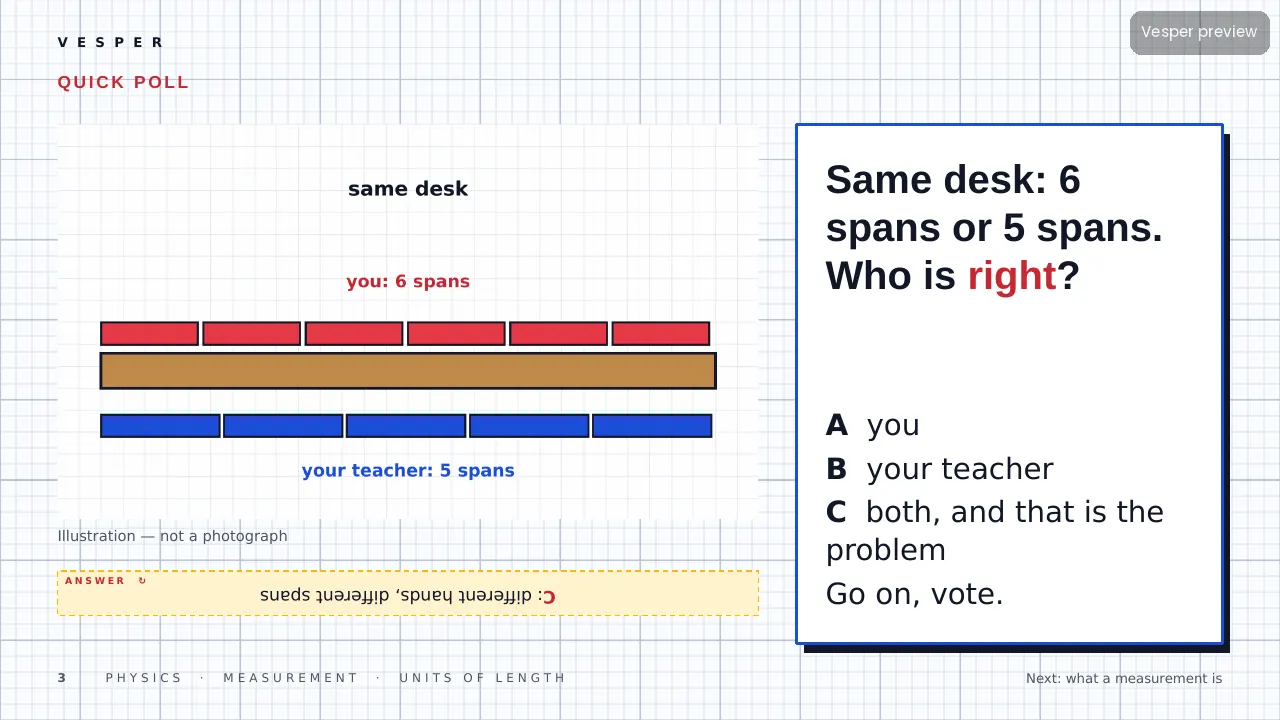
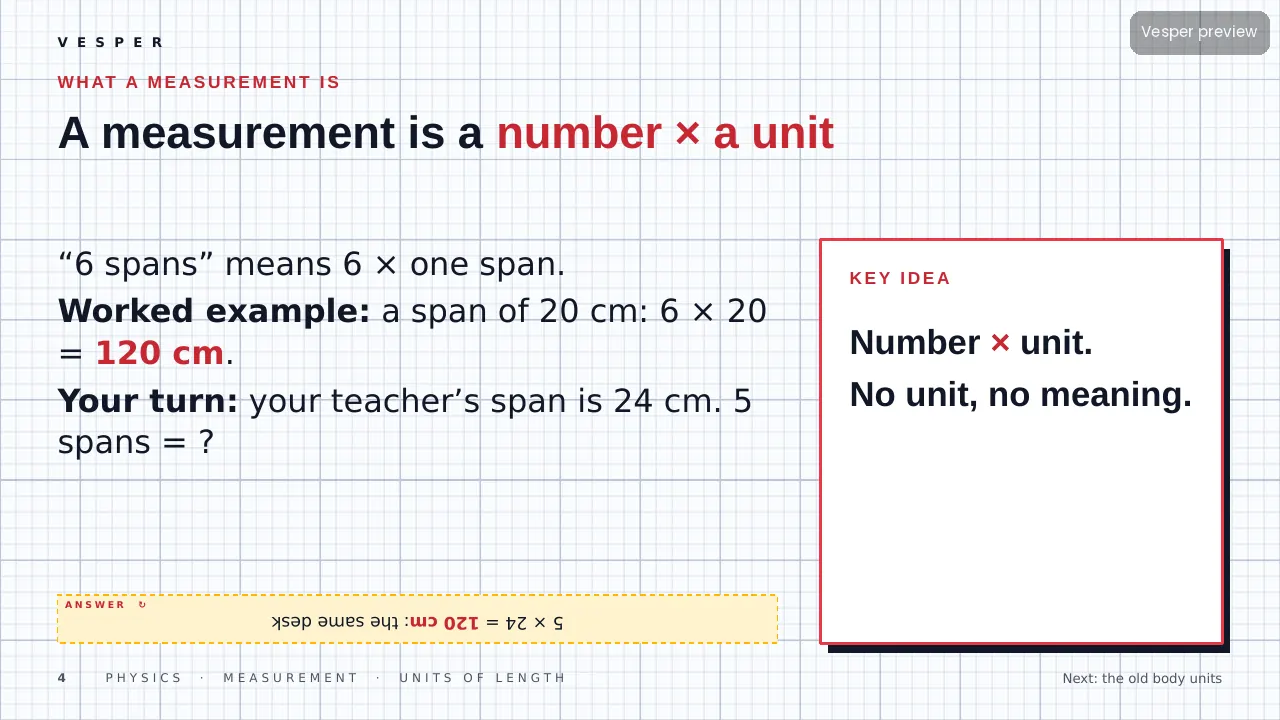
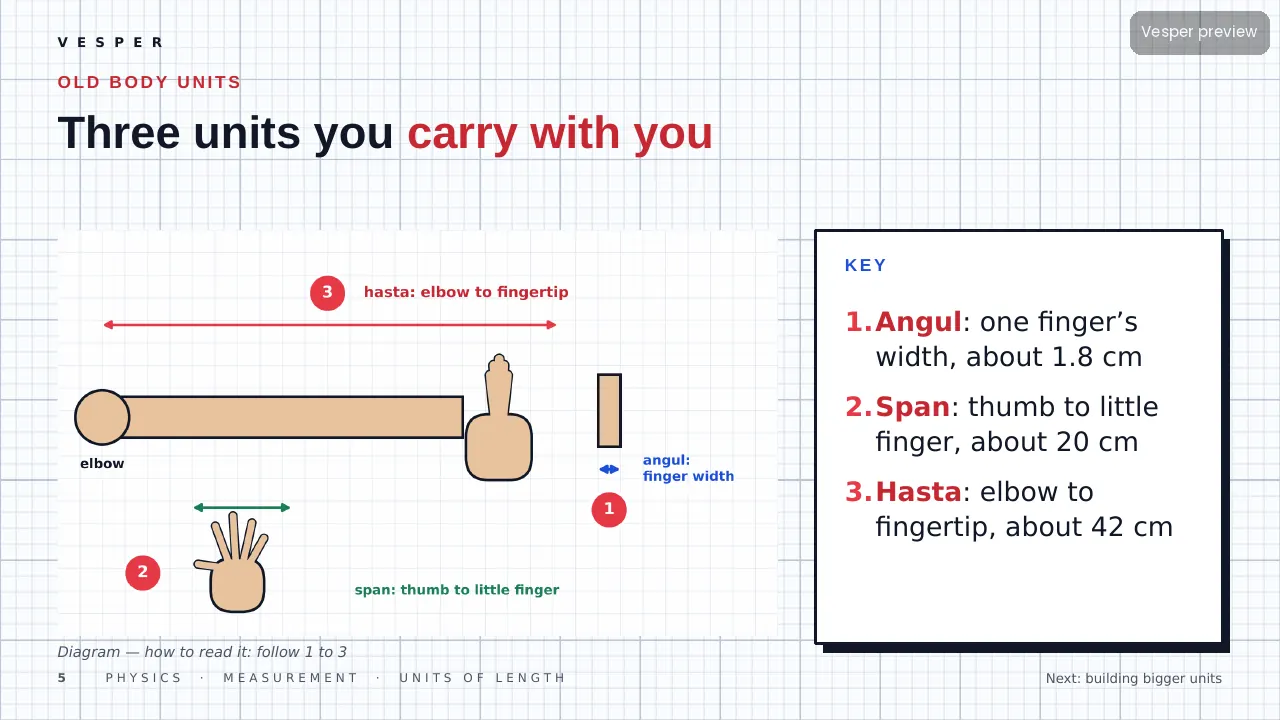
You measure your desk: 6 spans. Your teacher measures it: 5. Who is right? Both of you, and that is the whole problem. Students learn that a measurement is a number times a unit (6 × 20 cm = 120 cm), meet the angul, span and hasta, and build big units from small ones: 24 angul make 1 hasta, about 42 cm.
Sample arm lengths show why ’10 hasta’ of cloth could differ by a metre. Then come the fixes: Egypt’s master cubit rod (about 52.4 cm), Harappan marked scales 4,500 years old, a metre taken from the size of the Earth in the 1790s, and a metre set by light since 1983.
Inside the deck
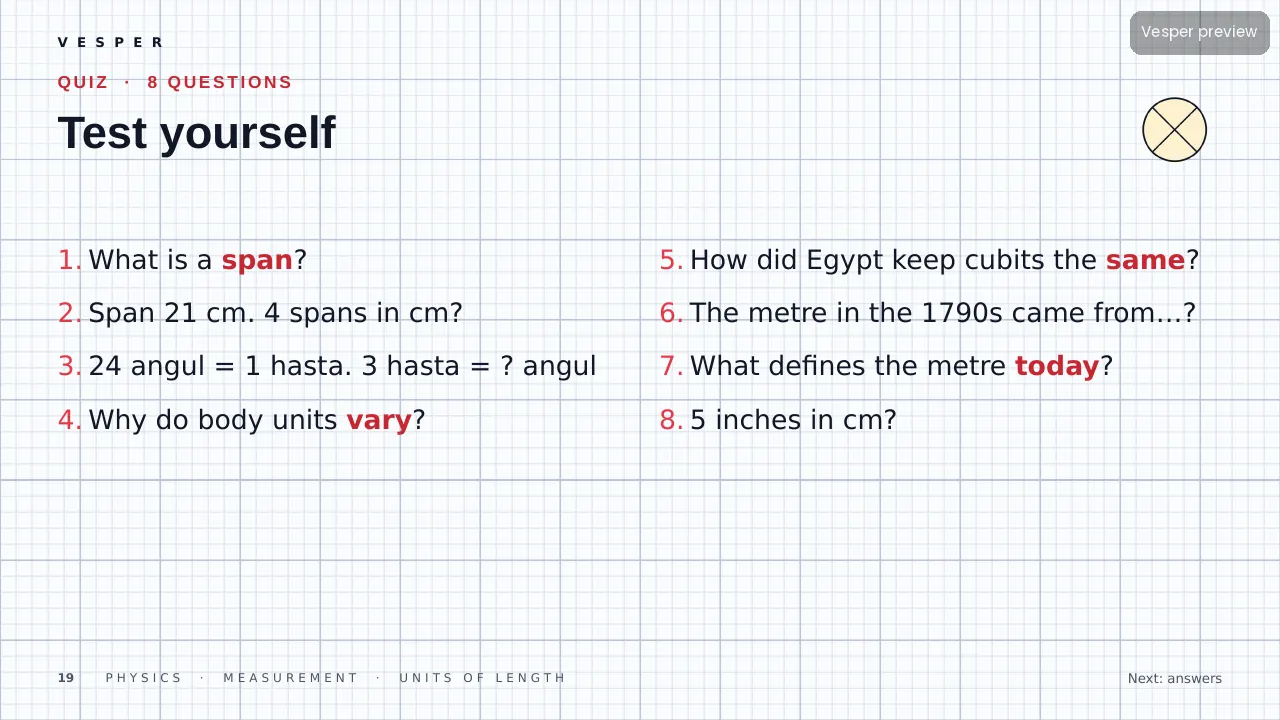
23 slides on the Vector template: a hook, a primer, a labelled diagram of the three body units, two evidence slides, a myth buster (‘old units were useless’), inch and centimetre conversions (1 inch = 2.54 cm exactly), two checkpoints and an 8-question quiz with explained answers. Every picture is an original diagram drawn in code.
How to teach it
Plan on about 45 minutes. Start with the desk argument and let the class settle it before slide 4. The activity on slide 16 has pairs measure the same table in spans and then in centimetres; compare the spread of answers on the board. Speaker notes on every slide give you what to say, a question to ask and the misconception to watch for.
Who it’s for
Written for ages 11–12 starting measurement in science or maths, and for anyone teaching the history of units. The Teacher Deck is an editable PowerPoint with named layouts, so you can add your own local units or a class data table.