About this lesson
What students discover
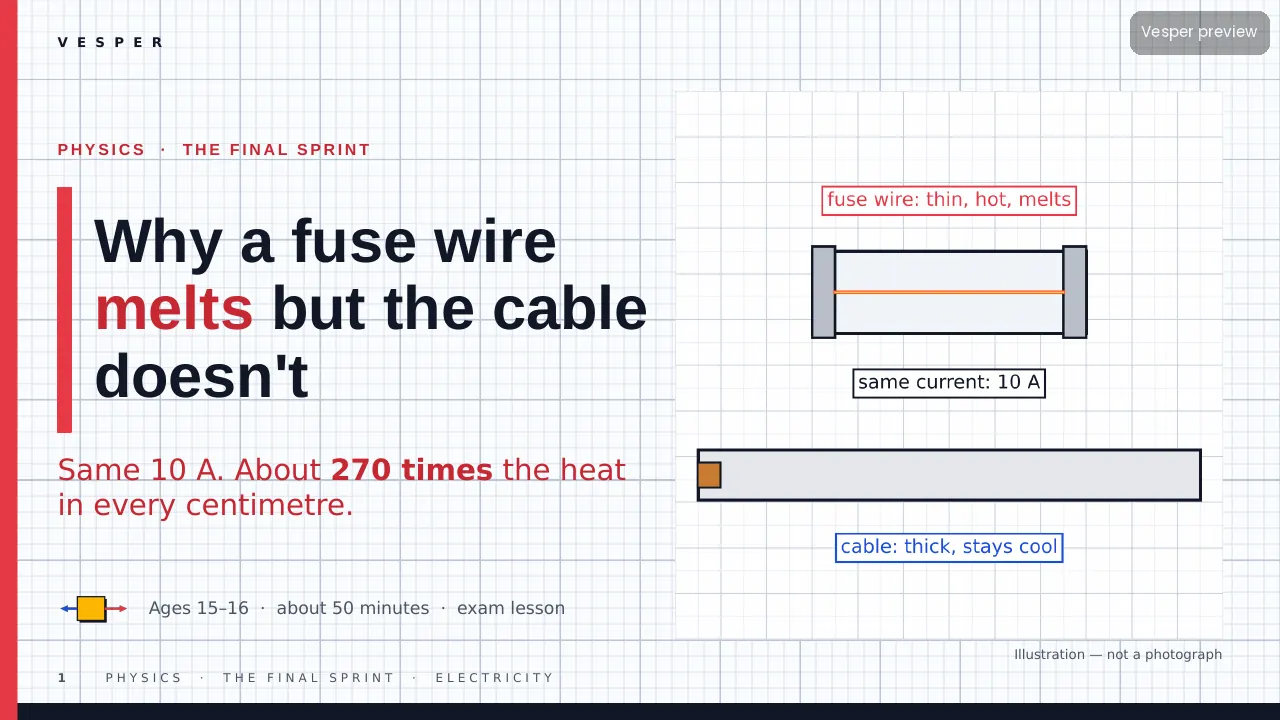
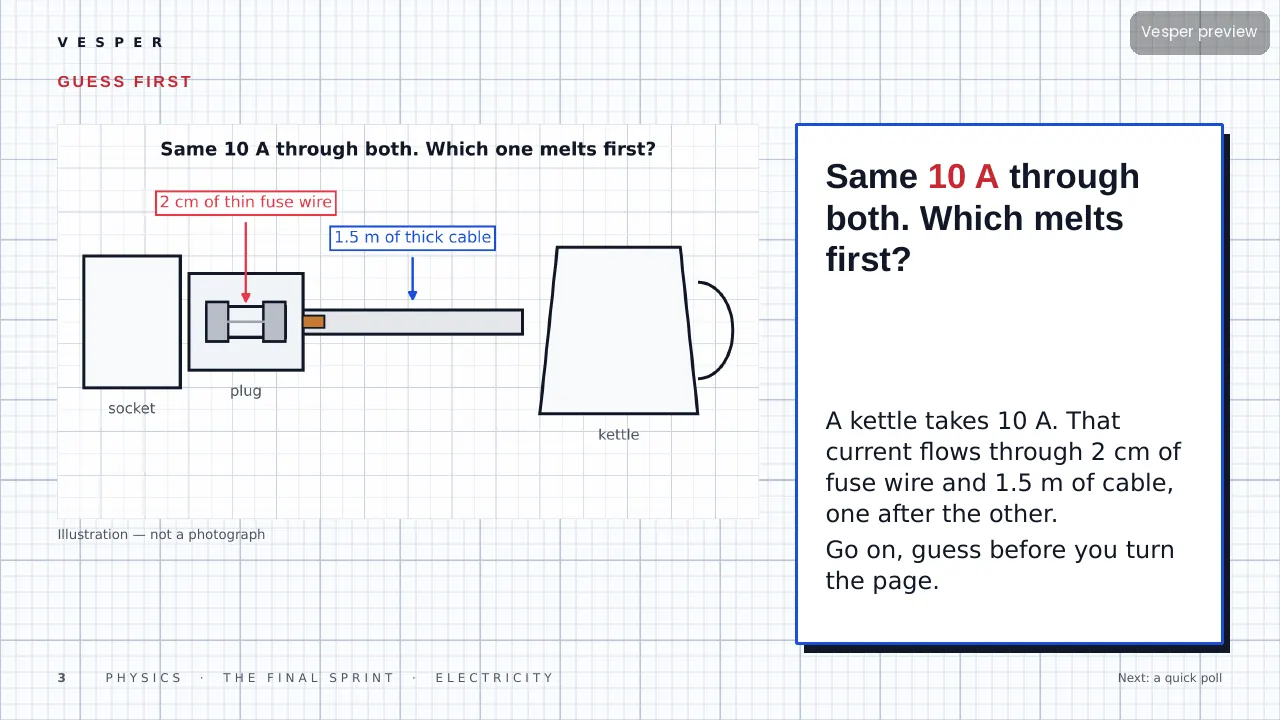
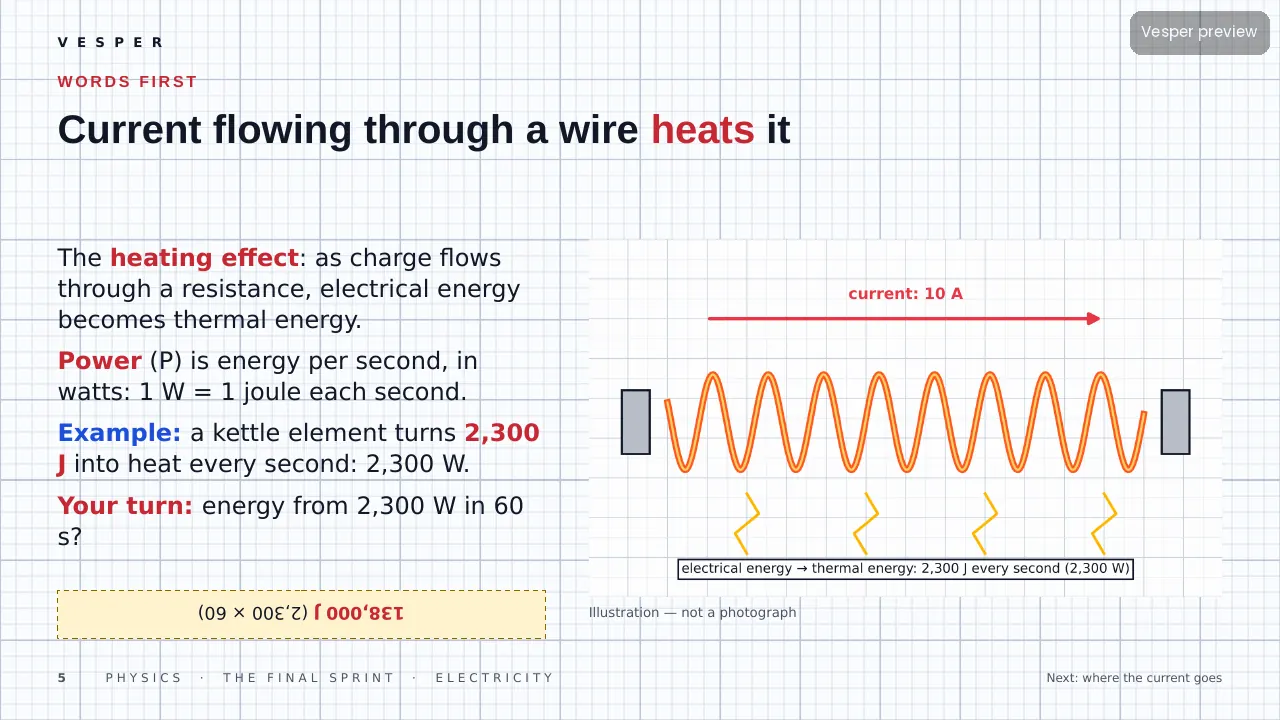
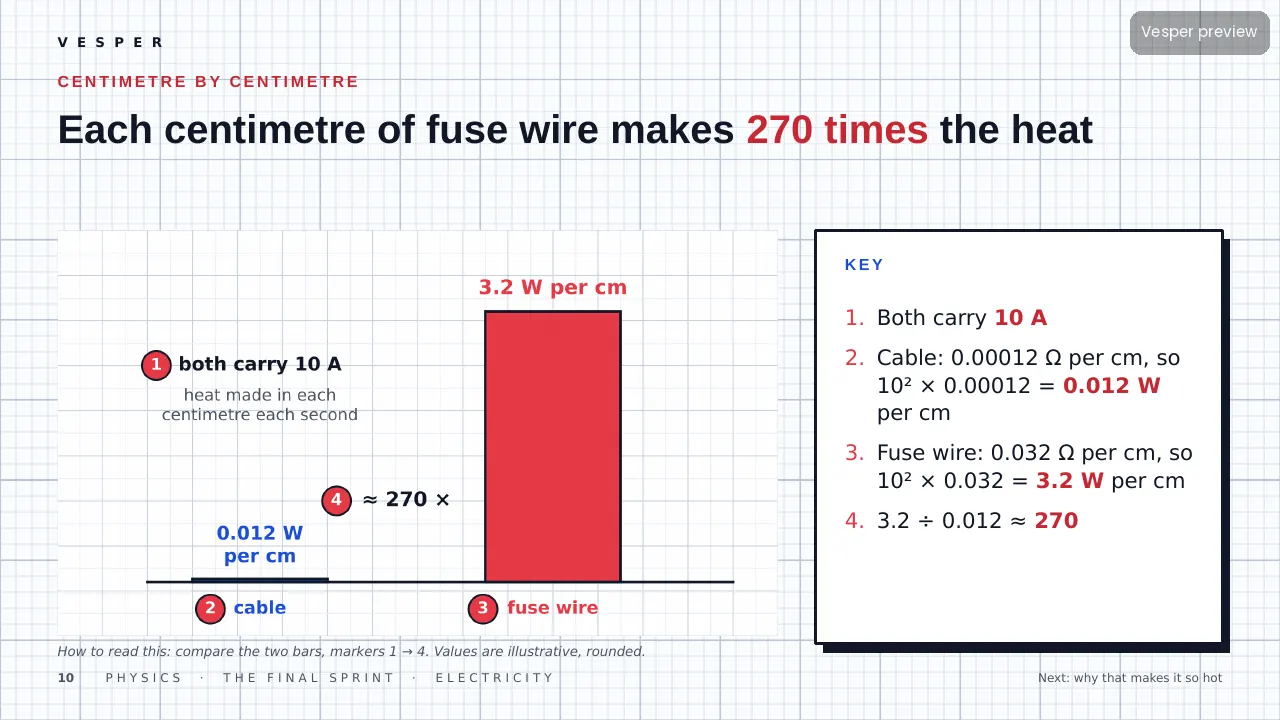
A kettle takes 10 A. That current flows through 2 cm of fuse wire and 1.5 m of cable, one after the other, yet only the fuse melts. Students first prove the current is the same everywhere (three ammeters, one path), then meet P = I²R. A metre of cable makes 1.2 W at 10 A; 2 cm of fuse wire makes 6.4 W. Cross-sections drawn to scale explain the 270-times difference in resistance per centimetre, and a melting-point chart adds the second reason: tin–lead melts at about 183 °C, copper at 1,085 °C.
A pause-and-predict doubles the current to 20 A, and a graph shows the heat per centimetre going up four times, which is why a fault melts the fuse fast. Then the practical side: choosing a fuse (the smallest rating above the normal current: 2,300 W ÷ 230 V = 10 A, so 13 A), Arjun’s 13 A fuse in a 60 W lamp, why the fuse sits in the live wire, and a myth slide on whether a fuse stops shocks (it protects the wiring, not you). MCBs, RCDs and James Joule’s 1841 experiment round it off.
Inside the deck
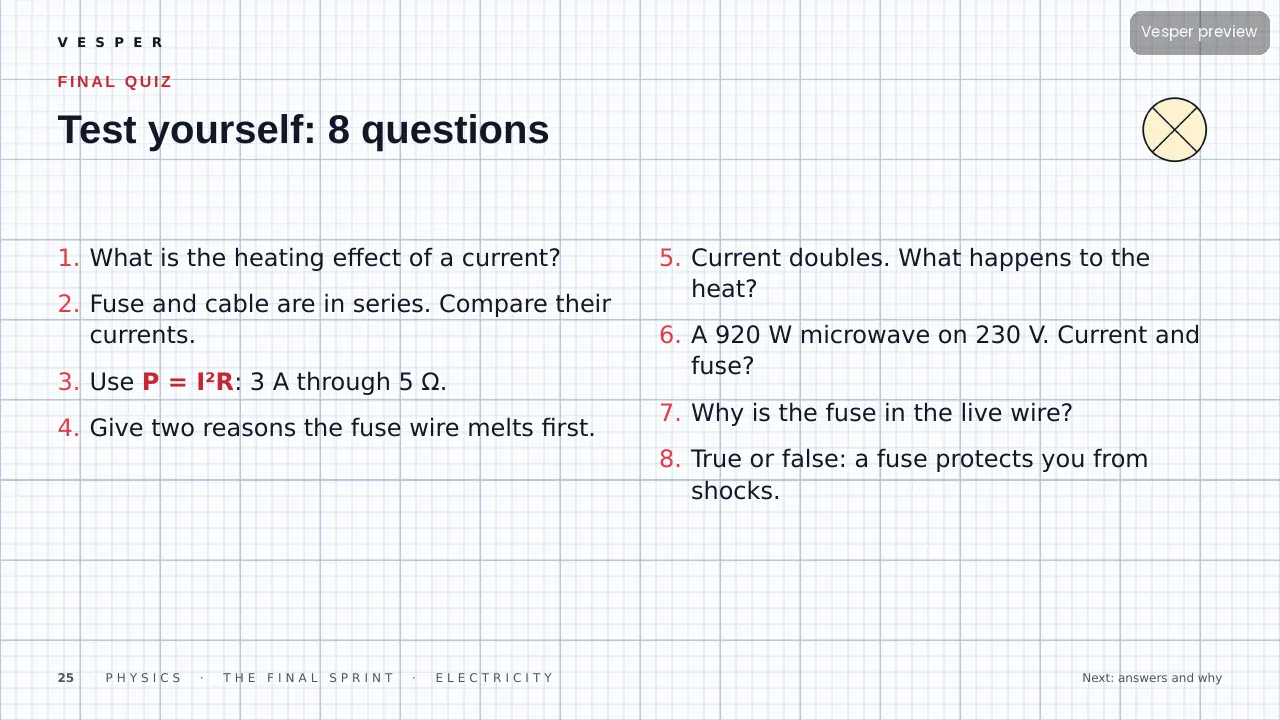
30 slides on the Vector template: a hook and quick poll, a primer, five your-turn tasks, three diagram walks, two checkpoints and an eight-question quiz with explained answers. A 7-mark kettle-fuse exam question comes with a mark scheme.
How to teach it
About 50 minutes. The fuse-detective activity sends students to read rating labels on three appliances (no unplugging, no opening) and work out the right fuse. Part of the Final Sprint collection; speaker notes sit on every slide.
Who it’s for
Learners aged 15–16 revising electricity and electrical safety, and teachers who want P = I²R to answer a real question.