About it
What students discover
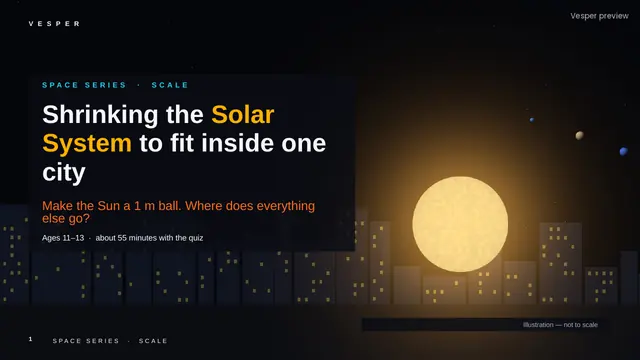
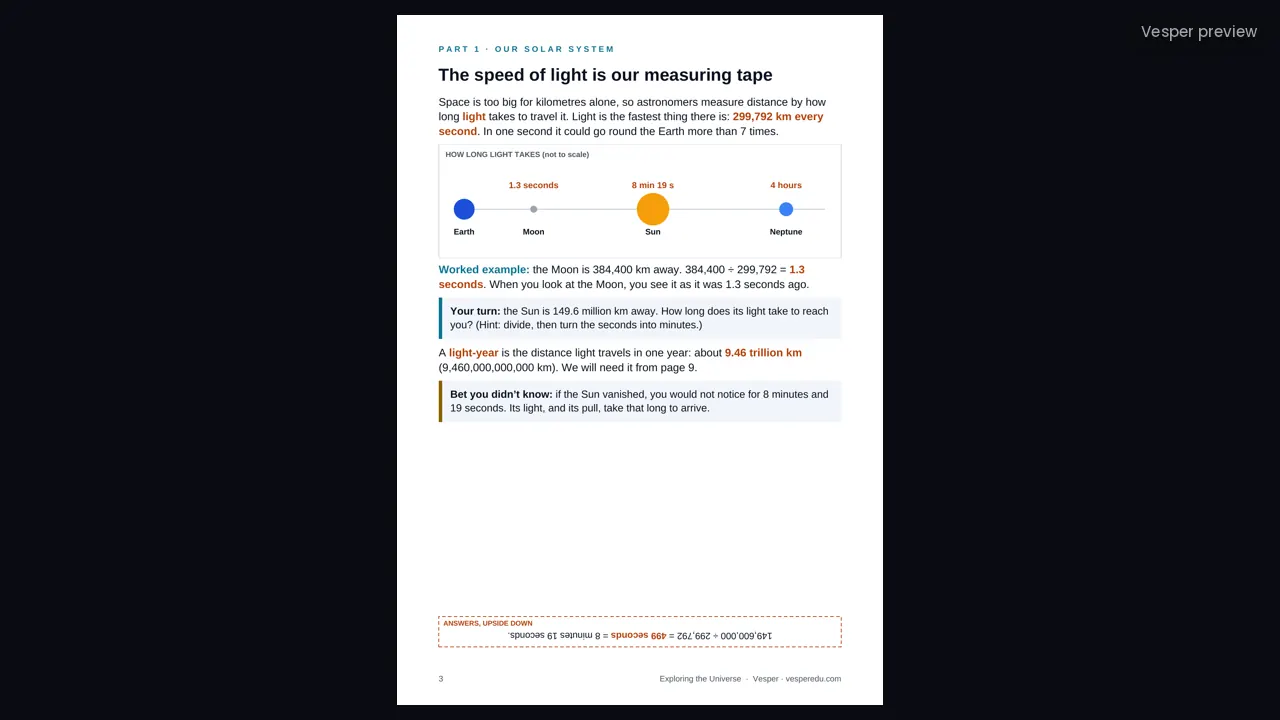
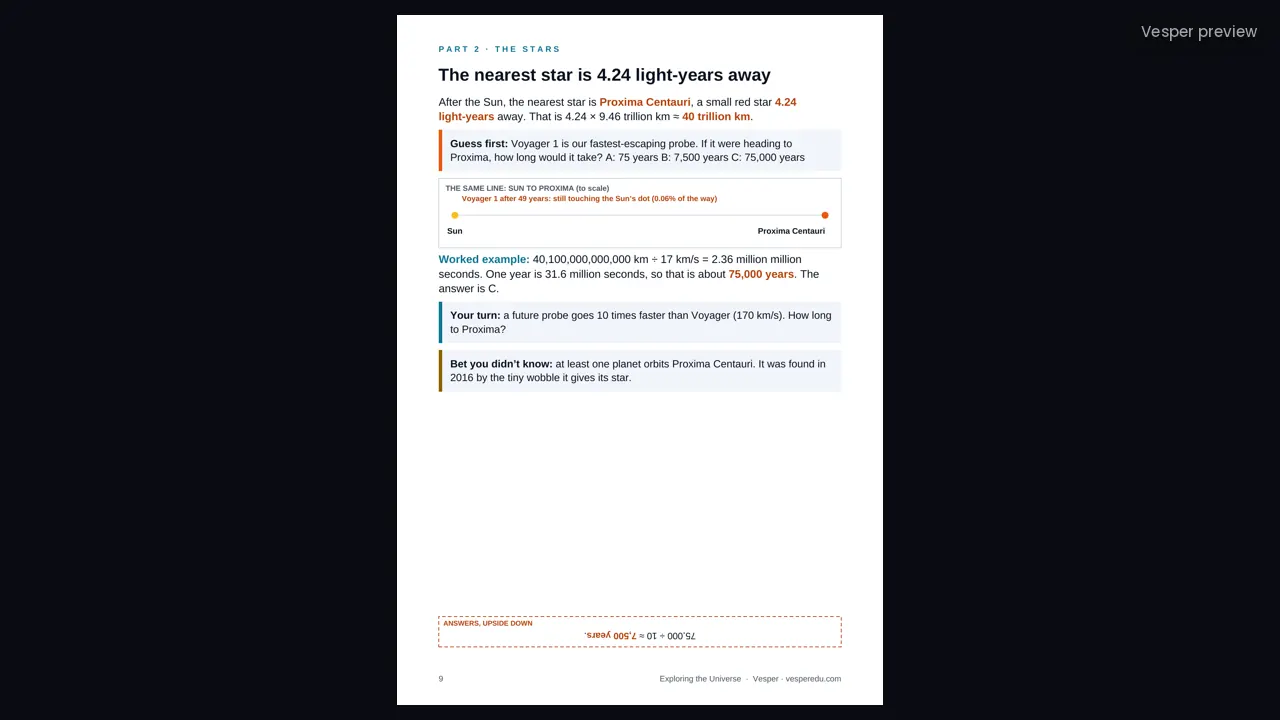
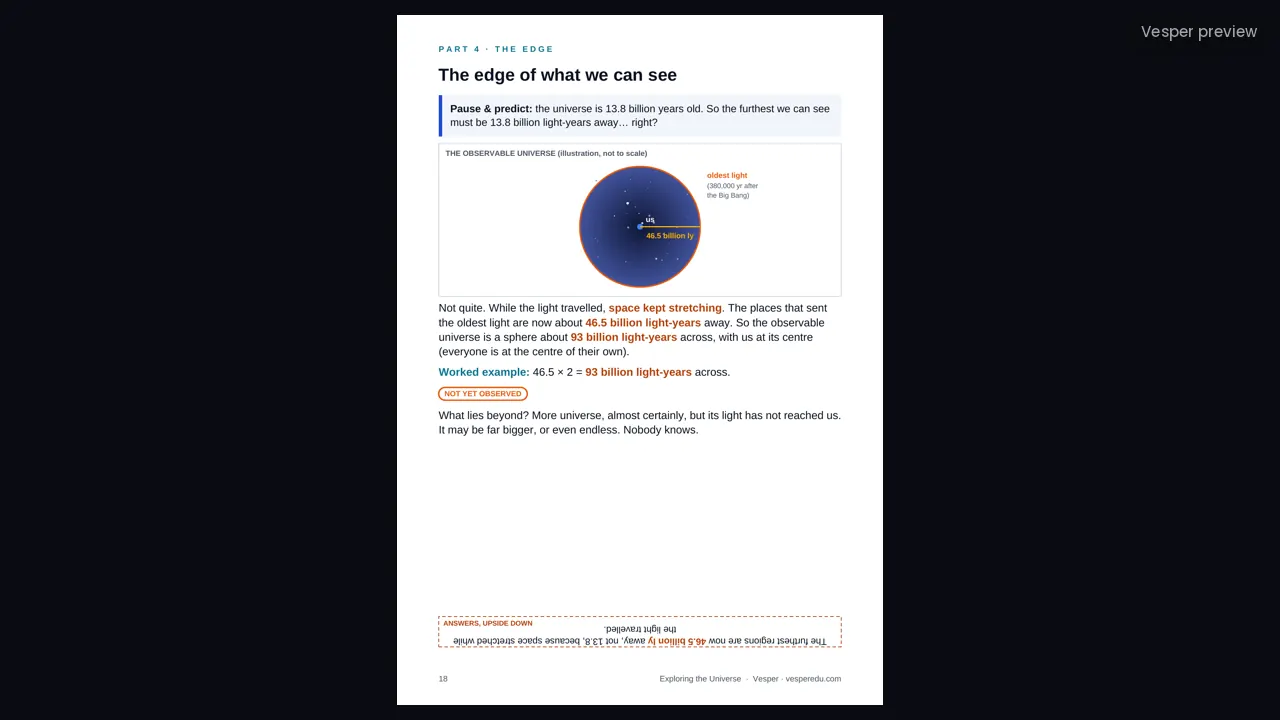
How long does sunlight take to reach you? How far is the nearest star, and how long would Voyager 1 take to get there? Why can the edge of what we see be 46.5 billion light-years away when the universe is only 13.8 billion years old? Each question gets real numbers and a worked example, then the pencil goes to the reader.
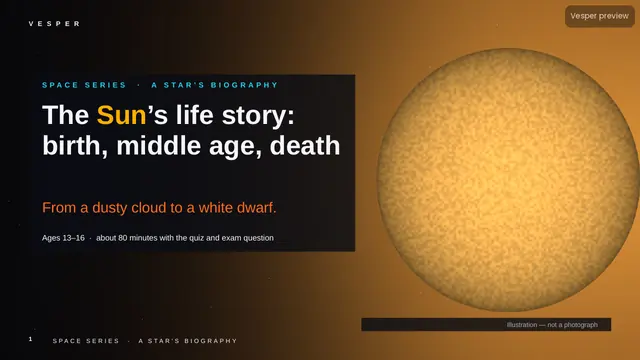
The tour runs from the Sun (109 Earths wide) and the planets, past Voyager 1 and the heliopause, to Proxima Centauri at 4.24 light-years, star colours, look-back time, the Milky Way, Andromeda, deep fields, the expanding universe and the Big Bang.
Inside the booklet
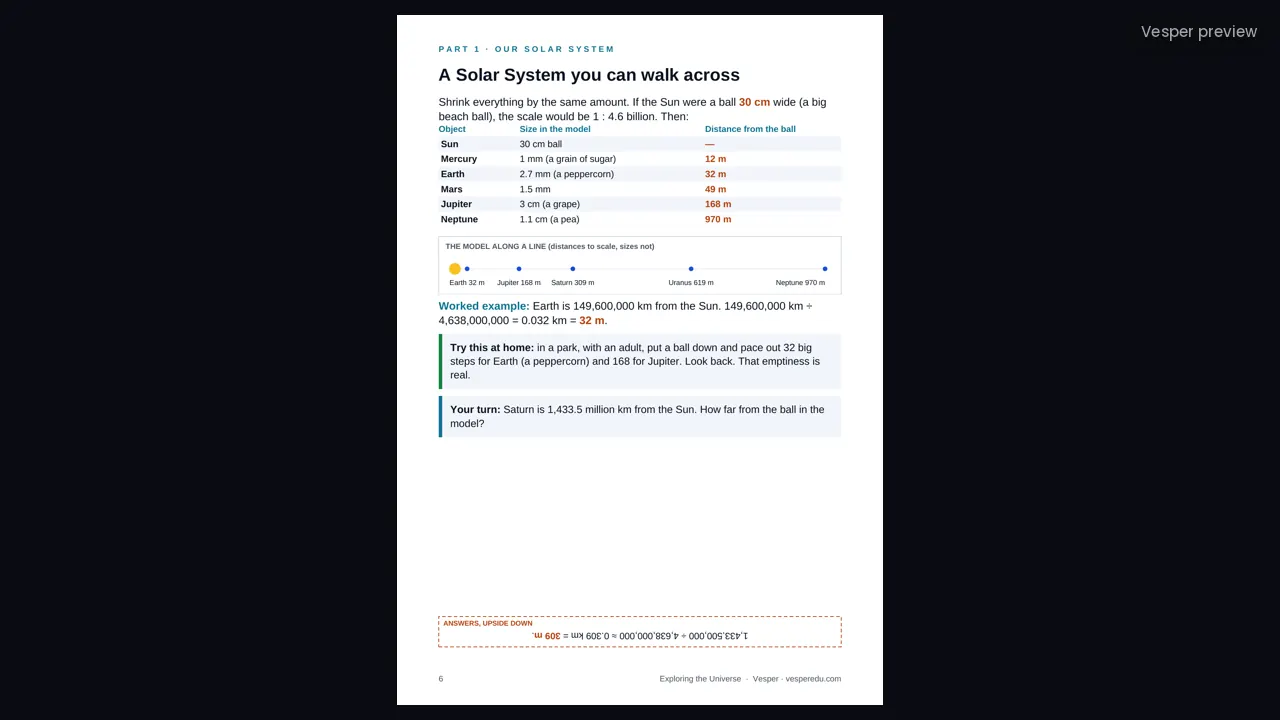
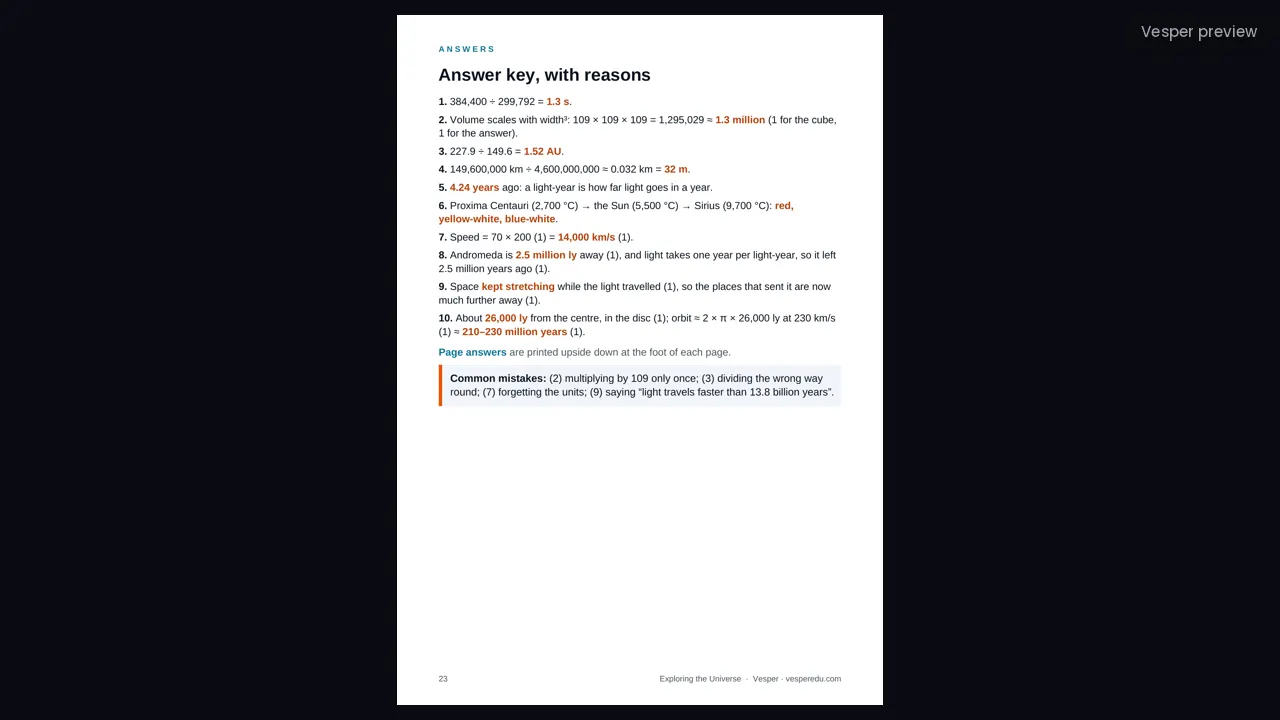
24 A5 pages. Every content page has something to do: guess first, your turn (answers printed upside down), pause and predict, a quick poll, spot the mistake, or a safe activity such as pacing out a scale model of the Solar System in a park. Two checkpoints, 10 practice questions (16 marks), an answer key with reasons and common mistakes, a glossary and a sources page. Every diagram is a vector drawing made in code.
How to use it
Print the A5 file on A4 or US Letter with ‘Fit to page’, or use the ready-made booklet files: print double-sided, flip on the short edge, fold and staple. It works as a homework pack, a cover lesson, a space-club workbook or a holiday activity. Uncertain values are flagged on the page, and hypotheses carry a badge.
Who it’s for
Students aged 11–14 who like big numbers, and the teachers and parents who want a printable space activity with real science and an answer key.