About this lesson
What students discover
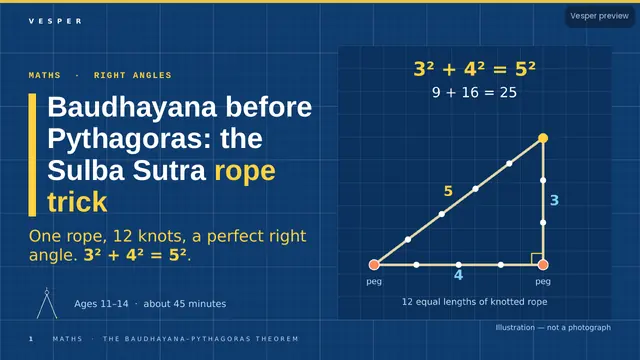
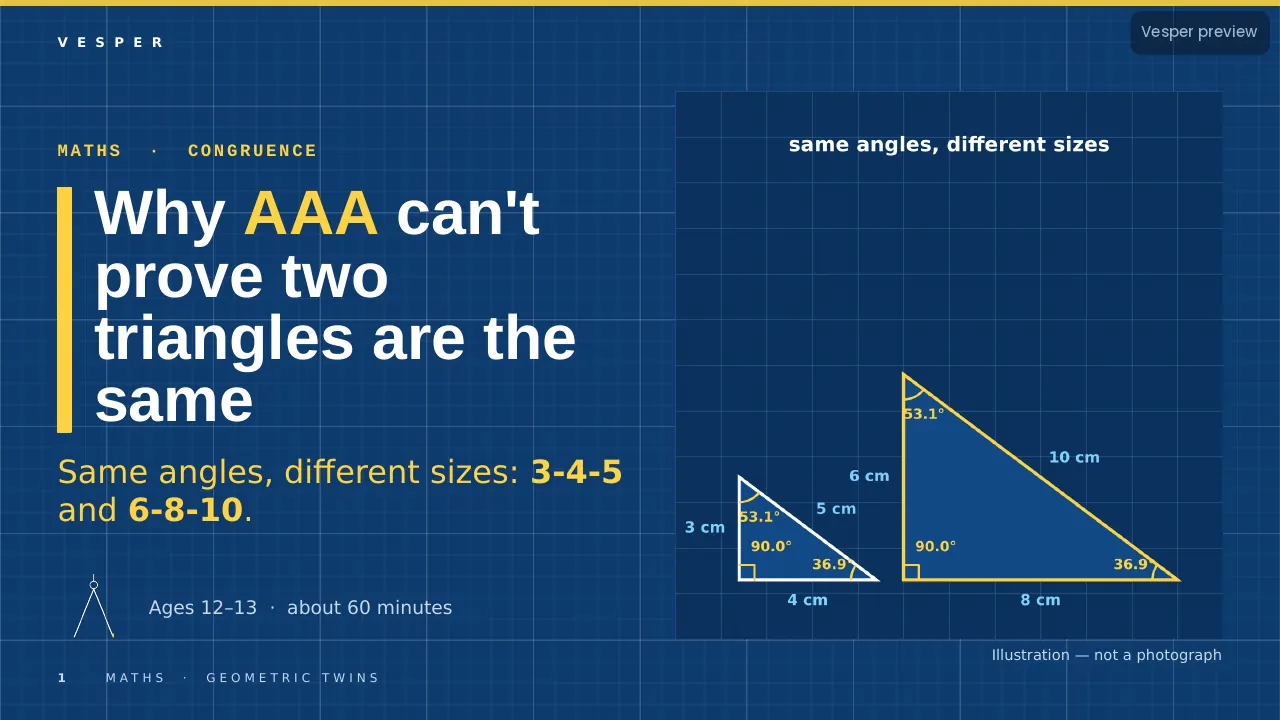
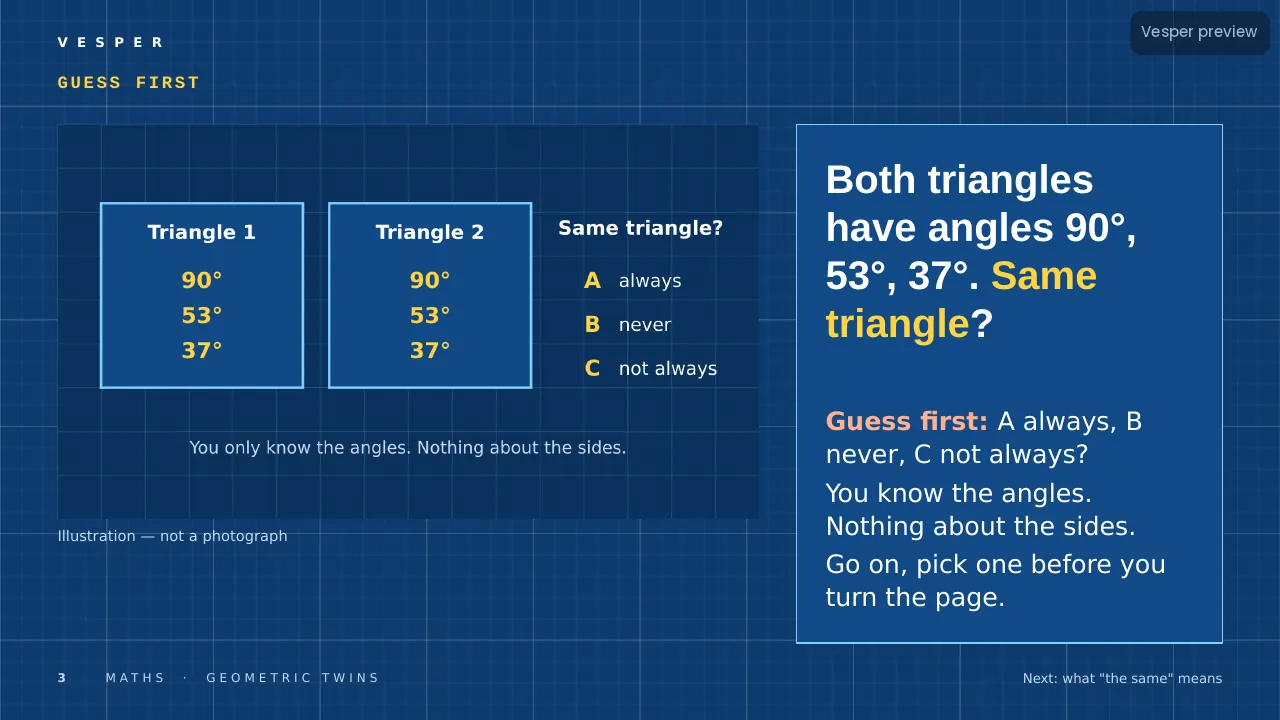
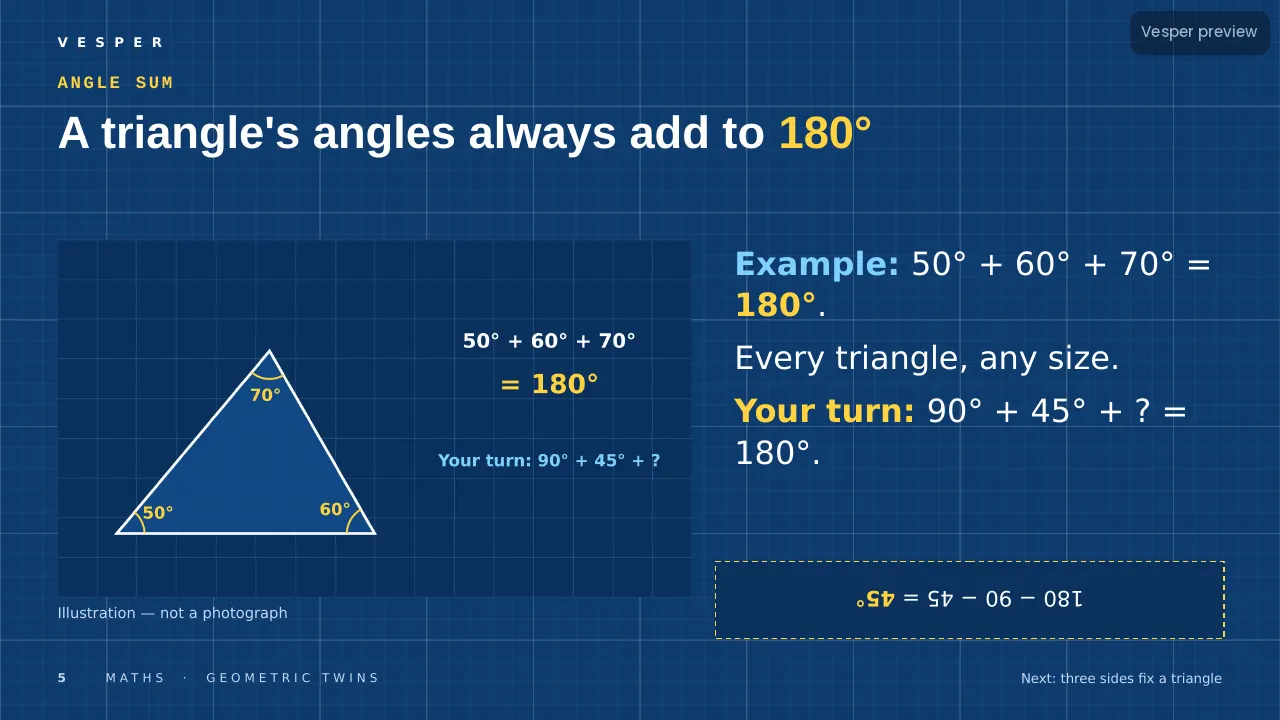
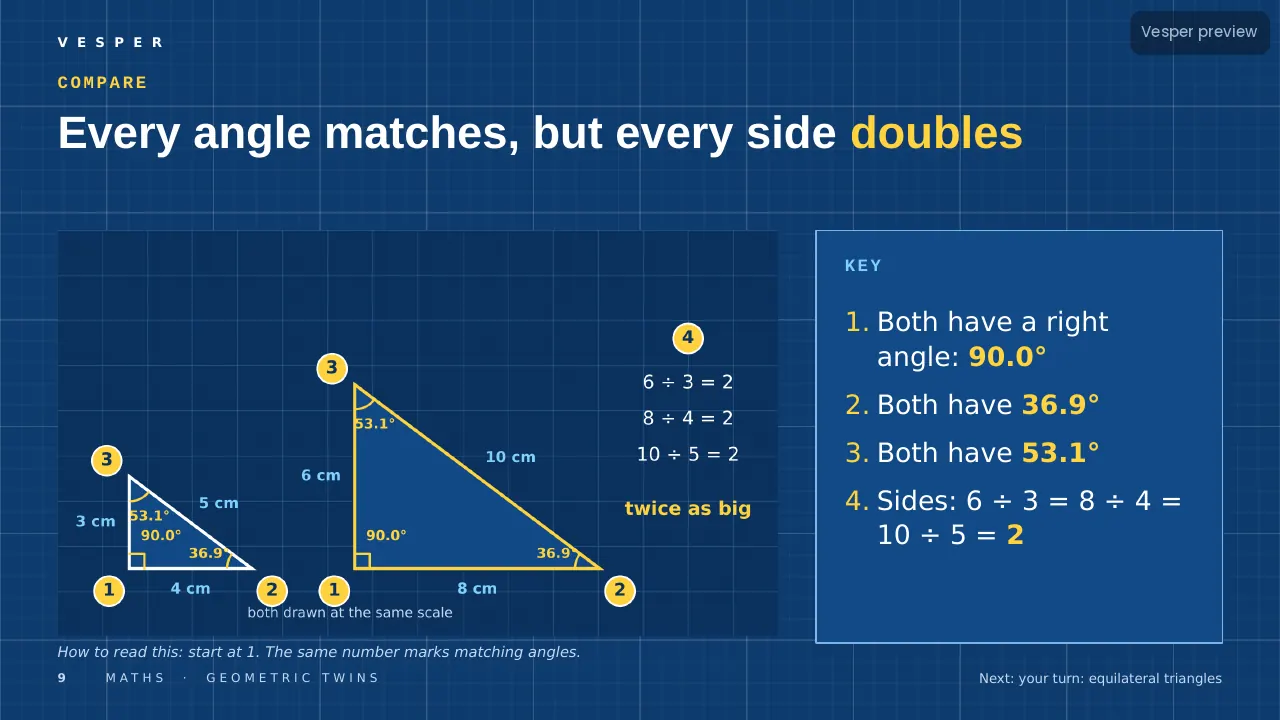
Two triangles with angles of 90°, 53° and 37°: the same triangle? Not always. A 3-4-5 and a 6-8-10 triangle, drawn to one scale, have identical angles but every side doubled. Students meet congruence (same shape and size), build a triangle from three sides with compass arcs to see why SSS works, and find that three angles are really only two facts, because the 180° rule forces the third.
Similar triangles and scale factors follow, then the four real tests: SSS, SAS, ASA and RHS. A bonus slide shows two different triangles built from the same two sides and the wrong angle, and a shadow problem measures a 15 m tree.
Inside the deck
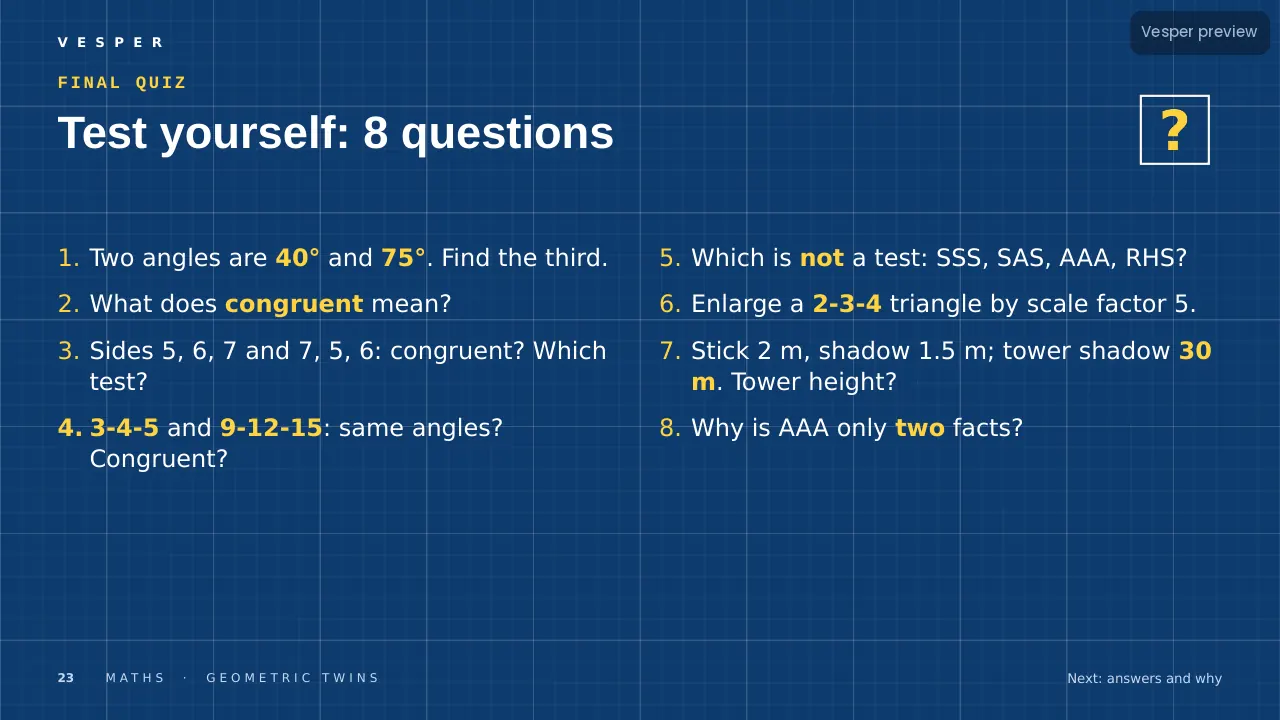
28 slides on the Blueprint template, with every triangle drawn from its true measurements. Three your-turn slides, a poll on which facts guarantee congruence, a spot-the-mistake on two 30°-60°-90° set squares, a myth slide, a straw activity, two checkpoints and an 8-question quiz with explained answers.
How to teach it
Allow about 60 minutes. Take a vote on the hook before showing the doubled triangle on slide 9. The straw activity on slide 21 needs straws cut to set lengths: three lengths always make the same triangle, but three angles do not. Notes on every slide give Say, Ask, Watch for and Time.
Who it’s for
For ages 12–13 studying congruence and similarity, and for older students who still list AAA as a test. The PowerPoint is editable, with named layouts, so you can add your own triangles or a class shadow-measuring task.